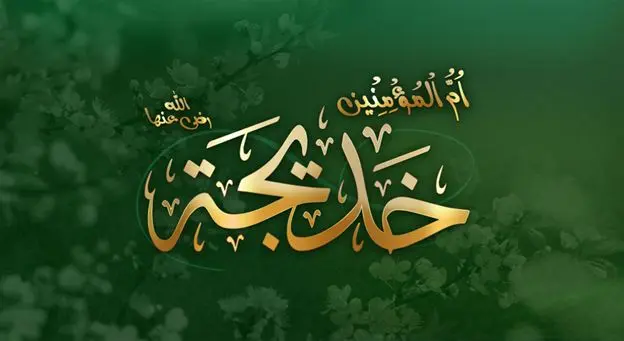


Celebrating the remarkable woman whose strength, wisdom, and unwavering faith helped shape the course of Islamic history and inspired generations of women worldwide
By Mohammad Zubair Ud Din
Muslims around the world celebrate Milad un Nabi, the blessed birth of Prophet Muhammad (SAW). They reflect upon the life and enduring legacy of Prophet Muhammad (SAW). However, it is imperative to acknowledge the remarkable woman who supported him during the most crucial early years of Islam. Hazrat Khadija (RA) bint Khuwaylid was no ordinary woman of seventh-century Arabia.
Hazrat Khadija (RA) commanded respect in a male-dominated society through her remarkable business empire. When she married Prophet Muhammad (SAW) ibn Abdullah around 595 CE, she was already a figure of extraordinary independence and influence. This accomplished widow had chosen Prophet Muhammad (SAW), a young and trustworthy man, based on his exceptional character. Her decision would prove far more significant than a personal union as It became the foundation upon which Islam would rise. She possessed trading caravans that travelled the lucrative routes between Arabia, Syria, and Yemen. These ventures generated profits that rivalled the most successful merchants in the area. In a patriarchal society where women typically inherited property through male relatives, Hazrat Khadija (RA) had maintained and expanded her business with her commercial success commanding respect from her contemporaries.
The First Believer
Hazrat Khadija’s (RA) most defining characteristic was her absolute support for her husband ,Prophet Muhammad (SAW), during his most challenging period. When Prophet Muhammad (SAW) received the first divine revelation around 610 CE, he was overcome with awe. The experience of hearing the angel Jibraeel’s voice in the Cave of Hira had left him trembling. It was Hazrat Khadija (RA) who provided the crucial validation that would shape Islam’s future. She listened to his account without scepticism. She wrapped him in her cloak for comfort. With complete conviction, she declared that Allah would never disgrace a man of his noble character.
Hazrat Khadija (RA) became Islam’s first convert through her intimate knowledge of Prophet Muhammad’s (SAW) integrity. Her immediate acceptance of his prophetic mission provided the emotional foundation Prophet Muhammad (SAW) needed. In those early, uncertain days, when Islam’s message had very few takers, her strong belief served as an anchor of certainty.
Financial Foundation Of Early Islam
The support extended far beyond emotional encouragement. Hazrat Khadija’s (RA) vast wealth became the financial backbone of the early Muslim community. She funded Prophet Muhammad’s (SAW) mission without hesitation. Her trading profits supported not only her husband but also the growing circle of believers. These early Muslims faced economic boycotts and social ostracism for their faith. Hazrat Khadija’s (RA) resources allowed Prophet Muhammad (SAW) to dedicate himself fully to his prophetic duties. He did not bear the burden of earning a livelihood. Her business empire became Islam’s first endowment. It provided the material foundation for a spiritual revolution.
Twenty-Five Years Of Devotion
For twenty-five years, until her death in 619 CE, Hazrat Khadija (RA) remained Prophet Muhammad’s (SAW) sole wife. This was remarkable in a society where polygamy was common among men. This monogamous devotion speaks to the profound bond between them, suggesting their relationship was built on genuine partnership rather than social or economic convenience. The depth of their partnership is evident in their children together. Hazrat Khadija (RA) bore Prophet Muhammad (SAW) four daughters—Hazrat Zaynab (RA), Hazrat Ruqayyah (RA), Hazrat Umm Kulthum (RA) and Hazrat Fatimah. Each would play a significant role in early Islamic history. Their household, including Hazrat Ali (RA) and Zaid bin Harith (RA) as well, became the first Muslim family. It was a living example of how the new faith could be practised in daily life. Prophet Muhammad (SAW) would later marry multiple wives after her death. However, none would ever replace Hazrat Khadija’s (RA) unique position in his heart and in Islamic history. Her role as mother to the Prophet’s children cemented her position as Islam’s foundational matriarch.
The Year Of Sorrow And Its Consequences
The year of Hazrat Khadija’s (RA) death became known as the “Year of Sorrow.” It marked a devastating loss for Prophet Muhammad (SAW). Her passing, combined with the death of his protective uncle Hazrat Abu Talib in the same year, left the Prophet vulnerable. Meccan authorities increased their persecution. Without Hazrat Khadija’s (RA) and Hazrat Abu Talib’s steadfast support, Prophet Muhammad (SAW) faced his darkest period, which ultimately led to his migration to Medina in 622 CE. This event would mark the beginning of the Muslim calendar. Less than a decade after her death, the Prophet returned to Mecca in triumph. Within another decade, his followers had embarked on a world conquest that established Islam from Spain to Central Asia. However, Hazrat Khadija’s legacy endured. Prophet Muhammad (SAW) often spoke of her with deep affection, honouring her as one of the four ladies of heaven alongside Hazrat Fatima, Hazrat Maryam and Hazrat Asiya. This ensured that her memory remained vivid within the rapidly growing Muslim community.
An Eternal Role Model For Women
Hazrat Khadija’s (RA) story challenges conventional narratives about women in early Islamic society. Far from being a passive figure in her husband’s shadow, she emerges as an active architect of Islam’s foundation. Her wealth, wisdom, maturity and perseverance greatly enabled the nascent religion’s survival. Her noble character provided a model for Muslim women throughout history. She demonstrated that devotion to faith and worldly success were not incompatible, and women could play central roles in religious and social transformation. Moreover, her example showed that business success and spiritual devotion could coexist harmoniously. In celebrating the birth of Prophet Muhammad (SAW), we must also honour the woman who stood first beside him, whose strength and conviction helped lay the foundation for one of the world’s great religions.
The writer is an Assistant Professor (History) in the J&K Higher Education Department
zu***********@***il.com