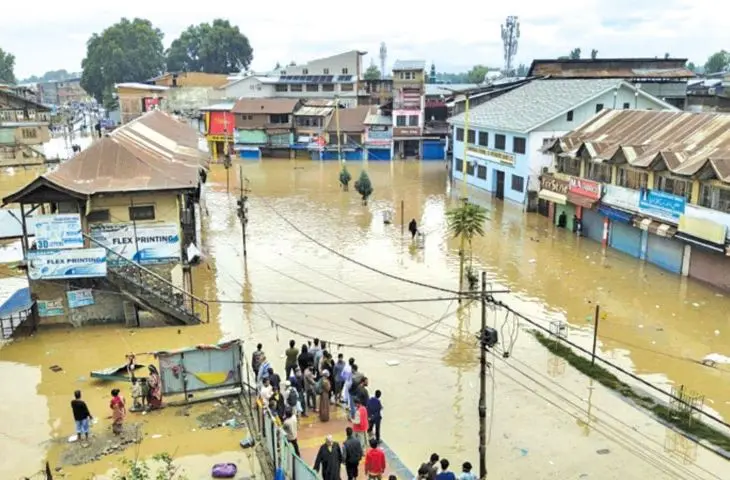


Analysing the causes, impacts, and urgent steps needed to prevent future disasters in a region vulnerable to climate-induced floods
September brings bitter memories to Kashmir. In 2014, the valley witnessed devastating floods that left behind a trail of destruction, displacing thousands and crippling the economy. Eleven years later, the same month has once again brought the region to the brink. This time, Jammu province has taken the heaviest blow, but the valley remains under constant threat with two days of continuous rain exposing our fragile preparedness. The fear is real: we have learnt little from the disaster of 2014.
Causes Of Repeated Flood Threats
Unplanned urbanisation has choked natural water channels and flood basins.
River Jhelum’s carrying capacity has drastically reduced due to siltation and encroachments.
Wetlands and floodplains, which once acted as natural sponges, have been destroyed by construction.
Poor drainage systems in Srinagar and other towns turn heavy rain into urban flooding.
Climate change is intensifying rainfall patterns, making extreme weather more frequent.
Impacts Already Visible
Villages in low-lying areas are forced into repeated evacuations.
Urban centres face waterlogging, crippling transport, trade, and education.
Agricultural fields get submerged, pushing farmers into losses and food insecurity.
Psychological scars remain, as every rainfall triggers fear of another deluge.
Economic costs run into billions, stunting growth and creating dependence on aid.
Have We Learnt Anything?
The painful answer is no. After 2014, committees were formed and reports drafted, but little changed on the ground. Embankments remain weak, dredging of rivers is incomplete, and illegal constructions continue unchecked. Srinagar, which should have been made resilient, still suffers from clogged drains and vanished wetlands. Disaster preparedness exists more on paper than in practice.
What Lies In The Future
If current trends continue, Kashmir will face recurrent floods of increasing intensity. Climate projections for the Himalayas indicate higher rainfall variability, more cloudbursts, and faster glacial melt. Inaction means repeating 2014 with even greater costs.
Steps Needed To Prevent Another Disaster
Restore and protect wetlands like Hokersar, Wular, and Pampore marshes to serve as natural flood buffers.
Dredge the Jhelum on a war footing to increase its carrying capacity.
Enforce strict land use laws to stop construction on floodplains and water channels.
Modernise Srinagar’s drainage system to handle high-intensity rain.
Set up an efficient flood forecasting and early warning system accessible to all citizens.
Educate communities on preparedness, evacuation, and safety.
Integrate climate adaptation strategies into development planning.
Conclusion
Floods are natural, but disasters are man-made. Kashmir cannot afford to repeat the mistakes of 2014. Each rainfall is a reminder that time is running out. Unless there is a collective will to restore ecological balance, strengthen infrastructure, and enforce accountability, the Valley will remain a sitting duck. Nature has given us repeated warnings. The question is whether we are willing to listen.
The writer works in the School Education Department
Malik Yaseen
ma**********@***il.com