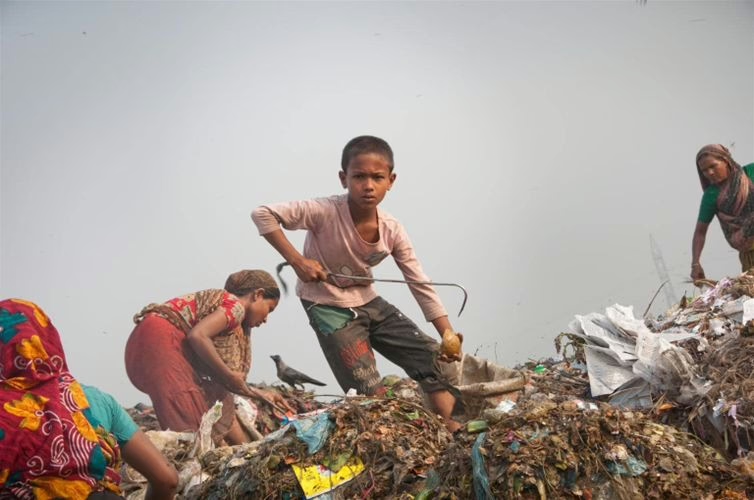


In India, there are estimated 5-30 million child labourers, with UP, Bihar, Rajasthan accounting for 55% of country’s cases
Child labour remains a significant global challenge, impacting millions of children worldwide and in India. It is a complex issue driven by various socioeconomic factors and has severe consequences for the children involved and for society as a whole.
Globally, an estimated 160 million children (nearly 1 in 10 children worldwide) were engaged in child labour at the beginning of 2020. This includes 63 million girls and 97 million boys. Alarmingly, this marked an increase of 8.4 million children in child labour over four years (as of June 2021). Almost half of these children (79 million) are in hazardous work that directly endangers their health, safety, or moral development. The agricultural sector accounts for the largest share of child labour, with 70% (112 million children), followed by services (31.4 million) and industry (16.5 million). Children aged 5 to 11 years constitute the largest proportion of those in child labour (48%).
Africa has the highest percentage of children in child labour (one-fifth) and the highest absolute number (72 million). Asia and the Pacific rank second, with 7% of all children (62 million) in child labour. Together, these two regions account for almost nine out of every ten children in child labour worldwide.
As per Census 2011, India had 10.1 million working children aged 5-14 years (3.9% of the total child population in that age group). However, other estimates suggest the actual number could be much higher, ranging from 4.3 million to as high as 10 to 30 million. Analysis of the Periodic Labour Force Survey (PLFS) 2018-19 revealed that around 5 million children aged 5-17 were engaged in economic activity. The agricultural sector engages nearly half of working children in India, with the industrial sector (including manufacturing and construction) employing one-third, and 14-17% in the service sector.
While child labour has decreased in rural areas, it has shown an increase in urban areas, indicating a growing demand for child workers in menial jobs. States like Uttar Pradesh, Bihar, Rajasthan, Maharashtra, and Madhya Pradesh account for nearly 55% of the total working children in India (Census 2011).
Causes of Child Labour:
Poverty: This is the primary driver, forcing families to rely on children’s income for survival.
Lack of Access to Quality Education: Many children, particularly in rural areas, do not have access to good schools, making them more susceptible to child labour.
Growth of the Informal Economy: The informal sector often operates with less oversight, making it easier to employ children and bypass labour laws.
Lack of Awareness: Many parents are unaware of the severe physical, mental, and psychological harm child labour inflicts on their children.
Social Norms and Cultural Beliefs: Traditional practices and attitudes can sometimes contribute to the acceptance of child labour.
Debt Bondage: Families may be forced to send their children to work to pay off ancestral debts.
Migration: Migrant families, especially those moving to urban areas, are often more vulnerable to child labour exploitation.
Impact of Child Labour
Child labour has devastating and long-lasting consequences for children and society:
Health Risks: Exposure to hazardous working conditions, physical and mental abuse, long hours, injuries, illnesses, and developmental issues.
Education Deprivation: Children are denied access to education, leading to illiteracy, limited future opportunities, and perpetuating the cycle of poverty.
Stunted Development: It deprives children of playtime, social interaction, and emotional well-being, hindering their physical, cognitive, and emotional growth.
Exploitation and Abuse: Children are vulnerable to slavery, sexual exploitation, trafficking, and forced recruitment into armed groups.
Psychological Trauma: The experiences of child labour can lead to long-term psychological issues, including anxiety, depression, and PTSD.
Undermining Human Rights: It violates fundamental children’s rights, including the right to education, protection, and a safe environment.
Perpetuates Poverty and Inequality: It keeps families and communities trapped in a cycle of poverty, limiting economic advancement.
Loss of Human Capital: A less skilled and educated workforce diminishes a nation’s capacity for economic growth and global competitiveness.
Increased Social Welfare Burden: The long-term health and psychological consequences of child labour can lead to increased healthcare and social welfare costs.
Social Disintegration: It can disrupt family and community dynamics, leading to a breakdown in social structures.
Efforts to Combat Child Labour in India
Constitutional Provisions: The Indian Constitution prohibits child labour in various forms (e.g., Article 21A, Article 24, Article 39(e) and (f)).
Child Labour (Prohibition and Regulation) Act, 1986 (amended in 2016): The act prohibits the employment of children below 14 years in all occupations and processes. It also prohibits the employment of adolescents (14-18 years) in hazardous occupations and processes. It allows children to help their families in non-hazardous family enterprises after school hours or during vacations.
National Child Labour Project (NCLP) Scheme: Provides for the withdrawal of children from child labour, their rehabilitation, and provision of education.
Right to Education Act, 2009: Makes elementary education a fundamental right for children aged 6-14, aiming to keep children in school and out of work.
Various Government Schemes: Programs focused on poverty alleviation, education, and social protection indirectly contribute to reducing child labour.
NGOs and Civil Society Organisations: These play a crucial role in rescuing child labourers, providing rehabilitation, advocating for policy changes, and raising awareness.
Despite significant efforts, child labour persists globally and in India, highlighting the need for continued and intensified action to address its root causes and ensure every child has the right to a safe childhood, education, and a dignified future.
The writer is a teacher at Higher Secondary School, Nehalpora, Pattan
Kousar Ahmed Rather
ko************@***il.com