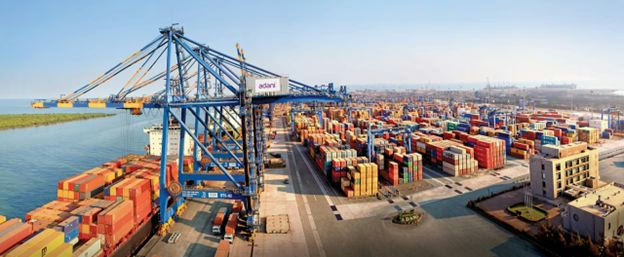


With over 7,500 km of coastline and a strategic location, India’s port sector is a vital driver of trade, employment and economic development
India, with its vast coastline of over 7,500 kilometres and strategic geographic location, stands at the crossroads of major global trade routes. The country’s ports, comprising 12 major and over 200 non-major ports, serve as vital conduits for international and domestic trade. Ports in India are not merely docking points for ships; they are economic catalysts that drive growth, facilitate commerce, and generate employment. With more than 95% of the nation’s trade by volume and about 70% by value being conducted through maritime routes, India’s port economy holds immense significance in shaping the country’s overall economic trajectory.
Structure and Dynamics of India’s Port Economy
India’s port system is divided into major ports, administered by the central government, and non-major ports, governed by state maritime boards. The 12 major ports, including Mumbai (JNPT), Chennai, Kolkata, Visakhapatnam, and Paradip, handle the bulk of cargo. On the other hand, non-major ports, many of which are privately operated, have been gaining momentum due to their operational efficiency and advanced infrastructure.
Among the most notable private ports is Mundra Port in Gujarat, operated by Adani Ports and SEZ Ltd., which has become the largest commercial port in India in terms of cargo handling. The rise of such ports indicates a broader shift towards increased private sector involvement and competition in port operations, which in turn improves service quality and turnaround times.
Economic Contributions of the Port Sector
The port economy plays a central role in India’s economic growth across several dimensions:
- Trade Facilitation
Ports are the primary gateways for India’s export and import activities. As per the Ministry of Ports, Shipping and Waterways, around 1.45 billion tonnes of cargo were handled by Indian ports in 2022–23, marking a steady year-on-year growth. Efficient port infrastructure reduces transportation and logistics costs, making Indian goods more competitive in global markets.
- Employment Generation
The port sector is a major source of direct and indirect employment. Dock workers, logistics operators, transporters, and employees in warehousing and related industries all depend on the port ecosystem. Estimates suggest that over 20 million jobs are supported by the maritime and logistics industry combined.
- Contribution to GDP
Ports and allied sectors such as shipping, logistics, and warehousing contribute approximately 2-3% to India’s Gross Domestic Product (GDP). This figure is projected to grow with the expansion of port infrastructure, increased cargo throughput, and the integration of smart technologies.
- Industrial and Regional Development
Ports act as magnets for industrial activity. Coastal Economic Zones (CEZs), Special Economic Zones (SEZs), and industrial corridors are often developed around major ports, leading to regional development, particularly in coastal states like Gujarat, Maharashtra, Tamil Nadu, and Andhra Pradesh.
Government Initiatives and Policy Reforms
Recognising the strategic importance of ports in national development, the Government of India has launched a series of initiatives aimed at transforming the maritime sector:
- Sagarmala Programme
Launched in 2015, Sagarmala is a flagship program for port-led development. Its objectives are centred on:
- Port modernisation and new port development
- Improved port connectivity through road, rail, and inland waterways
- Enhancing logistics efficiency
- Developing coastal communities and industries
As of 2024, more than 800 projects worth over ₹5.5 lakh crore are being implemented under the Sagarmala framework. These include the development of port infrastructure, port-rail connectivity projects, multimodal logistics parks, and industrial clusters.
- Maritime India Vision 2030
Unveiled in 2021, Maritime India Vision (MIV) 2030 serves as a long-term roadmap to overhaul the port ecosystem. It targets:
- Increasing port capacity to over 3,300 million tonnes per annum (MTPA)
- Attracting investment of over ₹3 lakh crore
- Promoting public-private partnerships (PPPs)
- Increasing Indian shipping tonnage and global competitiveness
The MIV 2030 also emphasises the need for green ports, digitisation, and automation of port operations to meet global standards.
- PM Gati Shakti – National Master Plan
This multi-modal infrastructure initiative, launched in 2021, integrates 16 ministries, including shipping, highways, and railways, under one digital platform. The aim is to reduce infrastructure duplication, speed up project approvals, and ensure seamless connectivity between ports and hinterlands.
- National Logistics Policy (2022)
India’s logistics cost is among the highest globally, at around 14% of GDP. The National Logistics Policy aims to bring this down to 8–10% by improving transport infrastructure, integrating digital systems, and standardising logistics operations. Ports are critical to this effort, as they serve as the primary nodes in the supply chain.
Emerging Trends in the Port Sector
India’s port economy is undergoing a significant transformation, driven by technological innovation, policy reforms, and growing global trade integration:
- Digital Transformation
Port operations are being digitised through the Port Community System (PCS), which enables faster documentation and communication among stakeholders. E-invoicing, online customs clearance, and real-time cargo tracking are reducing delays and enhancing transparency.
- Sustainability and Green Ports
Environmental concerns are being addressed through the development of green ports. Initiatives include the use of renewable energy, waste management systems, and shore power supply to reduce emissions from docked ships.
- Increasing Private Sector Participation
Private ports such as Mundra, Krishnapatnam, and Hazira have emerged as leaders in cargo handling efficiency. The government is actively encouraging PPP models to increase investments and introduce global best practices.
- International Connectivity
India is enhancing its maritime influence through investments in strategic ports abroad, such as Chabahar Port in Iran, which facilitates access to Central Asia. This aligns with India’s vision of becoming a key player in the Indo-Pacific maritime region.
Challenges and Areas for Improvement
Despite significant progress, India’s port economy faces several persistent challenges:
- Infrastructure Gaps
Many ports suffer from limited draft depth, outdated cargo handling equipment, and inadequate warehousing facilities. This restricts the berthing of large vessels and increases turnaround times.
- Connectivity Issues
Last-mile road and rail connectivity to ports remains a major bottleneck. Poor linkage leads to congestion, delays, and increased logistics costs.
- Regulatory and Institutional Fragmentation
Overlapping responsibilities between central and state authorities, along with bureaucratic delays, hinder coordinated port development. There is a need for a single-window clearance mechanism for port-related projects.
- Environmental Impact
Unregulated expansion, dredging, and pollution have adversely impacted coastal ecosystems. Sustainable development practices must be prioritised to minimise ecological damage.
Conclusion
India’s port economy stands at a critical juncture, rich with opportunity but also facing formidable challenges. Ports have emerged as engines of trade, industrial growth, and job creation. Government initiatives like Sagarmala, PM Gati Shakti, and Maritime India Vision 2030 are gradually transforming India’s ports into world-class hubs of maritime activity.
To fully realise this potential, India must continue to invest in infrastructure, embrace technology, streamline regulations, and pursue environmental sustainability. With the right mix of policy support, private participation, and regional integration, India’s ports can truly become gateways to trade, innovation, and inclusive growth, positioning the country as a global maritime power in the decades to come.
The writer is a research scholar at Central University of Jammu, with a focus on economics and development studies
Sumaya Jan
su*********@***il.com