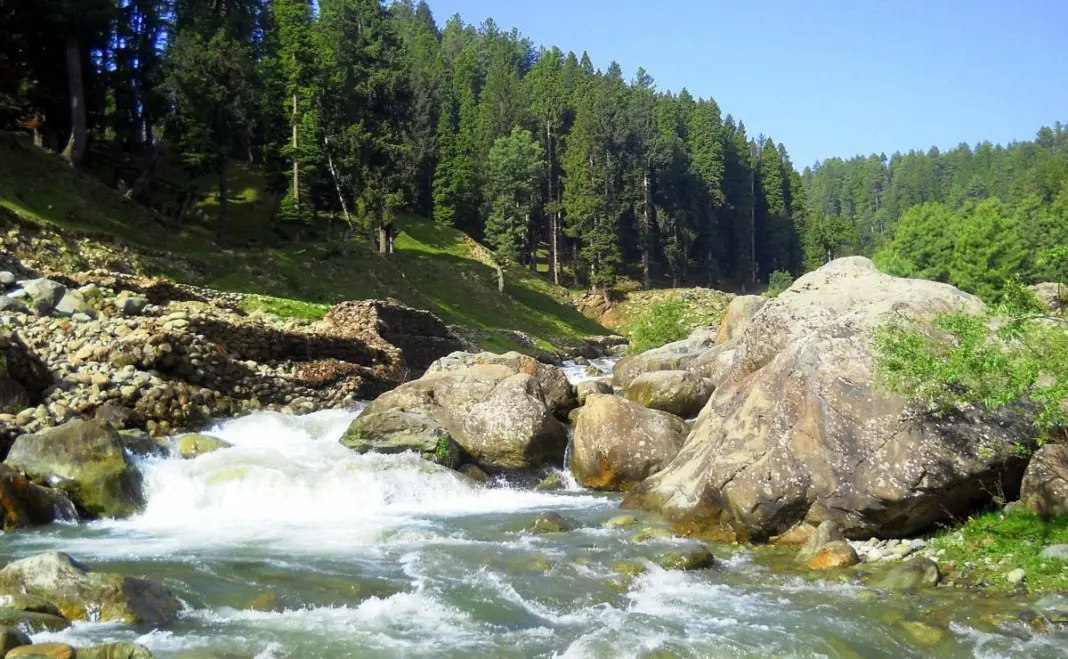


Once a lifeline for agriculture and biodiversity, Doodh Ganga now languishes under pollution and neglect, calling for urgent action to revive and protect this vital freshwater resource
Doodh Ganga, a picturesque stream winding its way from the Pir Panjal mountains through the lush landscapes of Budgam and Srinagar districts, has long been considered one of Kashmir’s most vital freshwater sources. With its name meaning “milky river” in the local language, Doodh Ganga once gleamed with clear, sparkling water, feeding agricultural lands, sustaining aquatic life, and providing drinking water to thousands.
But today, the story of Doodh Ganga is a tragic tale of environmental neglect, unchecked urbanisation, and human indifference.
A Stream with a Sacred Past
Historically, Doodh Ganga held spiritual and cultural significance. It originates from the upper reaches of the Yousmarg valley, a part of the Pir Panjal range known for its scenic beauty and ecological importance. For centuries, it has been an essential part of Kashmiri life—irrigating rice fields, orchards, and gardens. It has been home to diverse aquatic species and a source of fresh water for generations.
However, over the past few decades, this once-pristine stream has been reduced to a polluted drain, suffering the consequences of rapid urban growth and a lack of environmental planning.
The Current Crisis
Pollution and Waste Dumping: One of the most visible threats to Doodh Ganga is pollution. Municipal and household waste, including plastic, polythene, construction debris, and even untreated sewage, is routinely dumped into the stream. Entire stretches of the stream have become clogged with waste, disrupting the natural flow of water and killing aquatic life.
Sewage Inflow: In areas like Chadoora, Kralpora, Baghat, Barzulla, and Batamaloo, raw sewage is discharged directly into the stream. Despite the existence of some sewage treatment plants, most are either non-functional or poorly maintained.
Illegal Encroachments: The natural banks of Doodh Ganga are being eaten away by illegal constructions. Residential buildings, shops, and even roads have sprung up along its banks, narrowing the stream and increasing the risk of floods.
Loss of Biodiversity: Once teeming with fish and bird life, Doodh Ganga is now nearly devoid of its original biodiversity. The toxic water and altered landscape have driven away much of the flora and fauna that once depended on it.
“The Doodh Ganga was once clean enough to drink from,” says Abdul Rehman Rather, a 69-year-old farmer from Kralpora Chadoora. “Now, even the animals hesitate to go near it.”
Environmental and Public Health Concerns
Pollution of the Doodh Ganga not only affects the environment but also poses a serious risk to public health. The contaminated water is used for irrigation, affecting the safety of crops and vegetables. Residents living near the stream report increased cases of waterborne diseases, skin infections, and breathing problems due to the foul stench.
Moreover, the reduced water quality threatens future water security in the region, especially as climate change tightens its grip on Himalayan water sources.
Save Doodh Ganga
Doodh Ganga, a pristine river in Kashmir, is facing increasing pollution and degradation due to unchecked waste disposal, deforestation, and encroachments. To save this vital water source, urgent steps must be taken:
Strict Pollution Control: Implement strict regulations against dumping waste into the river. Establish proper sewage and waste management systems in the surrounding areas.
Public Awareness: Launch awareness campaigns to educate locals and tourists about the importance of keeping the river clean.
Afforestation and Conservation: Promote tree plantation along the riverbanks to prevent soil erosion and maintain ecological balance.
Regular Clean-up Drives: Organise community-led river clean-up activities with support from local authorities and NGOs.
A Call for Unity
While government intervention is critical, the people of Kashmir must also take ownership. Civil society, youth groups, environmental NGOs, and residents living along Doodh Ganga all have a part to play. Reviving the stream is not just about cleaning water; it’s about preserving a living symbol of Kashmiri heritage.
As climate change accelerates, the protection of freshwater resources like Doodh Ganga becomes more than an environmental issue—it becomes a matter of survival.
Unless swift and meaningful action is taken, the “milky stream” of Kashmir may soon become a memory—lost to pollution, neglect, and time.
“If you want to see the health of a land, look at its rivers.”
“Save Doodh Ganga Save Kashmir.”
The writer is an environmental researcher
Sahil Jahangir Mir
sa***************@***il.com