

In search of gold, let’s not lose the diamond
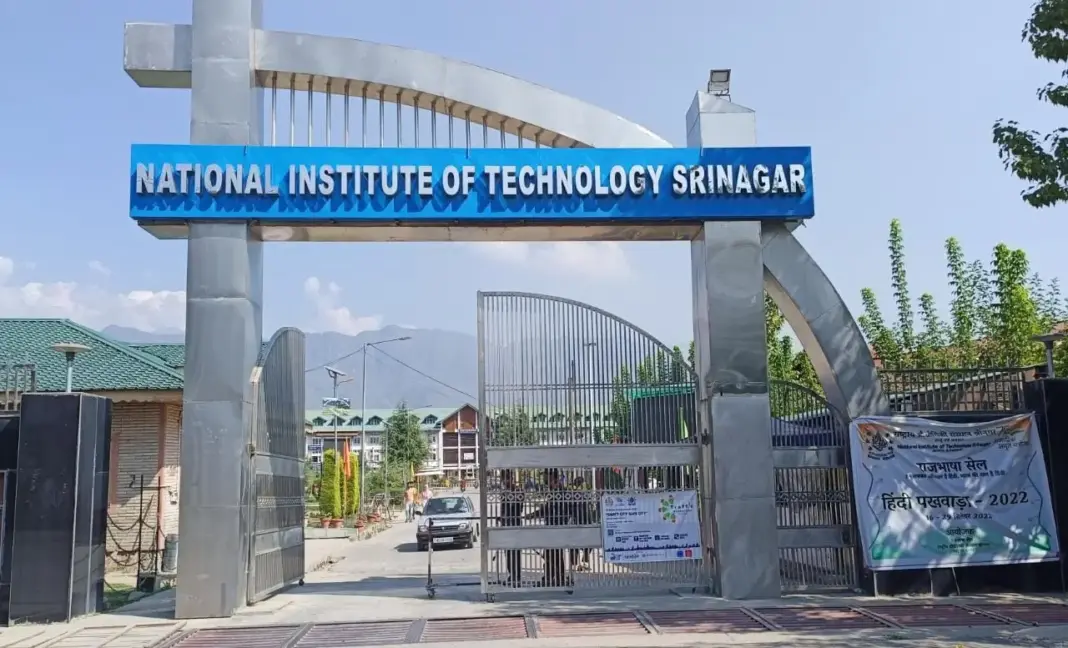
A debate has sparked over the proposed relocation of the NIT Srinagar campus to Pulwama, stirring diverse opinions and concerns. While some argue about the feasibility and appropriateness of such a shift, others highlight its potential consequences on livelihoods, agriculture, and urban accessibility. This article delves into the validity of these arguments and explores the path forward.”
- Quantity of land
The claim that a technology institute does not need 5000 kanals is debatable. Data from top Indian engineering institutes, such as IITs and NITs, show that campus sizes typically average around 5500 kanals, with some exceeding 8000 kanals. As a society, we must recognize the space and infrastructure needed for such institutions and avoid dismissive assumptions about land requirements.”
- Location
The location of a premier institute matters for accessibility, academic collaboration, and proximity to urban hubs. Srinagar, being the capital and an urban centre, provides these benefits. However, it is also reasonable to trust that the management and government have evaluated logistical factors in selecting Pulwama. A transparent explanation of their rationale could help address public concerns.”
- Land use, it’s fertility and livelihoods
The third and most critical concern relates to the fertile, apple-rich land in Pulwama that supports thousands of livelihoods. The government must take a data-driven approach by appointing an expert committee comprising technocrats, environmentalists, economists, and other stakeholders. This committee should assess the land’s fertility, economic value, and the livelihoods it supports. If the land proves indispensable for the local economy, it should be preserved as a vital agricultural and horticultural resource. A balance between development and existing livelihoods must guide this decision.”
Institutes like MIT, IITs, and Harvard have revolutionized societies, creating new industries, power centres, and opportunities. For Kashmir to compete globally, it must embrace the transformative potential of modern technological education. While it is essential to honour our ancestral heritage, the future lies in innovation, not nostalgia. A modern NIT campus could serve as a beacon of progress for the region.”
Conclusion
The controversy over the NIT Srinagar campus relocation is a double-edged sword. On one side, the land’s fertility and the livelihoods it supports cannot be overlooked. On the other, a modern technological institute promises long-term societal and economic dividends. The government must take an impartial, empirical approach by involving stakeholders and experts to analyze all aspects thoroughly. By identifying what constitutes the ‘gold’ and ‘diamond’ in this case, a decision can be made that balances progress with preservation.
The writer is an engineer in the J&K Public Works Department
Er Mohammad Iqbal Shah Peerzada
pe*******@***il.com