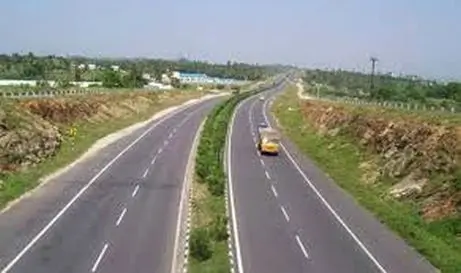


From ancient routes to modern highways, discover the historical evolution and contemporary safety issues of India’s road networks, focusing on Jammu & Kashmir
The history of roads is as old as the history of man on Earth. Prehistoric humans traced out narrow paths for hunting and gathering food. These narrow paths were footpaths or pathways, considered the first road marks laid on the surface of the Earth, like the Silk Route from China to Europe, passing through Kashmir. The utility and necessity of pathways gradually developed with the introduction of wheeled carts. The pathway was widened into a roadway, marking the beginning of roads as a means of communication and transport.
History of highway development in India
Indian civilization, one of the oldest in the world (around 4000 to 3000 BC), witnessed the growth and development of roads alongside its own development. Therefore, when tracing the history of road development in India, it is essential to study it in conjunction with the political, economic, and cultural life of the country.
Roads under early Indian rulers:
Ancient Indian history reveals that long ago, Indians knew the science of road construction. Excavations at Mohenjodaro and Harappa (in modern-day Pakistan) have established that even as early as 3500 BC, there was a well-designed network of roads, and streets were paved.
Aryan period:
During the Aryan period, there are references in the Rig Veda (Part 1, Para 5) about “Mahapaths” as a means of communication. Around 600 BC, a pucca road (6.1 m to 7.3 m wide) was built in Rajgir (ancient Rajagriha) in Patna district by King Bimbisara. This road was made of stones and still exists today.
Mauryan period:
During this period, roads were developed based on technical specifications, including guidelines for the width of roads, the type of surface, and the convexity of the road surface, which was compared to the back of a tortoise. Arthashastra, the well-known treatise on administration, provides a good deal of information about roads and specifications adopted during the Mauryan period. Arthashastra was written around 300 BC by Kautilya, the first prime minister of Emperor Chandragupta Maurya.
Chandragupta Maurya (322–298 BC) took a keen interest in the maintenance and development of roads. He established a separate department of communications to oversee public roads. He had the Grand Trunk Road (GT Road) constructed, connecting the North-West frontier to the capital, Pataliputra (modern Patna). He also had signposts in the form of pillars and mile markers placed along the road at regular intervals.
Emperor Ashoka took a special interest in improving roads and provided facilities for travellers, such as planting trees, digging wells, and constructing rest houses at intervals of about 4.8 to 6.4 km along the roads. The famous Chinese traveller Fahien spoke very highly of the roads of that time in his travel records.
Roads during the Mughal period:
The roads were greatly improved in India during the Mughal period. Chahar Gulshan, written in the eighteenth century, provides information about 24 important roads that formed the network of roads in India during the Mughal era. The road system at that time was considered one of the best in the world.
The road from Delhi to Daulatabad was constructed by Muhammad Tughlaq. Sher Shah Suri constructed the longest road, from Punjab to Bengal. The present Grand Trunk Road constitutes the greater part of the old Sher Shahi road, also known as Badshahi Sarak. The roads from Agra to Allahabad and from Ujjain to Bijapur were also constructed by Muslim emperors. Many of the roads built during the Mughal period still exist today.
Roads during the British rule:
The economic and political shifts caused significant damage to the maintenance of road transportation. With the fall of the Mughal Empire, the condition of roads deteriorated.
At the beginning of British rule, many old Mughal roads connecting important military and business centres were resurfaced with metal, and some new roads were constructed by Military Boards during the time of Lord William Bentinck. However, the administration of roads under Military Boards was not a satisfactory arrangement. It was only during the administration of Lord Dalhousie that the Central Public Works Department was established to oversee the construction and maintenance of roads. Later, such departments were created in other provinces as well. Lords Mayo and Ripon made significant contributions to road development by bringing road construction and maintenance under the direct control of local bodies.
With the development of railways in India, road development received a significant setback. Road construction and maintenance were given secondary importance, and thus, roads gradually lost the government’s attention. Major roads, except those of military importance, were mainly focused on feeder roads to railways. Consequently, the outlook on road development shifted, and roads were considered to be of only local importance.
According to the Government of India Act of 1919, the affairs of all roads, except those of military importance and certain other roads of national importance, were transferred from the central government to the provincial governments. These provincial governments then took direct responsibility for the construction and maintenance of provincial roads and placed the majority of road mileage under the charge of local bodies.
After World War I, motor transport became prominent, creating a revolution in India’s transportation system. Due to the increasing use of motor vehicles, existing roads quickly deteriorated. Local bodies, with their limited financial and technical resources, were unable to manage the situation properly, and with the rise in motor traffic, road conditions worsened. In response, the central government took several steps toward the development of roads:
- Appointment of the Jayakar Committee:
In 1972, the central government appointed the Jayakar Committee under the chairmanship of Dr. M.R. Jayakar to report on the condition of the existing roads and to suggest ways and means for their future development. In 1928, the Jayakar Committee recommended that since the provincial governments and local bodies were unable to manage all the roads, the central government should take responsibility for the important roads of national significance.
- Creation of the Central Road Fund:
On the recommendation of the Jayakar Committee, the Central Road Fund was established on March 1, 1929. A petrol tax surcharge of two annas per gallon (2.64 paise per litre) of petrol consumed by motor traffic was imposed to build the road development fund. Of the annual revenue thus collected, 20% was to be retained by the central government to meet expenses on administration, research, and the development of roads under its charge. The remaining 80% of the Central Road Fund was to be distributed among the provinces based on their petrol consumption, for the maintenance and construction of roads.
- Indian Roads Congress:
In 1934, a semi-official technical body known as the Indian Roads Congress (IRC) was established by the central government, as per the recommendation of the Jayakar Committee. This body, of national importance, was responsible for standardizing specifications and making recommendations regarding the design and construction of roads and bridges. However, the economic depression at that time delayed road development programs.
After World War II, there was a revolution in the use of automobiles on Indian roads. However, road development at that time could not keep pace with the rapid increase in road vehicles, causing the existing roads to deteriorate quickly. This necessitated proper highway planning by the authorities.
Nagpur Plan:
In 1934, a conference of the chief engineers of central and state governments was convened by the central government in Nagpur. This conference was a landmark in the history of road development in India, as it was the first attempt to prepare a road development program in a planned manner. The conference finalized a twenty-year road development plan (1943-1963), popularly known as the Nagpur Plan.
According to this plan, all roads were classified into four broad categories: National Highways, State Highways, District Roads, and Village Roads. It was also recommended that the central government should assume complete financial responsibility for the construction and maintenance of roads classified as National Highways and that the construction of roads of national importance should be the central government’s responsibility.
Roads during the post-independence period:
After independence, the Government of India began taking a much more active interest in the development of roads across the country. The targets set by the Nagpur Plan were largely achieved by 1960 through the first and second Five-Year Plans (1951-56 and 1956-61).
The various steps taken by the Government of India toward road development after independence are described here:
- Central Road Research Institute:
In 1950, the Central Road Research Institute (CRRI) was established in New Delhi. This institute, considered one of the national laboratories of the Council of Scientific and Industrial Research (CSIR), is primarily engaged in applied research and offers technical advice to state governments on various road-related issues.
- National Highway Act:
In 1956, the National Highway Act was passed. According to this Act, the responsibility for the development and maintenance of National Highways was provisionally assigned to the central government.
Road Development Plan (1961-81):
In 1958, the next Twenty-Year Road Development Plan (1961-81) was finalized at a meeting of the Chief Engineers of states. This plan is popularly known as the Chief Engineer’s Plan. In this plan, due consideration was given to future developments in various sectors across the country.
According to the Road Development Plan, the total length of roads to be constructed was nearly double the target set by the Nagpur Plan. This plan aimed at bringing every place in a well-developed agricultural area within 6.44 km of a metalled road and within 2.41 km of any other category of road.
It was anticipated that with better organizational arrangements and through intensive future planning, India would not only make up the deficiency in roads but would also surpass many other countries in road development in the near future.
Contribution of roads toward development:
Roads are the arteries through which the economy pulses. By linking producers to markets, workers to jobs, students to schools, and the sick to hospitals, roads are vital to any development agenda. Since 2002, the World Bank has constructed or rehabilitated more than 260,000 km of roads. It lends more to roads than to education, health, and social services combined. However, while roads bring economic and social benefits, they can also come with social costs, such as pollution or deforestation. The Amazon rainforest is crisscrossed by almost 100,000 km of roads—enough to circle the Earth two and a half times. The transport sector accounts for about 23% of global energy-related carbon dioxide emissions and a significant share of local particle pollution. These trade-offs need to be weighed when planning any infrastructure intervention.
Old Banihal Cart Road:
“A Guide for Visitors to Kashmir” (1898) by W. Newman mentions the Banihal route to Kashmir but adds that it was meant only for the royal family. In addition, Walter Rooper Lawrence, the Land Settlement Officer in Kashmir from 1889 to 1895, in his book Valley of Kashmir (1895), regrets that the valley was not connected to the plains via the Banihal Pass, which was something achievable and desirable. The route linking Srinagar to Rawalpindi railhead, the Jehlum Valley Cart Road, was already operational by 1890 with the help of Spedding & Co, a private army of civil engineers maintained by Charles Spedding. The modern route via Banihal must have first come up between those years. The road, called the ‘new’ Banihal route (BC Road, Banihal Cart Road), was finally completed in 1915 at a cost of about 40 lakh and opened to the public around 1922. The main Kashmiri engineer for the Banihal project was Pt. Laxman Joo Tickoo. With the opening of the motorable all-weather road, the dreaded ‘Begar’ system, where people were forcefully made to act as coolies for travellers crossing the treacherous passes, came to an end.
- CHRONOLOGY:
- The state of Jammu & Kashmir came into existence on March 16, 1846, under the Treaty of Amritsar, when it was purchased by Raja Gulab Singh from the British for seventy-five lakh rupees.
- The Public Works Department (PWD) first came into existence in Jammu & Kashmir in the reign of Maharaja Partap Singh in the year 1885. The overall technical guidance and supervision was provided by British engineers.
- The first road in Jammu & Kashmir, the “Jehlum Valley Cart Road,” was started in 1881. The 92-mile-long road stretch from Baramulla to Kohala was completed in 1890.
- The first road (the 92-mile Baramulla-Kohala stretch of Jehlum Valley Cart Road) was opened to wheeled traffic in September 1890 by Maharaja Partap Singh.
- The first entry of a wheeled vehicle into the state was on September 13, 1890, when Maharaja Partap Singh was driven on the Baramulla-Kohala road.
- The first road to be brought to asphaltic specifications was the Jammu City main road in 1934.
- The Banihal Cart Road was started in 1901. The road was first opened to traffic from Jammu to Srinagar on May 2, 1921, in connection with the annual Darbar move.
- The Ladakh road became motorable up to Gagangir by 1941.
- The Batote-Bhaderwah road was started in 1937 and completed in 1943.
- The Kathua-Basholi road was started in 1937 and completed in 1940.
- The Udhampur-Ramnagar road was started in 1937 and completed in 1940.
- The Mirpur-Bhimber road via Chhapper was started in 1938 and completed in 1939.
- The Patnitop-Sanasar road was started in 1938 and completed in 1939.
- The Saria to Nowshera road was started in 1936 and completed in 1937.
- The Katra-Reasi road was constructed in 1934.
- The Mirpur-Kotli-Poonch road was thrown open to traffic in 1933.
- The Doda-Kishtwar road was constructed in 1941.
- In the Kashmir province, the Valley road from Sadi Hazi to Drugjan was constructed in 1898-99. The Durgjan bridge to Shalimar Garden road was constructed in 1896-97. Other important roads, including the Tanga road from Srinagar to Gulmarg, the Uri-Hajipir road, and the Avantipur-Islamabad road, were constructed at a cost of Rs. 67,174, Rs. 17,230, and Rs. 53,419, respectively.
- The Public Works Department in Jammu & Kashmir, headed by a Chief Engineer belonging to the state, came into existence in 1945.
- A separate department of PWD Roads and Buildings, Jammu & Kashmir, came into existence in 1952.
- The Public Works (Roads & Buildings) Department was bifurcated into two divisions: Jammu Province and Kashmir Province, each with its own Chief Engineer, in 1958.
History of J&K Roads
Srinagar-Jammu National Highway:
The Srinagar-Jammu National Highway is part of NH 44 (formerly known as NH 1A before the renumbering of all national highways) and connects Srinagar (in Kashmir Valley) with Jammu city. The distance between Jammu Tawi and Srinagar is 295 km and is expected to reduce by about 30 km after the commissioning of the Chenani-Nashri Tunnel, the new Banihal road tunnel, and other smaller tunnels. These tunnels will help keep the highway open during winter avalanches. It is one of the two road links (the other being the Mughal road) that connects the Kashmir Valley with the rest of India. The traffic on the highway is controlled by two control rooms: one in Srinagar and one in Jammu.
Features:
The highway starts from Lal Chowk, Srinagar, and passes through Pulwama, Anantnag, Kulgam, Ramban, and Udhampur districts before ending in Jammu city. The highway lies in the Kashmir Valley for the first 68 km up to Qazigund, then passes through a series of mountains until it reaches Jammu. The highway is famous for the Patnitop hill station, Jawahar Tunnel, the sweets of Kud, and the tea of Sarmuli. The highway is often closed during winter due to heavy snowfall in the Kashmir Valley and Ramban district. Frequent landslides and avalanches in the mountainous region lead to the closure of the highway during winters.
The government of Jammu and Kashmir spends a lot of money each year on maintaining the highway. At many sites, new roads with fewer curves and more tunnels are being constructed, which not only provide comfort to passengers but also reduce the distance between the two cities.
The railway line connecting Baramulla at the western end of Kashmir Valley with Banihal across the Pir Panjal Range of mountains has eased traffic on the highway. Many people prefer to travel by train up to Banihal because it is both economical and time-saving. The distance between Qazigund, north of the Pir Panjal mountains, and Banihal, south of the mountains, is 35 km by road, compared to only 17 km by railway. The train takes about one-fourth of the time and fare compared to the road. After reaching Banihal railway station, people take the road (mainly by bus) to reach Udhampur or Jammu.
Traffic Control Rooms:
Traffic on the highway is controlled by traffic control rooms in the two capitals.
– The contact number for the Traffic Control Room in Srinagar is 01942-450022.
– The contact number for the Traffic Control Room in Jammu is 01942-459048.
These numbers help people get the latest updates on the conditions of the highway and assist them in postponing their journey in case of bad weather.
“Nafrat ki deewaron ko girakar hee dam lengey” (We will rest only after dismantling the walls of hatred) read signposts erected at crossings in Srinagar two years ago by the ruling People’s Democratic Party (PDP). No one would have thought that these politically motivated slogans would become a reality one day. Today, all roads seem to lead to Kaman Post, the last point at the Line of Control (LoC) in the Uri sector, on the Srinagar-Muzaffarabad road. The length of the road from Srinagar to Kaman Post is 118.5 km.
The Srinagar-Jhelum Valley road, as it was known then, was the only dependable connection between Kashmir and the rest of the world until the mid-1950s, when the then Prime Minister of Jammu and Kashmir, Bakshi Ghulam Mohammad, initiated the construction of the Jawahar Tunnel on the Srinagar-Jammu highway. Before this, Srinagar was connected to Jammu by a smaller link called the Banihal Cart Road. When tribesmen raided Kashmir in 1947, the only bridge near Kaman Post was damaged, and repair work was only recently taken up by the armies of India and Pakistan.
New Developments:
Recent developments on the Jammu-Srinagar National Highway have been aimed at improving connectivity, reducing travel time, and enhancing road safety. Below are some key updates:
– Tunnels:
– The Dr Syama Prasad Mookerjee Tunnel and the Banihal-Qazigund Road Tunnel have reduced the distance between Jammu and Srinagar by about 40 km.
– Zojila Tunnel:
– The foundation for the Zojila Tunnel, a 14.2 km tunnel, was laid by Prime Minister Narendra Modi in May 2018. Upon completion, it will be Asia’s longest road tunnel, reducing travel time by about two hours.
– Z-Morh Tunnel:
– The Z-Morh Tunnel, a 6.5 km tunnel being constructed near Z-Morh (20 km from the Zojila Pass), will directly connect Gagangir to Sonamarg in Kashmir.
– Flyovers:
– New flyovers are being constructed at Bemina Crossing, Sanat Nagar Crossing, and Nowgam Crossing to ease traffic flow.
– Service Road:
– A service road is being constructed along NH-44 on both sides to improve traffic management and safety.
– Main Carriageway:
– The main carriageway from 4.5 km to 11.5 km is being renewed to handle the increased traffic and improve road conditions.
Road Widening Project:
The Jammu-Srinagar National Highway is being widened to enhance connectivity and reduce travel time. The project, which began in 2011, is being carried out in stages:
– Realignment:
– The highway has been realigned to bypass dangerous areas such as Panthial, Marog, Khuni Nullah, Digdol, and Battery Chashma to improve safety.
– Tunnels and Bridges:
– Tunnels and bridges are being built to avoid landslide-prone areas, ensuring a safer journey throughout the year.
– Road Widening:
– The carriageway is being widened to two lanes at various locations, including Dhalwas, Mehar-Cafeteria, Panthiyal, and Nachlana.
– Restoration:
– The road is being restored from Nashri to Banihal to improve its condition and ensure better all-weather access.
Impact and Benefits:
The Jammu-Srinagar National Highway is the only all-weather road connecting Kashmir to the rest of India. Widening this highway is expected to:
– Reduce the distance between Jammu and Srinagar by 50 km.
– Cut travel time by half, significantly improving connectivity.
– Boost economic development in the region by developing basic infrastructure.
While the highway is undergoing widening, there may be temporary closures for work, which can suspend traffic. For instance, on March 9, 2024, the highway was closed for 14 hours to widen the carriageway at Dhalwas.
The four-lane road is being built at a cost of Rs 16,000 crore. Out of the total four-laning, 210 km of the route has already been completed, including 10 tunnels totaling 21.5 km, several crucial bridges, and the Ramban Viaduct.
Road Safety:
A national conference on Road Safety was held by the Kashmir R&B Department in collaboration with the Indian Road Congress (IRC) at the SKICC Srinagar. The conference, which I attended along with other engineers from within and outside Jammu & Kashmir, saw the presentation of several papers and the proposal of valuable suggestions aimed at improving road safety.
The Jammu-Srinagar National Highway, being located mostly in hilly terrain, has been a risky road, contributing to frequent accidents, injuries, and fatalities. I personally witnessed a chain of army vehicles rolling down the mountain at a turning point on the Banihal side during a survey in 1966 for the alignment of the Jammu-Srinagar 132 kVA transmission line. On many occasions, passenger buses and other vehicles have met with fatal accidents on the highway. However, with the ongoing widening of the highway into four lanes, the chances of accidents are expected to significantly reduce.
Despite these improvements, many of our roads, including city roads, lack essential road signage. Additionally, we face challenges due to the absence of properly registered driving schools to issue driving licenses, as is common in other states of India. The absence of laybys for bus stops on interior city roads has contributed to frequent traffic jams. Furthermore, illegal parking on both sides of the roads exacerbates congestion.
Many cities lack designated parking spaces, and permits for vehicles are issued without considering available parking spaces. This results in the addition of hundreds of new vehicles to already crowded streets. Bank loans have played a role in facilitating this increase in vehicle ownership. The authorities need to acquire land to build multi-story parking spaces to resolve this issue.
Since most of our internal roads were not originally designed for vehicular traffic, it is advisable to either widen these roads to prescribed standards, which may involve the removal of houses, or close certain roads to vehicular traffic entirely, allowing only pedestrian movement. This approach has been successfully implemented in several other countries.
Traffic Management and Enforcement:
In comparison to roads outside Jammu & Kashmir, we have witnessed that traffic rule enforcement in other states is much stricter. Measures such as imprisonment, vehicle seizures, and license cancellations for violating traffic rules are routinely implemented. In these regions, CCTV cameras monitor all roads, and fines are automatically deducted from the defaulter’s bank account, minimizing the risk of accidents.
Moreover, pedestrian crossings are equipped with proper functional signals, and vehicles adhere to these traffic signals without hesitation. This has resulted in the reduction of traffic police presence, as CCTV surveillance now plays a major role in managing traffic and enforcing rules.
There is considerable room for improvement in the management of vehicular traffic on our roads to reduce the tragic accidents we have witnessed, such as the recent one at Tengpora National Highway Bypass, where the lives of two young teenagers were tragically lost, and two others were injured, leaving their families and society in grief.
With proper infrastructure, road safety measures, and strict enforcement, we can significantly reduce accidents and improve road conditions in Jammu & Kashmir.
The writer is a former Chief Engineer
By Er Ashraf Fazili
sh*************@***il.com