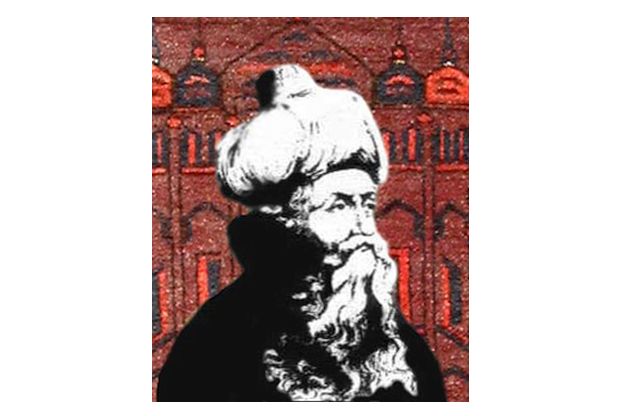


A collection of papers and research on Ibn Arabi’s philosophy, Sufism, and influence on Islamic thought, compiled by Tawseef Ahmad Wani
While today there are many Muslims who believe that Sufism has always led a somewhat marginal existence in Islam, the reality is that the overwhelming majority of the classical scholars were actively involved in Sufism. Ibn Arabi is one of the greatest Sufi philosophers and teachers in the Sufi school of thought. His Sufi doctrine Wahdatul Wajud became the source of inspiration for most of the subsequent Sufis in Islamic spiritual tradition. He explicitly depicted his ideas about God, Man, and the Universe in his own way but in the light of the Islamic framework.
On 11-12 July 2021, a two-day international webinar was orchestrated under the aegis of Syed Hassan Mantaqi Research Academy Awantipora Kashmir on Ibn Arabi. Some distinguished scholars of the valley and abroad presented their meticulously prepared papers followed by a discussion. A total of four papers were presented, two by well-known literary figures of the valley Mohammad Maroof Shah titled “Why Read and Revisit Ibn Arabi?” and “Ibn Arabi on Dialogue.” Gh Rasool Dehalvi presented “Impact of Ibn Arabi on Indian Muslim Mystics.” Prof Lateef Ahmad Shah presented “Ibn Arabi’s Concept of Man.” Later on, three more papers were contributed by reputed scholars: “Ontology and Religious Thoughts of Ibn Arabi in the Context of Islamic Philosophy and Sufism” by Dr Muhammad Umar Riaz, “Ibn Arabi’s Philosophy of Fana” by Prof Raja Zahid Siddiqui, and “Ibn Arabi and the Doctrine of Unity of Being” by Dr Nazir Ahmad Zargar.
All these seven papers were compiled and preserved in the form of a book titled ‘Revisiting Ibn Arabi’ by Tawseef Ahmad Wani. He has expressed his deep gratitude to all the scholars, researchers, teachers, and organizations who encouraged and helped him in compiling and editing this book. The book, boasting a captivating cover, spans 230 pages of premium paper quality published by Vyeth Publishing House J&K. Its proem is written by Dr Hafiz Muhammad Munir, HOD of Islamic and Arab Studies, Nottingham UK. According to him, Ibn Arabi’s legacy, marked by a unique blend of profound intellectual insights and spiritual illumination, has endured across centuries, captivating the minds of scholars, seekers, and philosophers alike. Dr Shah Kawthar Mustafa of the University of Dhaka has applauded the tireless efforts of Tawseef Ahmad Wani in editing this book and is of the view: “Ibn Arabi has many fans and foes among the followers of Islam. Those who correctly grasped his views remained his ardent admirers, while those who failed to understand the subtlety of his thought because of their lack of understanding of the true Islamic worldview were his vehement critics throughout the ages.”
Prominent poet, translator, and writer of the valley, Mushtaq Barq, while commenting on the papers of the book, writes: “After reading all these papers, one has ample chance to rediscover Ibn Arabi by taking recourse to scholars’ views.” Attaullah Fazili, Ex-Chancellor of Ghor University, Afghanistan, has written a detailed and comprehensive afterword of this book. He says: “Revisiting Ibn Arabi is not merely a book, it is a bridge. It bridges the gap between the 13th century and our own, making the profound wisdom of this mystical giant accessible to a new generation.”
Muhammad Maroof Shah, in his paper “Ibn Arabi on Dialogue,” stresses the importance of exploring traditional resources for intercultural and interreligious dialogue. He suggests the importance of bridging the gulf between traditional and modern responsibilities, which seem to be at loggerheads. In this paper, it unfolds that Ibn Arabi provides a basis for genuine dialogue between philosophies and religions, philosophy and theology, tradition and modernity, and also between cultures and civilizations.
Prof Lateef Hassan Kazimi of AMU, in his paper “Ibn Arabi’s Concept of Man,” has made an attempt to highlight Ibn Arabi’s concept of man concerning his metaphysics and mysticism. According to Prof Lateef, Ibn Arabi wasn’t a simple Sufi moral agent but a well-versed mystic in the spiritual techniques and esoteric sciences of the Islamic mystic tradition. According to him, Ibn Arabi is the greatest speculative genius of Islamic Sufism. In this paper, Prof Lateef reveals that Ibn Arabi received the vision of Moses, Jesus, and Muhammad (saw), urging him to leave aside his studies of religious sciences and to pursue the spiritual path.
In another paper, “Impact of Ibn Arabi on Indian Muslim Mystics” by Ghulam Rasool Dehlvi, it is evident that Ibn Arabi has influenced prominent Sufi saints in the Indian subcontinent. Worth noting among those are Hazrat Lal Shahbaz Qalandar in Sehwan and Bulleh Shah, another Muslim mystic of the 18th century Punjabi Sufi poet, who also draws inspiration from Ibn Arabi. Meer Dard, Amir Khusrau, Sheikh Ahmad Sirhandi, Shah Waliullah Dehlvi, and Maulana Ashraf Ali Thanvi all seem to be influenced by the works of Ibn Arabi in one way or another.
The valley of Kashmir is one of the sacrosanct places for mystics. The founder of the Sufi order is believed to be the 14th-century mystic Sheikh Noor Din Wali, widely known as Nund Reshi. Most poetic verses of Nund Reshi depict Ishqi-Haqiqi and Wisal-e-Ilahi. Sheikh ul Alam left a deep spiritual imprint in the teachings of later Reshi-Sufis like Sheikh Hamza, Baba Dawood Khaki, and Baba Naseebudin Gazi.
“Ibn Arabi and the Doctrine of Unity of Being,” written by Dr Nazir Ahmad Zargar, comprises two articles published in the popular English daily Greater Kashmir. According to Dr Zargar, there is a varied standpoint among scholars with regard to Ibn Arabi. For example, Al-Manavi declared him a mujtahid and well-versed in the Sunnah. Sheikh Ahmad Sirhandi calls him Arif bi-Allah. Mian Nazir Hussain calls him Khatm al Waliyah al-Muhamdiyah. However, Al-Sakhavi, Mulla Ali Qari, and Ibn Al-Maqri argue that his writings are clearly against the Shariah. To address this controversial issue, Dr Nazir again says, that almost all scholars who have criticized Ibn Arabi weren’t people of Tasawuf and had not read him seriously.
“Ibn Arabi’s Philosophy of Fana or Annihilation” is another well-articulated paper in this book composed by Prof Raja Zahid Siddiqui of Batangas State University, Philippines. Fana or Annihilation occupies a central position in Sufi philosophy, representing the transcendence of the self and the union with the divine. Prof Raja Zahid declares Ibn Arabi a prolific mystic, philosopher, poet, and Sheikhul Akbar in the Sufi tradition. He undertook extensive travels across the Islamic world to quench his thirst for knowledge. However, his significant influence was arguably his spiritual mentor Abu Yaqub Al-Khizri, who guided Ibn Arabi towards a deeper understanding of Sufism. Prof Zahid has quoted many Quranic verses and sayings of the Prophet in this paper, where the concept of Fana or annihilation has been mentioned.
One more paper, “Ontology and Religious Thought of Ibn Arabi in the Context of Islamic Philosophy and Sufism” by Dr Muhammad Umar Riaz of the National University of Modern Languages, primarily focuses on Ibn Arabi’s ontology, firmly rooted in Islamic metaphysics. This paper explores the interdependent connection between Ibn Arabi’s philosophical study of existence and deep reflection practices within Sufism. In this paper, the author has described Ibn Arabi as a sagacious and astute spiritual guide for Muslims who possessed the dual roles of philosopher and poet.
“Why Read and Revisit Ibn Arabi” is the last and final paper of this book compiled by Muhammad Maroof Shah, who argues that some fear Ibn Arabi, some find him obscure, and some think he was misguided. It is due to this that, in order to see the merit in these assessments, we need to read and revisit him. The argument that people would be misled if we advocate reading Ibn Arabi no longer holds water as there is enough material that has misled people in an age of misinformation and pseudo-spirituality against which Ibn Arabi is one of the best antidotes.
After going through this book, a reader unequivocally reveals that Revisiting Ibn Arabi is an excellent addition to the already more than 700 books written on the life and works of the Sufi scholar, and it offers a fresh exploration of his life and works. This book also removes misconceptions and key criticism of Ibn Arabi.
The writer is a columnist and can be reached at ra***********@***il.com