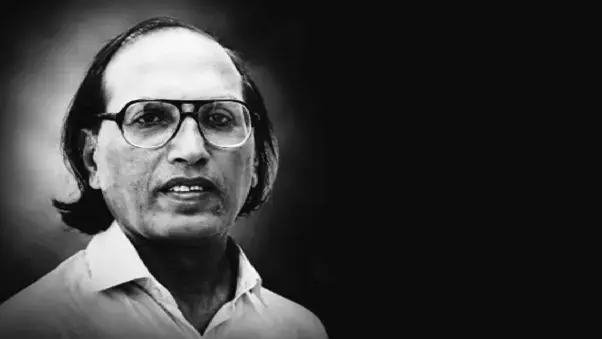


His poetry is not defined by philosophical complexity but by emotional honesty and human closeness. Even in silence, his words continue to speak.
Prof Hamid Naseem Rafiabadi
Bashir Badr stands among the most beloved voices of modern Urdu poetry, a poet who transformed the ghazal into an accessible yet deeply emotional medium of human expression. His poetry does not rely on complexity or heavy symbolism; instead, it speaks in the language of everyday life—love, loss, longing, and the silent pain of changing human relationships.
His work is rooted in simplicity, yet that simplicity carries remarkable depth. It is this balance that made his poetry equally cherished in literary circles and in public mushairas, where his verses became instantly memorable and widely quoted.
Early Life And Academic Background
Bashir Badr was born on 15 February 1935 in Ayodhya, Uttar Pradesh, India. From an early age, he was exposed to a culturally rich environment that shaped his literary sensitivity. He later pursued higher education at Aligarh Muslim University, where he completed his BA, MA, and PhD degrees.
Aligarh played a crucial role in his intellectual development, exposing him to classical Urdu literature as well as emerging modern trends. He later served in the Urdu departments of Aligarh Muslim University and Meerut University, contributing both as a teacher and a scholar.
Literary Formation And Style
Bashir Badr began his poetic journey during a transitional phase in Urdu literature when modern sensibilities were reshaping the traditional ghazal. Instead of choosing extreme abstraction or rigid classicism, he carved out a middle path grounded in emotional clarity.
His poetry is marked by:
Simple, conversational language
Emotional authenticity
Strong visual imagery
Immediate accessibility
He is not a poet of philosophical heaviness, but of emotional truth—someone who translates lived human experience directly into verse.
Bashir Badr And The Mushaira Tradition
Bashir Badr’s popularity is deeply connected with the mushaira culture, where poetry is performed before live audiences. In such gatherings, his style stood out for its softness, clarity, and emotional immediacy.
He did not merely recite poetry; he experienced it on stage. His pauses, tone, and delivery created a powerful emotional connection with audiences. This is why his couplets became part of public memory and everyday speech.
While some critics argue that his poetry lacks philosophical complexity, its strength lies in its emotional accessibility—giving voice to ordinary human feelings in an extraordinary way.
Selected Couplets With Transliteration
1
کوئی ہاتھ بھی نہ ملائے گا جو گلے ملو گے تپاک سے
یہ نئے مزاج کا شہر ہے ذرا فاصلے سے ملا کرو
Transliteration:
Koi haath bhi na milayega jo galay milo ge tapaak se
Yeh naye mizaaj ka shehar hai zara faaslay se mila karo
2
لوگ ٹوٹ جاتے ہیں ایک گھر بنانے میں
تم ترس نہیں کھاتے بستیاں جلانے میں
Transliteration:
Log toot jaate hain ek ghar banane mein
Tum tars nahi khaate bastiyan jalaane mein
3
کچھ تو مجبوریاں رہی ہوں گی
یوں کوئی بے وفا نہیں ہوتا
Transliteration:
Kuch to majbooriyan rahi hongi
Yun koi bewafa nahi hota
4
نہ جی بھر کے دیکھا نہ کچھ بات کی
بڑی آرزو تھی ملاقات کی
Transliteration:
Na ji bhar ke dekha na kuch baat ki
Badi aarzoo thi mulaqat ki
5
پتھر مجھے کہتا ہے مرا چاہنے والا
میں موم ہوں اس نے مجھے چھو کر نہیں دیکھا
Transliteration:
Pathar mujhe kehta hai mera chahne wala
Main mom hoon usne mujhe chhoo kar nahi dekha
6
گھروں پہ نام تھے ناموں کے ساتھ عہدے تھے
بہت تلاش کیا کوئی آدمی نہ ملا
Transliteration:
Gharon pe naam thay naamon ke saath ohday thay
Bahut talaash kiya koi aadmi na mila
7
کئی میل ریت کو کاٹ کر کوئی موج پھول کھلا گئی
کوئی پیڑ پیاس سے مر رہا ہے ندی کے پاس کھڑا ہوا
Transliteration:
Kayi meel reet ko kaat kar koi mauj phool khila gayi
Koi ped pyaas se mar raha hai nadi ke paas khada hua
8
جسے لے گئی ہے ابھی ہوا وہ ورق تھا دل کی کتاب کا
کہیں آنسوؤں سے لکھا ہوا کہیں آنسوؤں سے مٹا ہوا
Transliteration:
Jise le gayi hai abhi hawa woh varaq tha dil ki kitaab ka
Kahin aansuon se likha hua kahin aansuon se mita hua
9
مرے ساتھ جگنو ہے ہم سفر مگر اس شرر کی بساط کیا
یہ چراغ کوئی چراغ ہے نہ جلا ہوا نہ بجھا ہوا
Transliteration:
Mere saath jugnu hai humsafar magar is sharar ki bisaat kya
Yeh chiraagh koi chiraagh hai na jala hua na bujha hua
Books And Literary Contribution
Bashir Badr’s poetic legacy is preserved in several important collections that reflect his artistic journey:
Ikai — his early identity in modern ghazal
Aamad — maturity of expression and thought
Aahat — emotional depth and introspection
Aas — themes of hope and longing
Image — strong visual and imagistic poetry
Roshniyan — symbolic light and optimism
Kulliyat-e-Bashir Badr — complete collection of his poetry
These works collectively form a complete emotional and intellectual biography of the poet.
Awards and Recognition
His contribution to Urdu literature was widely acknowledged:
Padma Shri (1980)
Sahitya Akademi Award (1999)
These honours reflect his national literary significance and enduring influence.
Legacy And Final Years
In his later years, illness reduced his public presence, but his poetry continued to circulate widely in literary gatherings, media, and everyday speech. His verses remained alive in public memory, proving the timeless nature of his expression.
His poetry captures a universal human condition—love, fragility, separation, and hope. Even in silence, his words continue to speak.
Bashir Badr remains one of the most influential modern Urdu ghazal poets, known for transforming simplicity into artistic strength. His poetry is not defined by philosophical complexity but by emotional honesty and human closeness.
His passing is a significant loss to Urdu literature, but his work ensures his eternal presence. He continues to live through his verses, which remain part of everyday language, memory, and emotion.
In the history of Urdu literature, Bashir Badr will always be remembered as a poet of light, simplicity, and heartfelt human truth—an enduring voice that never fades.
—Dr Hamid Naseem Rafiabadi (also known as Dr Hamidullah Marazi) is a distinguished contemporary Islamic scholar whose work significantly contributes to the dialogue between Islamic philosophy and modern Western thought. He is the author of several books. Through a rigorous comparative methodology and an emphasis on epistemological integrity grounded in Tawhid (the oneness of God), Marazi critiques secular paradigms and advocates for an integrative intellectual tradition. His scholarship not only critiques Western thought but also calls for mutual enrichment between traditions, emphasising Islamic metaphysics, ethics, and educational reform as central to contemporary challenges.
ha*********@***il.com