

Schools and NGOs should conduct awareness programs. Parents must monitor screen time and transaction details. Celebrities should be held accountable for promoting betting platforms. The aim is not only to stop addictions but to help our youth live a better and purposeful life. Change begins when we prioritise well-being over illusions.
Wikar Rashid
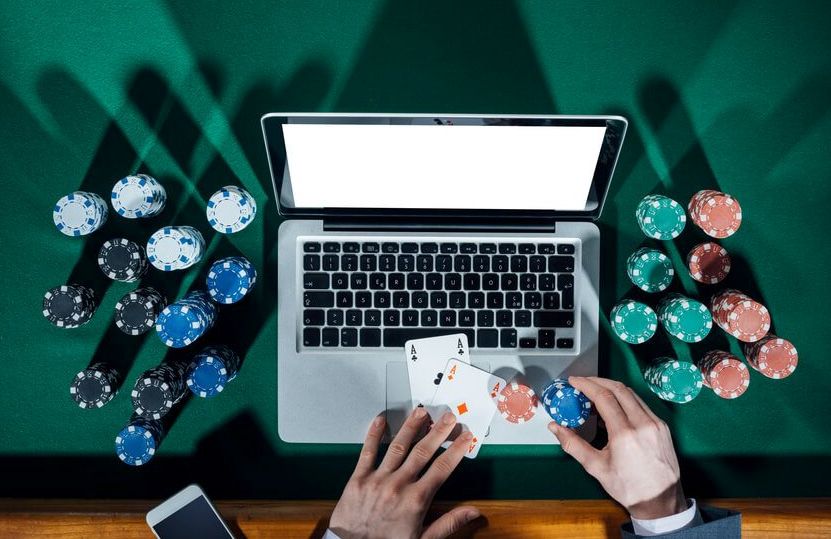
Not all addictions are visible like drugs and alcohol; some hide behind colourful screens, bonuses and illusions of easy money. Online gambling is an addiction which not only drains finances but also wreaks havoc in people’s lives. A click may look easy, but it often leads to empty pockets, strips away peace and leads to a stressful life. It has a deep-rooted effect on the gambler’s life and also on everyone around them.
Gambling doesn’t stop at losing money, but it also affects one’s mental health, relationships, studies and social life. It may look silent, but its damage is long-lasting. It leaves an indelible mark on families, children, and even future generations.
Almost every religion in the world condemns gambling severely. Islam also strictly prohibits gambling. Prophet Mohammad (PBUH) said: “Whoever says to his companion: ‘Come let us play a game of chance or gamble’, should give charity, as atonement.” (Sahih Bukhari). The person who gambles not only ruins worldly life but also the afterlife.
This issue is acutely relevant in the modern tech-based world because of easy access to smartphones, the internet, and betting apps. Apparently, gambling is not limited to casinos; it’s available anytime, anywhere on phones and other devices. Moreover, a lack of strict supervision or surveillance by parents and uncontrolled usage of smartphones by teenagers make it harder to restrain. As a result, gambling or online betting is spreading rapidly among students and teens in particular, making it a serious social issue prevalent in society.
What begins as an entertainment often ends in incurable destruction. Such irreparable harm often leaves families emotionally and economically shattered. Students suffer academic decline due to constant betting. The survey “Young People and Gambling Survey” conducted by the UK Gambling Commission found that children as young as eleven are tempted to try online betting after exposure to celebrity-endorsed gambling content online.
Ironically, celebrities followed and admired by the masses often contribute to normalising these addictions and these betting apps. They often create a false sense of security and glamorise gambling, misleading people into risky activities. The commercialisation or advertisement of these betting apps raises ethical concerns and highlights the need for greater accountability. Fame and fortune should guide society, not mislead it, because temporary allure often leads to permanent regret.
Online gambling often tends to weaken bonds in families and create instability within households. Continuous gambling pushes families into debt and poverty. Mistrust, stress, anxiety, domestic conflicts and confrontations begin to rise. In some extreme cases, it may lead to separation and divorce. Furthermore, parents preoccupied with betting neglect their children, which acts as an obstacle in providing proper guidance, encouragement, and emotional bonding. Such children are easily judged for having low self-esteem and behavioural issues.
Many teens and students participate in or get involved in these addictions or mobile applications before they are of the prescribed age. Breaking age restrictions can lead to a fine or legal trouble. Additionally, some websites or apps operate outside the boundaries of law; using them is illegal in certain countries and may even result in prosecution.
To fund gambling, some people steal, cheat, or commit fraud. Transferring money for betting across countries or accounts illegally may attract legal actions. An initiative taken by the Reserve Bank of India (RBI), in which they monitor suspicious transactions and freeze accounts linked to illegal activities. Banks must report large or unusual transactions under the Prevention of Money Laundering Act (PMLA) 2002. In this Act, accounts up to 21 layers are frozen because of the betting money. Even if someone unknowingly receives money from a flagged account, their account is frozen. This prevents laundering and forces the money trail to be transparent.
Acknowledging the consequences is the first step, but taking the right steps to minimise the severity of these addictions is very important, and these begin with awareness, education and responsibilities. Schools, colleges and NGOS should conduct/start awareness programs about the consequences and solutions of these addictions. Students should be taught about financial management, scams and other long-term consequences. Parents also have responsibilities and duties to monitor the screen time and transaction details of their children, especially teenagers. They should counsel their children, have a good communication environment at home, so children don’t hide such detrimental activities.
Counselling is another and the most effective solution for these problems because betting is not only a bad habit, but it also has a psychological impact on the person. People addicted to these betting apps should go for therapy sessions, communicate with their friends and family, and seek help from support groups. The government should ban and regulate these websites and apps. Celebrities should be held accountable for promoting betting platforms. There could be more healthy alternatives to these apps, especially for children, like sports, fitness, and other creative hobbies. They should be indulged in some productive entertainment, and social gatherings or interactions.
Gambling is widespread and destructive, but is preventable, with the right guidance, awareness, strict governmental intervention and some good alternatives. The aim is not only to stop addictions but to help our youth to live a better and purposeful life. Change begins when we prioritise change over addictions and well-being over illusions.
wi*********@***il.com