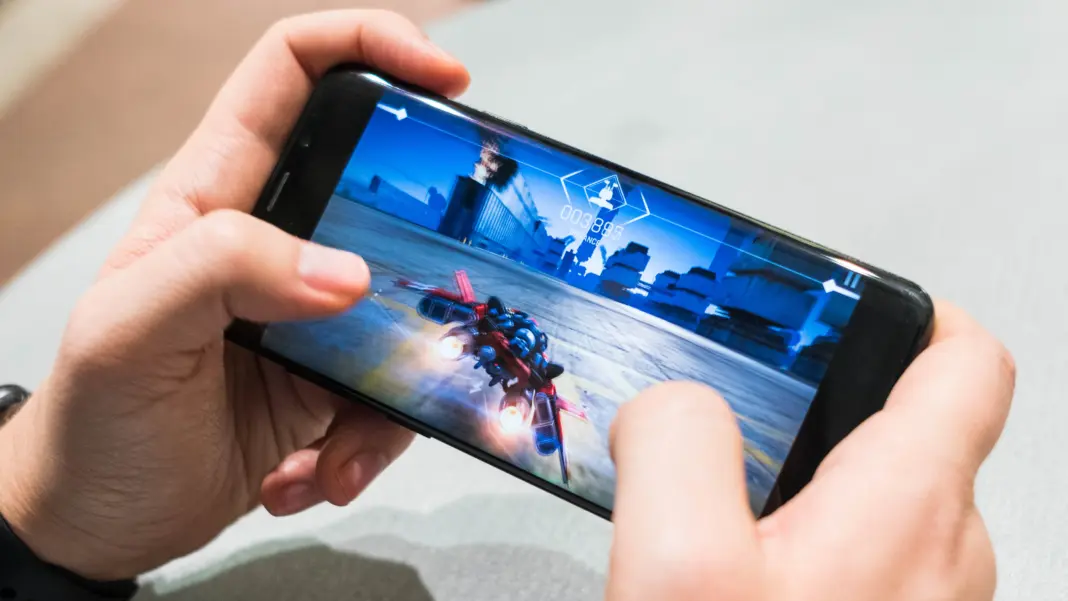


Instead of banning phones completely, parents should set healthy limits on screen time. Encouraging outdoor activities, hobbies, reading, and family interaction can help children maintain balance. Parents must become role models by reducing their own screen usage.
Sahil Jahangir Mir
In today’s fast-moving digital world, mobile phones have become a basic necessity. From communication and education to entertainment and social networking, smartphones are now a part of everyday life. While adults use phones for work and convenience, children have increasingly become attached to mobile devices at a very young age. This growing dependence on screens has sparked serious concerns among parents, teachers, psychologists, and society as a whole. The childhood that once revolved around outdoor games, storytelling, friendships, and family interaction is gradually being replaced by virtual worlds, online videos, and endless scrolling.
There was a time when children spent their evenings running through playgrounds, riding bicycles, flying kites, and playing games like cricket, football, hide and seek, and hopscotch. Streets echoed with laughter, and parks were full of life. Kids returned home tired but happy, carrying memories instead of mobile phones. Families sat together for dinner, grandparents shared stories, and friendships were built face-to-face rather than through social media. That old childhood may not have been filled with technology, but it was rich in human connection, creativity, and emotional bonding.
Today, the picture is very different. Many children begin using smartphones before they even learn to read properly. Parents often hand over phones to keep children quiet, entertained, or occupied. Educational apps, cartoons, online games, and social media platforms have made phones extremely attractive to young minds. While technology itself is not harmful, excessive and uncontrolled use has created several problems affecting children physically, mentally, socially, and emotionally.
One of the most visible impacts of mobile phones on children is the decline in physical activity. Instead of playing outside, many children now spend hours sitting indoors with screens in their hands. This sedentary lifestyle contributes to obesity, poor posture, eye strain, headaches, and sleep disorders. Doctors have warned that excessive screen time can negatively affect a child’s developing body. Blue light from mobile screens also disturbs sleep patterns, especially when children use phones late at night. Lack of proper sleep affects concentration, memory, and academic performance.
Mental health has also become a growing concern. Many children develop addictive behaviour toward mobile phones. They feel restless, irritated, or anxious when their phones are taken away. Online games and social media apps are designed to keep users engaged for long periods, making it difficult for children to disconnect. As a result, attention spans become shorter, and children often struggle to focus on studies or real-life activities. Cases of anxiety, stress, loneliness, and depression among young users have increased significantly in recent years.
Social media has added another layer of pressure on children and teenagers. Platforms that constantly display edited photos, luxury lifestyles, and unrealistic beauty standards can affect a child’s self-esteem. Young users often compare themselves with others and may feel insecure or dissatisfied with their own lives. Cyberbullying has also emerged as a major issue. Hurtful comments, online harassment, and digital peer pressure can deeply affect a child’s confidence and emotional well-being.
Education is another area where mobile phones have shown both positive and negative effects. On one hand, smartphones provide access to online classes, educational videos, digital libraries, and learning tools. During the COVID-19 pandemic, mobile phones became essential for students attending virtual classes. They helped children continue their education during difficult times. However, the misuse of phones during study hours has also become common. Many students become distracted by games, social media notifications, and entertainment apps. Instead of focusing on learning, they often spend more time scrolling through videos or chatting online.
Another major concern is the weakening of family relationships. Earlier, children spent quality time with parents and grandparents, learning values, traditions, and life lessons through direct interaction. Today, family members often sit together while remaining disconnected, each focused on their own screen. Conversations have reduced, and emotional bonding has weakened in many households. Children who spend too much time online may struggle to communicate openly with family members or build strong interpersonal skills.
The old generation often remembers childhood as a time filled with simplicity and genuine happiness. Children created games with simple objects, explored nature, climbed trees, and formed deep friendships without needing internet access. Festivals and holidays were celebrated together with excitement and unity. Even boredom encouraged creativity, as children invented activities and used imagination to entertain themselves. In contrast, many modern children rely on mobile phones for instant entertainment, leaving little room for imagination or independent thinking.
However, blaming technology alone would not solve the issue. Mobile phones are powerful tools, and when used wisely, they can offer many benefits. Children can learn new skills, explore educational content, connect with distant relatives, and gain awareness about the world through technology. The key problem lies in excessive and unsupervised usage. Parents, schools, and society all share responsibility in guiding children toward balanced digital habits.
Parents play the most important role in shaping a child’s relationship with technology. Instead of completely banning phones, parents should set healthy limits on screen time. Encouraging outdoor activities, hobbies, reading habits, sports, and family interaction can help children maintain balance in life. Parents must also become role models by reducing their own screen usage and spending quality time with their children. Open communication is essential so children feel comfortable discussing their online experiences and problems.
Schools can also contribute by spreading awareness about digital safety and healthy phone usage. Teachers should encourage classroom participation, creativity, teamwork, and physical activities that reduce dependence on screens. Workshops on cyberbullying, online privacy, and mental health can educate students about the responsible use of technology.
Governments and technology companies also have responsibilities. Social media platforms and gaming apps should introduce stronger child safety measures and age-appropriate content controls. Awareness campaigns can educate families about the risks of excessive mobile usage. Communities can create safe playgrounds, sports programs, and cultural activities that motivate children to spend more time outdoors.
The challenge of mobile phone addiction among children is not just about technology; it reflects a changing lifestyle and society. Modern life has become busier, and many parents struggle to find time for their children due to work pressures. In such situations, phones often become easy substitutes for attention and companionship. Yet no digital device can replace real human interaction, emotional warmth, or the joy of shared experiences.
Old childhood memories remind us of a time when happiness was found in simple moments, playing under the open sky, sharing homemade snacks with friends, listening to bedtime stories, and laughing freely without worrying about notifications or internet connections. Those memories carry lessons that are still valuable today. Children need freedom to explore the real world, make mistakes, build friendships, and experience life beyond screens.
The future generation will grow up in a world dominated by technology, and avoiding mobile phones completely is neither practical nor necessary. What matters most is teaching children balance, discipline, and responsible use. Mobile phones should remain tools for learning and communication rather than becoming replacements for childhood itself.
As society moves forward, it is important to preserve the essence of childhood that older generations once enjoyed. Technology should support human life, not control it. If families, schools, and communities work together, children can benefit from modern technology while still enjoying the innocence, creativity, and emotional richness that made old childhoods truly memorable.
The writer is an environmental researcher, storyteller and columnist
sa***************@***il.com