

A random reel of Kashmir appears at 3 a.m. The nostalgia strikes. There is guilt now—a quiet, persistent guilt. “How do I allow myself to enjoy this freedom when my family is still struggling to make ends meet? How do I live the life that my sisters and I once dreamed of together, alone?”
Shafiya Showkat Wani
I have always tried to run away, from home, from the walls, the wallpapers, the quiet weariness hidden within even the most pleasant weather, and from the wilderness that both comforted and suffocated me. For twenty-two years of my life, I carried a strange chill in my bones, a voice that kept whispering that I belonged not to Kupwara, not even to Kashmir, and certainly not to my very traditional khandaan, but to the world.
I belonged to the world in the way writers often do. They live within small rooms, at ordinary desks, confined by family and society, yet their words travel freely, everywhere and nowhere at the same time. That was me. Sitting on my bed in the darkness of my room, staring out of a window that only revealed trees and a wild forest that seemed to echo my own restlessness. Every time I felt I could surpass it, it roared back at me.
So I wrote.
I wrote stories believing they would take me to places I had never been. I invented worlds, because who wants to write about a mediocre Kupwara or even the marvellous Kashmir? I wanted my stories to exist in places where imagination was the only passport, where borders dissolved, and identity was shaped by creativity alone.
That is how I always felt, small, confined, and never quite content.
But then I left home, and reality shifted.
I had written stories in confinement, poems born out of stillness and restriction. Now I had freedom, complete, overwhelming freedom, and suddenly, I didn’t know what to do with it. I couldn’t write the way I used to. What was there to write about anymore?
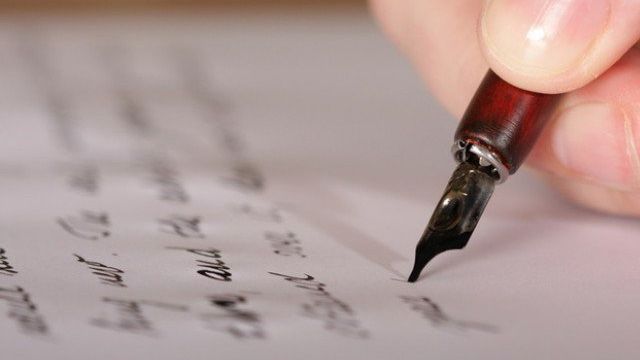
And yet, when I picked up my pen, the first word that came to me was home.
Now, I want to write about what it feels like to be away from home. The kind of nostalgia that strikes at 3 a.m. when a random reel of Kashmir appears on your phone. The ache of calling your family and hearing them talk about fixing a light bulb, gossiping about neighbours, sipping tea in the garden, or searching for room heaters to survive the cold, while I sit here in Delhi, suffocated by heat, longing for a cup of my favourite tea, for a quiet garden, for a rooftop where I could escape and write.
My life is no longer confined in the same way, yet it feels bound by new, invisible constraints.
There is guilt now. A quiet, persistent guilt. How do I allow myself to enjoy this freedom when my family is still struggling to make ends meet? How do I live the life that my sisters and I once dreamed of together, alone? How do I make something meaningful out of this freedom without letting it consume me?
So I write again.
Not stories, not poems, at least not yet, but my reality. My life, which may seem ordinary, yet carries moments of unexpected beauty and quiet joy. Still, every day is a new struggle. I have the freedom to explore, to wander, to watch films, to exist on my own terms, but what am I really gaining? What am I exchanging for my happiness? And where is that happiness, really?
Sometimes I see people from my homeland speaking in Kashmiri, and I want to join them. I want to say, I am from there too. But I stop myself. Why would they care? And even if they did, would they judge me for seeming desperate? But I am not desperate. I am simply homesick.
And homesickness does not mean I want to go back to the life I once tried to escape. It does not make me selfish. It makes me human. A human being willing to endure discomfort, uncertainty, and distance in the hope of building a better life.
Yet the question remains, am I really making my life better?
I never have a clear answer.
But perhaps the fact that I keep asking the question is an answer in itself. It tells me that I am still growing, still searching. That I am like a plant, uprooted, yes, but not yet re-rooted. Or maybe I am becoming something else entirely. A plant that does not need fixed soil, that can exist without belonging to one place alone.
I will write stories again.
But they will be different now. Earlier, my stories were about confinement, about the quiet suffocation of being trapped, about the things that slowly destroy you from within. Now, they will be about beginnings. About life beyond borders, beyond forests, beyond everything that once defined me. About the strange, fragile moments that make you feel alive, even as they threaten to undo you.
They will be about my life.
About being Kashmiri, yet away from Kashmir. About loving Kashmir deeply, and still finding space to love the world beyond it. About belonging, not to one place, but to many.
And perhaps, in the end, about belonging everywhere and nowhere at once.
The writer is pursuing a Master’s in English Literature at Jamia Millia Islamia
sh***********@***il.com