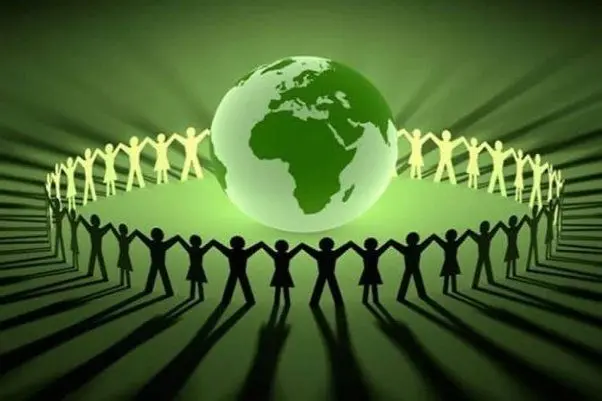


The brightest stars are not only in the sky – they are in the people who strive to learn, create, and contribute
Suhaib Bakshi
Human civilisation did not appear suddenly. It developed gradually over thousands of years as people learned, observed, and shared knowledge. Each discovery, act of creativity, and gesture of care has contributed to the world we live in today. Behind this long journey are individuals who imagined possibilities, worked patiently, and passed their knowledge to future generations. Their efforts form a shared heritage of human learning that connects societies across time and place.
Long before written records and organised cities, early human communities developed methods for growing food, creating tools, and supporting one another. These early innovations in agriculture, cooperation, and resource management helped societies become more stable and organised. Although the names of many of these early innovators are unknown, their contributions laid the foundations for later civilisations to build upon.
In ancient times, scholars in many regions studied mathematics, philosophy, and the natural world. The Greek thinker Pythagoras explored relationships between numbers and geometry. In the city of Alexandria, the scholar Hypatia taught mathematics and astronomy and contributed to the preservation and discussion of scientific knowledge. Across different civilisations, curiosity and learning encouraged the growth of philosophy, science, and education.
During the Renaissance in Europe, interest in science, art, and careful observation expanded significantly. Leonardo da Vinci studied anatomy, engineering, and art with remarkable curiosity. Galileo Galilei used telescopes to observe celestial bodies and made important contributions to astronomy. Johannes Kepler described the mathematical laws that explain the motion of planets around the Sun, strengthening the scientific understanding of the universe.
Scientific discovery continued to advance in later centuries. Isaac Newton formulated the laws of motion and the law of universal gravitation, which helped explain how objects move both on Earth and in space. Marie Curie conducted pioneering research on radioactivity and became the first person to receive two Nobel Prizes in different scientific fields. Their dedication demonstrated the importance of careful observation, experimentation, and persistence in scientific inquiry.
Civilisation has also progressed through compassion, environmental awareness, and service to others. Florence Nightingale helped transform nursing practices and emphasised the importance of hospital sanitation. Wangari Maathai, a Kenyan environmentalist and Nobel Peace Prize laureate, organised tree planting initiatives that supported environmental protection and community development. Jane Goodall devoted decades to studying chimpanzees and contributed greatly to understanding animal behaviour and conservation.
In modern times, advances in technology and communication have further expanded human knowledge and cooperation. Ada Lovelace is widely recognised for her early work on the concept of computer algorithms. Tim Berners Lee invented the World Wide Web, enabling people around the world to access and share information. Katherine Johnson, a mathematician at NASA, performed complex calculations that contributed to the success of early space missions. Innovators such as Bill Gates and Paul Allen, Larry Page and Sergey Brin, Jeff Bezos, and Elon Musk have also influenced modern computing, communication, commerce, and space technology. Science communicator Carl Sagan encouraged millions of people to explore curiosity about the universe through books and television programs.
Across centuries, the efforts of scientists, educators, innovators, caregivers, and environmental advocates show that human progress develops gradually through learning and cooperation. Each generation builds upon the knowledge of those who came before. Civilisation continues to evolve through curiosity, dedication, and a shared commitment to understanding the world and improving society’s well-being. The brightest stars are not only found in the sky above us. They can also be seen in the people who strive to learn, create, and contribute to the advancement of humanity.
ba*************@***il.com