

An honest introspection is needed: disunity, sectarianism, and the gap between ideals and reality weaken the Ummah. The Qur’anic path is justice, compassion, and unity. The strongest response is ethical conduct.
Prof Hamid Naseem Rafiabadi
Islamophobia has emerged as one of the most widely debated social and political issues in the contemporary world. In many public discussions, the phenomenon is often attributed almost entirely to Western governments, political institutions, and the media. Undoubtedly, geopolitical rivalries, ideological conflicts, and certain segments of Western media have contributed to the negative portrayal of Islam, particularly in the aftermath of dramatic global events such as the September 11 attacks. The climate of fear and suspicion that followed those attacks significantly shaped public perceptions of Muslims and Islam in many Western societies. However, while external political agendas and media narratives have played an undeniable role in fostering Islamophobia, it would be intellectually incomplete and morally unproductive for Muslims to assume that the problem lies solely outside the Muslim world. A more honest and constructive approach requires sincere self-reflection and internal critique within the Muslim community itself.
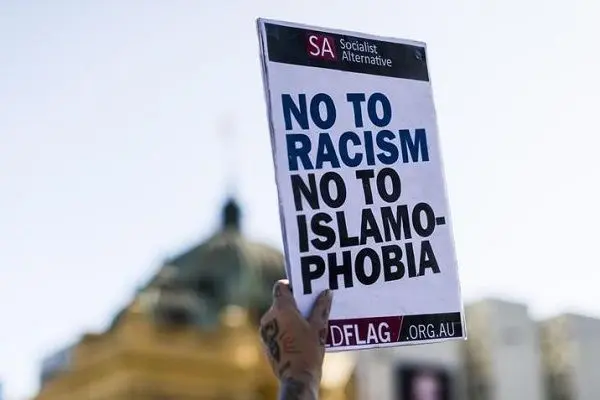
Islamophobia, broadly understood, refers to prejudice, hostility, or discrimination directed toward Islam and Muslims. It manifests in various forms, including hate crimes, discriminatory policies, cultural stereotyping, and persistent negative portrayals in media and political discourse. In several Western societies, Muslims have faced increased suspicion and marginalisation, particularly after violent incidents carried out by individuals claiming to act in the name of Islam. Governments have sometimes introduced security measures that disproportionately affect Muslim communities, while political rhetoric in certain contexts has framed Islam as a civilizational challenge to Western values. Such developments have undoubtedly contributed to the spread of Islamophobic sentiments in many parts of the world.
Yet, a meaningful response to Islamophobia requires Muslims to move beyond a purely defensive posture. While it is essential to challenge injustice, discrimination, and misrepresentation, it is equally necessary to examine internal weaknesses that may have inadvertently contributed to the negative perception of Muslims. The Qur’ān consistently encourages believers to practice self-accountability and moral introspection. Islamic ethics emphasise that social reform begins with personal and collective self-correction. Without such introspection, criticism of external forces becomes incomplete and may even hinder genuine transformation.
One of the most visible challenges facing the Muslim world today is the persistent problem of disunity. Instead of presenting the universal message of the Qur’ān and the Sunnah through collective strength and moral integrity, the Muslim world often appears fragmented along sectarian, ethnic, and political lines. Sectarian divisions, ideological rivalries, and regional conflicts have weakened the sense of solidarity within the global Muslim community. In many cases, Muslims identify themselves more strongly with sectarian labels than with the broader ethical and spiritual mission of Islam. Such fragmentation not only undermines internal cohesion but also projects an image of discord and instability to the outside world.
The Qur’ān strongly warns believers against such divisions and calls for unity grounded in faith and moral purpose. The command to “hold firmly to the rope of Allah altogether and not become divided” serves as a powerful reminder that unity is not merely a political aspiration but a spiritual obligation. When Muslims allow internal disputes to escalate into hostility and rivalry, they weaken their collective moral authority and obscure the universal message of Islam.
Closely related to this issue is the rise of sectarianism and factionalism. In many Muslim societies, religious identity has become intertwined with narrow ideological loyalties. Instead of recognising the diversity of legitimate interpretations within Islamic scholarship, some groups insist on rigid and exclusive understandings of the religion. Those who differ are often dismissed or marginalised. Such attitudes create an atmosphere of intolerance within the Muslim community itself and undermine the spirit of intellectual openness that historically characterised Islamic civilisation.
Classical Islamic scholarship was marked by a remarkable tradition of intellectual pluralism. Muslim scholars recognised the legitimacy of scholarly disagreement (ikhtilāf) in matters of jurisprudence, theology, and interpretation. The great jurists of Islam developed distinct legal schools while maintaining mutual respect and acknowledging the sincerity of each other’s reasoning. Differences of opinion were regarded as a sign of intellectual vitality rather than a cause for division. Scholars debated vigorously yet upheld the values of humility, courtesy, and scholarly integrity.
In contrast, many contemporary debates within the Muslim community have become increasingly polarised. The influence of social media, ideological activism, and political polarisation has sometimes amplified intolerance and hostility toward differing viewpoints. Instead of engaging in thoughtful dialogue, individuals may resort to denunciation or attempts to silence dissenting perspectives. This restrictive intellectual climate undermines the rich scholarly tradition that once defined Islamic civilisation.
Another factor contributing to the problem is the gap that sometimes exists between Islamic ideals and the lived realities of Muslim societies. Islam places profound emphasis on justice, compassion, integrity, and moral responsibility. The life of the Prophet Muhammad ﷺ represents the highest model of ethical conduct. His character embodied patience, mercy, humility, and forgiveness even toward those who opposed him. The Qur’ān presents him as the most exemplary model of moral excellence for humanity.
However, in several Muslim-majority societies, social realities often fall short of these ideals. Issues such as corruption, political instability, authoritarian governance, and social injustice continue to affect many regions of the Muslim world. While these problems are not unique to Muslim societies, they nonetheless shape external perceptions of Islam. Observers who witness internal conflict and governance failures may mistakenly associate these issues with the teachings of Islam itself rather than recognising them as deviations from Islamic principles.
The challenge, therefore, is not merely to defend Islam intellectually but also to demonstrate its ethical teachings through lived example. The most effective response to Islamophobia cannot rely solely on political rhetoric or media campaigns. Rather, it must emerge from the moral transformation of individuals and communities. When Muslims embody the ethical teachings of the Qur’ān—justice, honesty, compassion, and respect for human dignity—they offer the most compelling testimony to the universal values of Islam.
Education plays a crucial role in this process of renewal. Many misconceptions about Islam arise from ignorance, both within and outside the Muslim world. At the same time, educational institutions in some Muslim societies have not always fostered critical thinking, intellectual openness, or engagement with contemporary challenges. Revitalising Islamic education requires integrating classical scholarship with modern intellectual inquiry. Scholars and educators must cultivate a culture of dialogue, research, and ethical reflection that reflects the dynamic spirit of early Islamic intellectual life.
Equally important is the need for Muslims to engage constructively with the broader global community. Islam has a long and rich history of interaction with diverse civilisations and religious traditions. Throughout history, Muslim societies have coexisted and collaborated with Christians, Jews, Hindus, Buddhists, and others in various intellectual and cultural contexts. Reviving this tradition of respectful engagement is essential in an increasingly interconnected world.
At the same time, Muslims must also confront extremist interpretations that distort the message of Islam. Violent groups claiming religious justification have caused immense harm not only to global security but also to the image of Islam itself. Their actions have provided ammunition to those who portray Islam as inherently violent. Scholars and community leaders, therefore, bear a responsibility to challenge such distortions and reaffirm the ethical foundations of Islamic teachings.
While acknowledging internal shortcomings, it is equally important not to ignore the external forces that contribute to Islamophobia. Political conflicts, geopolitical rivalries, and ideological agendas often shape narratives about Islam in international media and policy discourse. Some political movements have exploited the fear of Muslims to mobilise support or justify restrictive policies. Addressing Islamophobia, therefore, requires both internal reform and principled advocacy against injustice.
Muslim intellectuals, scholars, and community leaders must actively participate in shaping public discourse about Islam. Through engagement with academic institutions, media platforms, and interfaith initiatives, they can help present a more balanced and accurate understanding of Islamic teachings. Such engagement should highlight the universal values of justice, compassion, and human dignity that lie at the heart of the Qur’ānic message.
Ultimately, the most effective response to Islamophobia lies not merely in defending Islam through arguments but in demonstrating its principles through action. When Muslims cultivate knowledge, practice justice, uphold compassion, and engage respectfully with others, they embody the true spirit of their faith. Such moral integrity has the power to transform perceptions and challenge stereotypes more effectively than any rhetoric.
If Muslims sincerely return to the ethical teachings of the Qur’ān and the exemplary character of the Prophet Muhammad (SAW) —demonstrating humility, knowledge, justice, and compassion—the response to Islamophobia will emerge naturally from their conduct. A community that lives according to the highest moral standards becomes its own strongest argument. Through unity, ethical excellence, and intellectual openness, Muslims can not only counter negative perceptions but also revive the moral credibility and spiritual vitality that once distinguished Islamic civilisation.
—Dr Hamid Naseem Rafiabadi (also known as Dr Hamidullah Marazi) is a distinguished contemporary Islamic scholar whose work significantly contributes to the dialogue between Islamic philosophy and modern Western thought. He is the author of several books. Through a rigorous comparative methodology and an emphasis on epistemological integrity grounded in Tawhid (the oneness of God), Marazi critiques secular paradigms and advocates for an integrative intellectual tradition. His scholarship not only critiques Western thought but also calls for mutual enrichment between traditions, emphasising Islamic metaphysics, ethics, and educational reform as central to contemporary challenges.
ha*********@***il.com