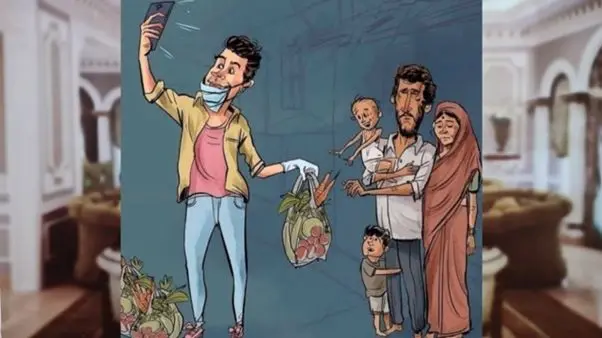


As Ramadan giving reaches new heights, the poor remain where they were. Something has gone wrong.
Nasreen Hamza Ali
There is no shadow of doubt that Ramadan is not an ordinary month but a sacred and exceptional period, regarded as the most virtuous among all months. It is a precious gift bestowed by the Creator, a time when Muslims walk the path of faith with simplicity, humility, and spiritual awareness. Throughout this month, believers engage in devotion and compassion, fulfilling religious responsibilities through charity, zakat, and voluntary giving according to their means.
For people of faith, self-accountability becomes essential during Ramadan, as Islam places belief in divine unity at the centre of human existence. A believer recognises God as the Creator and Sustainer of the universe, and through reflection continues a lifelong search for meaning and truth. Faith not only nurtures awareness but also instils responsibility toward society.
Yet an important question arises. In this sacred month that promotes sacrifice, empathy, and social equality, how is the wealthy class utilising zakat and charitable contributions? Are these efforts genuinely reducing inequality and empowering the needy, or have they become ritual practices detached from their true spirit?
Despite vast resources and influence, sections of affluent society often fail to meet the ethical ideals envisioned by Islam. A culture of outward display increasingly overshadows sincerity. While religious philosophy may be eloquently expressed, the priority frequently shifts toward social media visibility rather than moral transformation.
During Ramadan, food packages sufficient for a month are distributed among the poor, while elaborate iftar gatherings are organised for affluent circles. This raises a fundamental question: What kind of charity does this represent? Temporary assistance may offer relief, but it does not eliminate poverty. Access to education remains limited, employment opportunities remain scarce, and structural inequalities persist.
The issue is not charity itself but the absence of sustained, long-term efforts aimed at real change. Poverty cannot be addressed through seasonal generosity alone. Ramadan is a month of moral consciousness, and the character of believers reflects the condition of society. The need of the hour is not accusation but reform, not complaint but collective introspection supported by purposeful strategy.
A practical framework is essential, one that ensures free and modern education for underprivileged children, dignified employment opportunities for youth, and accessible healthcare for vulnerable communities. When poverty drives young generations toward despair and education becomes inaccessible, society must honestly examine how charitable wealth is being used.
Distributing aid while publicising it through videos and online content often shifts the focus from service to recognition. Increasing social awareness has led many self-respecting individuals to reject assistance that compromises dignity. A charity that undermines human honour contradicts the very essence of compassion.
Addressing poverty requires moving beyond symbolic generosity toward structural solutions rooted in integrity and foresight. Economic weakness contributes to educational backwardness and limits the ability of communities to adapt to modern realities. As opportunities diminish, constructive engagement gives way to frustration and negative thinking.
Unfortunately, zakat and charitable giving are frequently confined to Ramadan, while social service becomes a means of publicity. Temporary gestures, such as single-day iftar events or short-term food distribution, cannot resolve deep social challenges. Sustainable change demands investment in education, skill development, and economic empowerment.
Islam seeks to cultivate ethical human beings, not merely religious imagery on social media. Charity is meant to be humble and sincere, given so discreetly that even one hand remains unaware of what the other gives. God judges intentions rather than appearances, and acts performed for display risk losing their spiritual value.
The affluent must therefore move beyond self-constructed mindsets and adopt organised, long-term planning. Supporting education, offering interest-free assistance, and creating opportunities for economic self-reliance can bring meaningful transformation. Such efforts become a lasting charity whose benefits continue across generations.
The welfare of the poor remains the true path toward spiritual fulfilment, inner peace, and enduring moral reward. Genuine compassion, sustained commitment, and responsible use of wealth embody the true spirit of Ramadan.
The writer is a poet, author and social activist
na***********@***il.com