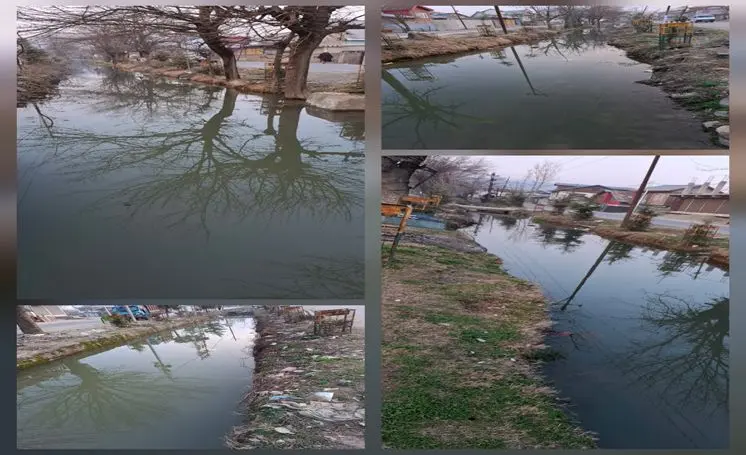


The canal can only be saved when those who live along it decide to protect it
Waseem Akhter Dar
Once celebrated as a lifeline of north Kashmir, the Zaingair Canal stood as a symbol of prosperity, sustenance, and harmony between nature and human need. For decades, this canal served as a major source of irrigation and drinking water for the people of Bandipora, Zaingair, Sopore, and adjoining areas. Its waters nourished fields, quenched thirst, and supported livelihoods, making it an indispensable part of daily life and local economy.
Tragically, this once-beautiful canal has been reduced to a waste drain today. Years of neglect, unchecked pollution, and irresponsible human behaviour have pushed it to the brink of collapse. Household garbage, plastic waste, construction debris, sewage, and all kinds of refuse are routinely dumped into the canal. What was once a source of life has now become a carrier of filth, disease, and environmental degradation.
The consequences of this apathy are alarming. The canal’s water flow is obstructed, embankments are weakening, and the risk of complete structural collapse looms large. If this happens, the region will face severe consequences, acute water scarcity, loss of agricultural productivity, ecological imbalance, and immense hardship for future generations. The day is not far when, if corrective steps are not taken, we will be left with misery and regret, and nothing else.
Yet, all is not lost. There is still hope if we choose introspection over indifference. Saving the Zaingair Canal requires a collective awakening. We must acknowledge that throwing waste into this canal is not merely an environmental crime but a moral and social sin. It is an injustice to nature, to our children, and to future generations. On the Day of Judgment, every individual will be held accountable for the mess created through carelessness and greed.
It is high time for each one of us to play our role. Stop treating the canal as a dumping ground. Practice responsible waste disposal. Educate children and neighbours about the importance of preserving water bodies. Community vigilance, local initiatives, and public participation can bring meaningful change.
At the same time, this is a humble yet urgent appeal to the government and concerned departments to treat this as a burning issue. Strong measures are needed, including regular cleaning, strict enforcement against encroachments and dumping, restoration projects, and sustainable management of the canal. However, governmental efforts alone will not suffice. People must support the government wholeheartedly, because a canal can only be saved when those who live along it decide to protect it.
Let us not convert a priceless heritage into a permanent scar. Let us save the Zaingair Canal, not just for ourselves, but for the future generations who deserve clean water, fertile land, and a healthy environment. The choice is ours: destruction through neglect, or revival through responsibility.
The writer is a librarian at the Department of School Education
wa**************@***il.com