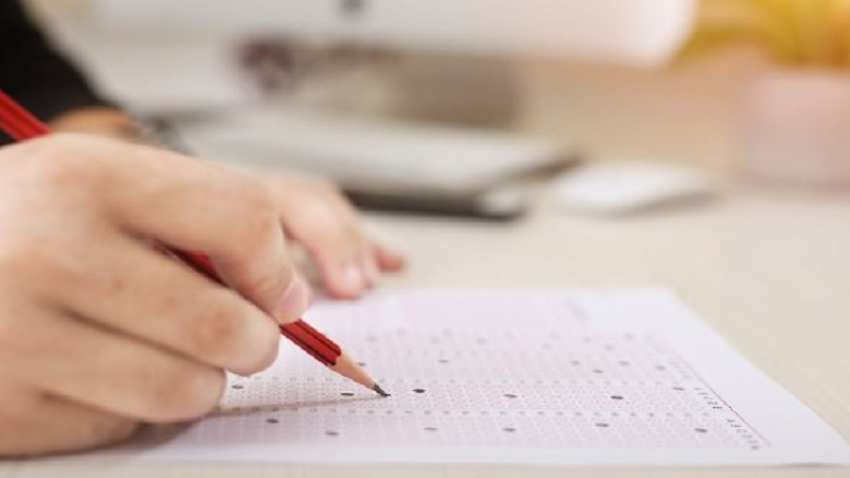


Cheating persists not because students are clever, but because teachers allow it. This normalisation is a foundational lesson in moral decay with lifelong consequences.
Aaqib Ashraf
Examinations are not merely tests of learning. They are tests of patience, honesty, discipline, and personal character. An exam reflects more than what a student knows; it reflects whether a student has learned integrity along with information. In theory, the examination hall is supposed to be the purest space in the education system. In practice, however, a silent crime takes place every year, every season, in almost every institution: cheating allowed by the very people who are supposed to prevent it.
From my 10th standard days to my final semester of university, I have repeatedly seen one thing remain constant: the soft-heartedness, the negligence, or the deliberate silence of many teachers, invigilators, and examiners. The faces changed, the schools changed, the subjects changed, even the level of study changed, but the behaviour hardly changed. And although I deeply disliked it, I could not stop it. At that age, and even now, I ask myself: Why should I get into this? What authority do I have?
But silence does not erase reality. And the reality is simple: cheating in our exam halls survives not because students are geniuses at manipulation, but because the adults responsible for maintaining discipline look away.
A System Where Looking Away Feels Normal
Cheating rarely happens in dramatic ways. Most often, it happens in small, everyday, almost ordinary scenes that almost every student in India has witnessed.
The general pattern is the same everywhere:
An invigilator sits quietly at the front, absorbed in a newspaper or phone.
Students exchange whispers in low voices, believing, correctly, that no one will stop them.
When someone tries to copy from a fellow student, the teacher glances once and then pretends not to have seen.
Some invigilators walk from one corner to the other but deliberately avoid checking desks or the backs of answer sheets.
Students pass tiny chits under the desk or show answers from behind their hands while the room remains completely undisturbed.
A teacher stands near the window or at the door, talking to another teacher, while the entire class solves the paper together in silent coordination.
Sometimes, the invigilator warns: “Do whatever you do quietly, just don’t create noise.”
None of these are exaggerated scenes. These are general, common realities that any student will recognise. It is this normalisation; this everyday acceptance, that is the real danger.
The Soft-Hearted Invigilator: A Silent Enabler
There is a particular type of teacher that I have seen repeatedly: the soft-hearted invigilator. They are not corrupt. They are not cruel. They are usually respected, kind, and gentle people. They genuinely believe they are helping students by not being strict. They think:
“What difference does it make?”
“Let them manage, exams are stressful.”
“Everyone copies in one way or another.”
But this soft-heartedness, especially during exams, is not kindness. It is harmful.
A teacher who looks away intentionally teaches students a bigger, more dangerous lesson than anything written in a book: Dishonesty is acceptable if someone allows it.
This is the foundation of moral decline. A student who grows up believing that shortcuts work will eventually become an adult who believes the same; in jobs, in relationships, in society, in responsibility.
Why Do Teachers Allow Cheating?
The reasons may vary from school to school, exam to exam, but the pattern is almost universal:
1. Fear of conflict
Some teachers avoid strictness because they don’t want arguments or disturbance in the hall. They don’t want students complaining or causing a scene.
2. Pressure from administration
Many institutions want high pass percentages. Strict invigilators are often discouraged because their strictness “reduces results.”
3. Emotional leniency
A teacher sometimes thinks that by allowing copying, they are helping weaker students. They forget that real help lies in teaching, not in allowing dishonesty.
4. Laziness or negligence
Some invigilators simply want the exam to end peacefully.
No disturbance = No responsibility = No effort.
5. Normalisation
When everyone around is looking away, it becomes easy to do the same.
The Real Cost Of This Negligence
Allowing cheating harms far more than just the fairness of an exam. Its consequences ripple through a student’s entire life.
1. It destroys fairness
Hard-working students get suppressed by those who inflate marks through dishonest means.
2. It produces incompetent professionals
A student who cheats today might become:
a doctor who doesn’t know vital concepts,
an engineer who cannot solve a problem,
a lawyer who never actually learned the law.
Society eventually pays the price.
3. It kills confidence
Students who copy do not trust their abilities. They grow dependent on shortcuts.
4. It promotes corruption
Dishonesty learned in school is reflected later in workplaces and institutions.
5. It damages the credibility of education
If exam results cannot be trusted, the entire purpose of education collapses.
Why Many Of Us Stay Silent
As a student, even though I disliked what was happening, I never raised my voice.
Because I wondered:
“Why should I interfere?”
“It is not my responsibility.”
“What can one student do?”
Most students think the same. Speaking up feels awkward. It feels like inviting trouble. And so, silence becomes easier, and cheating becomes normal.
Teachers And Invigilators Are The Real Line Of Defence
The truth is, students behave according to the environment created for them.
A strict, alert invigilator can turn even the most undisciplined class into a silent, honest room.
A careless invigilator can turn even a good class into a place of shortcuts. When an invigilator walks seriously through the rows, checks desks, watches carefully, and enforces rules, students immediately fall in line. When a teacher looks away, the entire class takes advantage.
In short:
The character of an exam hall reflects the character of the invigilator.
What Needs To Change
Institutions must value integrity more than pass percentages.
Invigilators should be trained in responsibility and ethics.
Teachers must understand that soft-heartedness during exams is not kindness; it is harmful. Students must be taught that honesty in exams shapes honesty in life.
A Humble Request To Every Teacher And Invigilator
To every teacher, invigilator, and examiner, you do not just supervise exams. You shape the moral backbone of every student in that room. Your silence becomes their permission. Your strictness becomes their discipline.
Please do not let cheating become a routine event.
Please do not let kindness become negligence.
Please do not look away when the future of honesty is right in front of you.
A single teacher with integrity can change the atmosphere of an entire examination hall.
A single invigilator’s seriousness can remind 100 students that values still matter.
For the sake of fairness, for the sake of education, and for the sake of the society we are all part of, please be strict when it matters the most.
Because one honest invigilator today can create a generation of honest adults tomorrow.
aa***********@***il.com