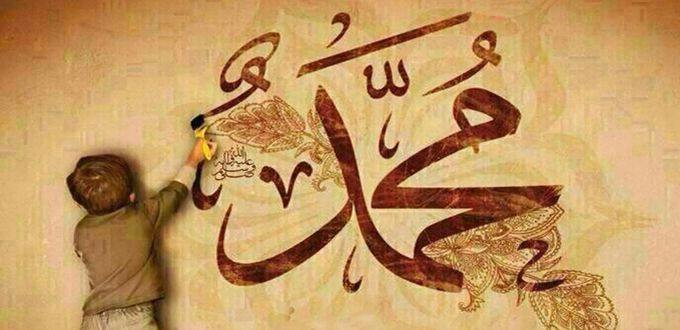


His (SAW’s) life exemplifies divine guidance, justice, compassion, and strategic foresight, and inspires principled leadership across all spheres today
By Prof Hamidullah Marazi (Hamid Naseem Rafiabadi)
Leadership, from the Islamic perspective, is not merely the act of directing people or achieving organisational goals; it is a sacred trust (Amanah) grounded in accountability, justice, and service to others. Among all historical figures, Prophet Muhammad (peace be upon him) exemplifies the ideal model of leadership—one that combines moral integrity, visionary thinking, humility, and administrative competence. Recognised universally, both by Muslims and non-Muslims, as one of the most influential leaders of all time, the Prophet’s life offers a comprehensive blueprint for contemporary leadership in all spheres—social, political, economic, and spiritual.
- Leadership Rooted in Divine Guidance
Unlike conventional leadership paradigms that evolve from personal ambition or secular ideologies, the Prophet’s leadership was divinely guided. The Qur’an identifies Muhammad (SAW) as both a messenger and a leader entrusted with the moral and social upliftment of humanity. Allah says:
“Indeed, in the Messenger of Allah (Muhammad SAW), you have a good example to follow…” (Surah Al-Ahzab, 33:21)
This verse highlights the Prophet’s role not only as a spiritual guide but also as an exemplary model of conduct, decision-making, and leadership. Every action he took was guided by revelation and divine wisdom, making his leadership infallible in intent and unparalleled in impact.
- Visionary and Strategic Leadership
A defining trait of Prophet Muhammad’s (SAW) leadership was his clear vision. He envisioned a society grounded in Tawheed (Oneness of God), justice, equality, and compassion. Despite being born into a society plagued by tribalism, polytheism, and social injustices, he transformed it into a unified community (Ummah) governed by divine law and ethical principles.
From the secret preaching in Makkah to the migration (Hijrah) to Madinah and the establishment of the first Islamic state, the Prophet demonstrated remarkable strategic foresight. He navigated threats, negotiated treaties (such as Hudaybiyyah), and built coalitions that secured both the survival and the growth of Islam. His vision was not confined to immediate gains; he planned for long-term sustainability and the eventual global reach of the Islamic message.
- Shura (Consultation) and Participatory Leadership
Prophet Muhammad (SAW) was a leader who practised consultative leadership (Shura). Even though he received divine revelation, he valued the opinions of his companions and often consulted them in important matters. Allah instructed him: “…and consult them in affairs. Then, when you have taken a decision, put your trust in Allah…” (Surah Al-Imran, 3:159)
During the Battle of Uhud, the Prophet adopted the advice of younger companions to confront the enemy outside Madinah, even though he personally preferred another strategy. This decision, though resulting in temporary loss, reinforced a culture of mutual respect, inclusion, and transparency—values essential for modern leadership.
- Justice and Fairness
The Prophet (SAW) upheld justice (Adl) as a central pillar of his leadership. His administration did not discriminate based on tribe, ethnicity, or social class. He declared: “Even if my daughter Fatima were to steal, I would cut off her hand.” (Sahih Bukhari)
This uncompromising stance on justice ensured public trust and social stability. The Qur’an also commands: “O you who believe! Stand out firmly for justice… even if it be against yourselves or your parents…” (Surah An-Nisa, 4:135)
This divine injunction was embodied perfectly by the Prophet in his leadership decisions, both in private arbitration and state governance.
- Compassion, Empathy, and Servant Leadership
The Prophet’s leadership was characterised by deep empathy and compassion. He was not a leader who ruled with an iron fist; instead, he was gentle, forgiving, and approachable. Allah reminds us: “And by the mercy of Allah, you dealt with them gently. Had you been severe or harsh-hearted, they would have broken away from you…” (Surah Al-Imran, 3:159)
He never distanced himself from the common people, often sitting, eating, and walking among them. He would personally visit the sick, console the bereaved, and even perform menial tasks without hesitation. This servant-leadership style made him deeply beloved and respected among his followers.
- Promoter of Freedom of Thought
Contrary to the authoritarian models of leadership, the Prophet (SAW) allowed freedom of expression and welcomed critique. His companions freely questioned his decisions, and he never silenced dissent when expressed respectfully. As noted by Patwary (2003), the four rightly guided Caliphs, trained under the Prophet’s tutelage, upheld this principle. Hazrat Umar (RA) thanked Allah for having people who would correct his errors—a direct legacy of the Prophet’s leadership ethos.
- Dependence on Allah (Tawakkul) with Strategic Planning
While the Prophet planned meticulously for all endeavours—from battles to treaties—his trust always remained in Allah. This perfect balance between strategic planning and divine reliance defines the Islamic concept of Tawakkul. As Ather (2008) notes, a true leader must act with diligence but depend on Allah for outcomes. This was evident during the Hijrah when the Prophet hid in the cave of Thawr while trusting in Allah’s protection despite being pursued by enemies.
- Accountability and Sincerity
Prophet Muhammad (SAW) held himself accountable to Allah and his people. He never abused power for personal gain. His sincerity—Ikhlas—was evident in every act, from leading prayers to distributing war booty. He emphasised that leaders are shepherds responsible for their flocks and will be questioned about their leadership on the Day of Judgment.
“Every one of you is a shepherd, and every one of you is responsible for his flock…” (Sahih Bukhari & Muslim)
This accountability transcends political leadership and forms a moral compass for anyone in a position of authority.
- Dignity of Labour and Esprit de Corps
The Prophet (SAW) emphasised the dignity of labour, stating:
“Pay the worker his wages before his sweat dries.” (Al-Hadith)
He recognised the value of every role in society, from manual labourers to commanders. Moreover, he cultivated team spirit among his companions. During the construction of the mosque in Madinah or digging the trench during the Battle of Khandaq, he worked side-by-side with his followers, embodying humility and shared responsibility.
“The Hand of Allah is with the Jama’ah (team).” (Sunan Al-Tirmidhi)
This principle of esprit de corps is essential for any organisational or community leader, highlighting the importance of collaboration and unity.
Conclusion
Prophet Muhammad (SAW) was not just a religious figure; he was a leader par excellence, whose life remains a guiding light for all facets of leadership—whether in governance, management, community organisation, or spiritual guidance. His model integrates ethical values, strategic acumen, emotional intelligence, and servant-leadership into a unified whole. In today’s volatile and complex world, where leadership is often marred by self-interest and ethical compromises, the Prophet’s legacy offers a timeless framework rooted in justice, compassion, and divine guidance. As such, his life and leadership continue to inspire not just Muslims but all who seek a principled and purpose-driven approach to leadership.
—Dr Hamidullah Marazi (also known as Hamid Naseem Rafiabadi) is a distinguished contemporary Islamic scholar whose work significantly contributes to the dialogue between Islamic philosophy and modern Western thought. He is the author of several books. Through a rigorous comparative methodology and an emphasis on epistemological integrity grounded in Tawhid (the oneness of God), Marazi critiques secular paradigms and advocates for an integrative intellectual tradition. His scholarship not only critiques Western thought but also calls for mutual enrichment between traditions, emphasising Islamic metaphysics, ethics, and educational reform as central to contemporary challenges.
ha*********@***il.com