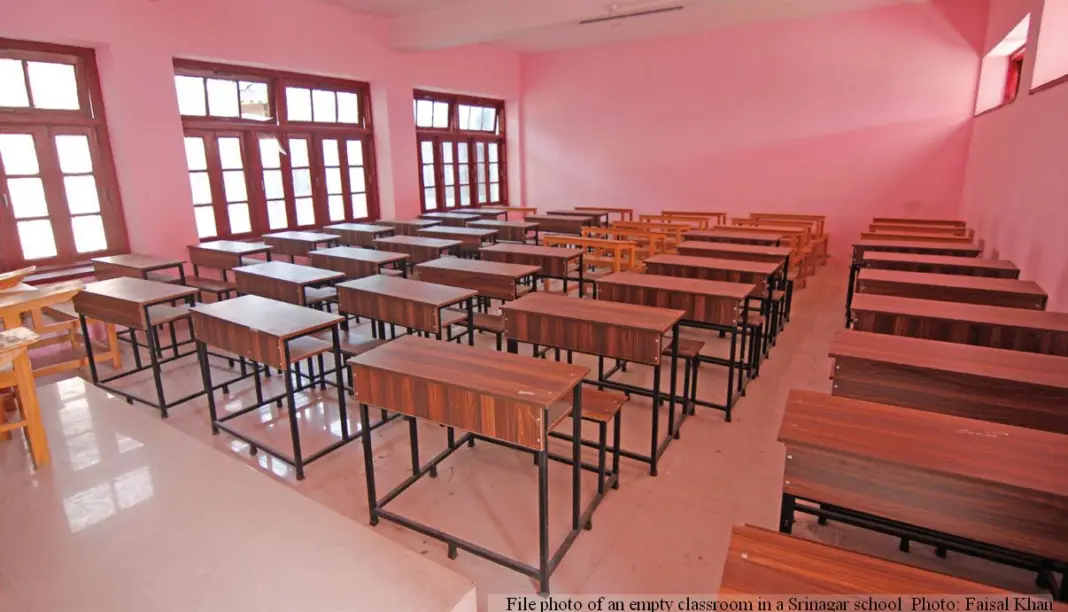


Modern classrooms no longer feel like places of enlightenment. Instead, they’ve become hollow shells—where attendance is mandatory, but actual learning is optional.
Recently, during a microbiology class, I witnessed something that struck me deeply. A girl, sitting quietly in her hijab, with a tasbeeh in her hand, watched a Hollywood movie on a tablet gifted by her parents—for the purpose of studying. The contradiction couldn’t have been clearer: sacred symbols on the outside, but a complete disconnection from the values they represent inside.
Sadly, she wasn’t alone in this. Across the room, students waited—not for knowledge, but for the final PowerPoint slide that says “Thank You”. That slide doesn’t signify the end of a meaningful lecture anymore. It’s a signal of freedom. A release from the burden of forced attendance.
Today’s students don’t attend classes to learn. They attend to avoid shortage notices, cancelled viva marks, or internal grade penalties. The classroom has become a space of silent suffering, where fear overrides curiosity. Asking questions is now considered risky—students who dare to raise doubts are often punished later in viva voce or labelled as troublemakers.
On the other side of the equation, teachers themselves arrive unprepared. PowerPoint presentations have replaced textbooks, and even those are often copied from someone else. Lectures are rushed, concepts unclear, and practical engagement nearly zero. In many cases, it feels as if the teacher is remembering the content along with the students.
And what about the practicals? They have become ceremonial. Over a hundred students are forced into labs designed for a fraction of that number. No small groups, no personal guidance, and no real observation. The idea of “learning by doing” has become “learning by crowding.”
A deeper issue lies in the silent injustice unfolding behind these crowded labs. Students who earned their place through competitive entrance tests are made to share limited resources with students who entered through donation quotas. In the name of institutional growth, quality is being sacrificed at the altar of quantity. It’s not just unfair—it’s academic fraud.
Teachers struggle to manage. Genuine students struggle to breathe. Meanwhile, administrators celebrate increased “enrollment.”
And amidst all of this chaos lies another monster: attendance politics. Proxy attendance, cancellations, and warnings have made classrooms more about tracking presence than ensuring understanding. When fear becomes the reason for showing up, learning naturally disappears.
This is not an isolated problem. It’s a system-wide collapse.
We’ve upgraded our tools—smartboards, portals, tablets, and high-speed internet. But we’ve downgraded our intent. The soul of education—curiosity, integrity, mentorship, and sincerity—has quietly faded.
The old chalk and duster days may seem primitive now. But at least they carried dignity. Teachers prepared. Students respected the classroom. Questions were welcome. Practicals were meaningful. And learning was alive.
When both teaching and learning become performative, when questions are punished and shortcuts are rewarded, education doesn’t fail dramatically—it dies silently.
The writer is a Vet student at FVSc, Shuhama
Sahil Majeed
sa************@***il.com