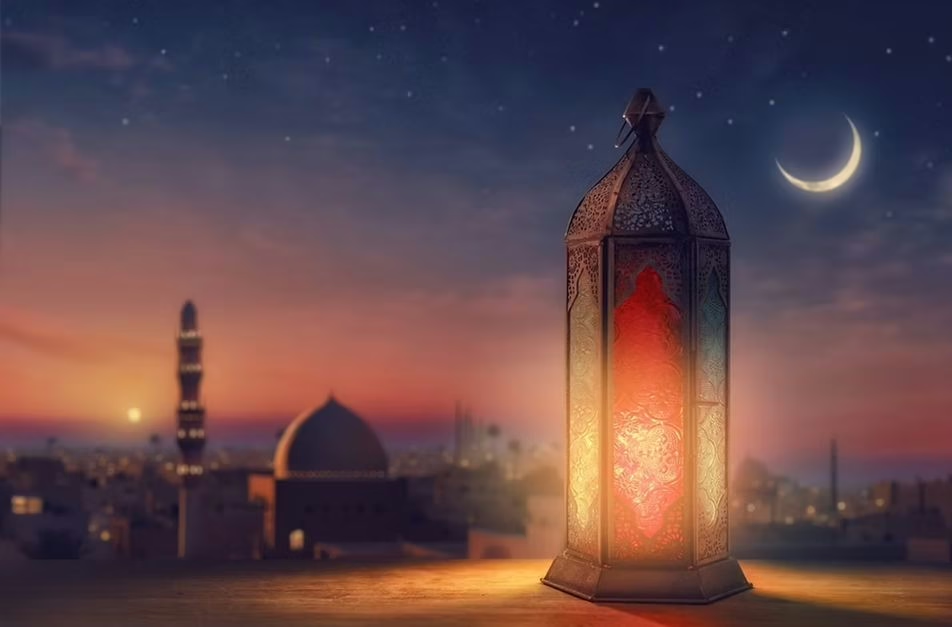


As millions of Muslims around the world prepare to celebrate Eid ul-Fitr, this article explores the historical significance, religious practices, and cultural customs associated with the festival. Marking the end of Ramadan, Eid ul-Fitr emphasizes the values of charity, gratitude, and community, drawing from teachings in the Quran and Hadith. Discover how this joyous occasion fosters unity, reflection, and a renewed commitment to faith among believers.
Eid ul-Fitr, often simply referred to as Eid, is one of the most significant religious holidays in Islam, marking the end of Ramadan, the holy month of fasting. This joyous occasion is celebrated by millions of Muslims around the world and serves as a reminder of the values of gratitude, community, and spiritual renewal. In this article, we will explore the historical significance, religious practices, and cultural customs associated with Eid ul-Fitr, referencing relevant teachings from the Quran and Hadith to provide a comprehensive understanding of this important celebration.
Historical Context of Eid ul-Fitr
The term “Eid” means festival or celebration in Arabic. Eid ul-Fitr, which translates to the “Festival of Breaking the Fast,” is celebrated on the first day of Shawwal, the month following Ramadan in the Islamic calendar. The origins of Eid ul-Fitr can be traced back to the time of Prophet Muhammad (peace be upon him), who established it as a communal holiday for Muslims in Medina after his migration from Mecca.
The spiritual significance of Eid ul-Fitr is deeply rooted in the ideals of charity and gratitude. During the month of Ramadan, Muslims fast from dawn until sunset, engaging in prayer, reflection, and acts of kindness and compassion. The fast is not merely a physical exercise but a means to develop self-discipline, empathy for those less fortunate, and a closer relationship with God. Eid serves as a culmination of these efforts.
Quranic Teachings on Eid ul-Fitr
The Quran emphasizes the importance of gratitude, charity, and community, all of which are core themes of Eid ul-Fitr. The observance of the festival is closely linked to the payment of Zakat al-Fitr, a form of charity given to the needy before the Eid prayer. This is supported by the following Hadith:
Narrated by Ibn Abbas: The Prophet Muhammad (peace be upon him) said: “The Messenger of Allah (peace and blessings be upon him) ordained Zakat al-Fitr as a purification for the fasting person and as food for the needy. Whoever pays it before the prayer, it is accepted as Zakat, and whoever pays it after the prayer, it is just a form of charity.” (Sunan Abu Dawood, Book 9, Hadith 1576)
This Hadith highlights the necessity of giving Zakat al-Fitr before attending the Eid prayer, ensuring that those in need can partake in the festive meals of the day.
The Quran articulates the principles of gratitude in the following verse: “And remember when your Lord proclaimed: ‘If you give thanks (by accepting faith and worship), I will give you more of My Bounty; but if you deny (My Blessings), verily My punishment is indeed severe.’” (Quran 14:7)
This verse reflects the significance of gratitude, particularly in the context of the blessings bestowed upon Muslims during Ramadan, culminating in the joyous occasion of Eid ul-Fitr.
The Significance of Community in Eid ul-Fitr
Eid ul-Fitr is not only a personal celebration but also a communal one. It reinforces the bonds of brotherhood and sisterhood among Muslims, fostering a spirit of unity and solidarity. The Eid prayer, performed in congregation, is an essential aspect of the celebration. Muslims dress in their finest clothes and gather in mosques or open fields to perform the special Eid prayer.
The Prophet Muhammad (peace be upon him) emphasized the importance of gathering for prayers on this occasion: “Pray in your homes, for the best prayer of a person is in his home, except for the obligatory prayer.” (Sahih Muslim)
While this Hadith highlights the merits of praying at home, it should be noted that Eid prayers are distinct from the regular prayers and are intended to be performed in community settings to strengthen communal ties.
The Rituals of Eid ul-Fitr
- Preparation for Eid
In the days leading up to Eid ul-Fitr, Muslims prepare for the celebration by purchasing new clothes, gifts, and sweets. Families clean their homes and decorate them to create a festive atmosphere. It is customary to visit the graves of loved ones, reflecting on the transient nature of life and praying for those who have passed away.
- Zakat al-Fitr
As previously mentioned, the giving of Zakat al-Fitr is a critical element of Eid ul-Fitr. This charitable contribution is generally given in the form of food items or money to ensure that all members of the community can enjoy the festivities. The amount is often set at the cost of basic food items such as dates or barley.
- Eid Prayer
On the morning of Eid, Muslims perform the Eid prayer, which consists of two units (rakats). This special prayer is usually followed by a sermon (khutbah) delivered by the imam. It is encouraged for Muslims to perform the prayer in congregation, highlighting the communal spirit that Eid fosters. The prayer can be offered in mosques or open fields and is typically held after sunrise but before noon.
The Prophet Muhammad (peace be upon him) used to emphasize the significance of attending the Eid prayer, urging Muslims to participate in the gathering for the sake of community and gratitude.
- Celebration and Festivities
After the prayer, Muslims often greet one another with wishes of “Eid Mubarak” (Blessed Eid) and exchange hugs. Families come together to share festive meals, which often include traditional dishes and sweets. This time of sharing and food reflects the spirit of gratitude and communal ties present during Eid.
Customs surrounding Eid ul-Fitr can vary in different cultures, but the underlying theme remains the same: celebrating the blessings of life, community, and faith.
Cultural Expressions of Eid ul-Fitr
Eid ul-Fitr is celebrated in diverse ways across the world, with each culture incorporating its unique traditions. In many countries, the end of Ramadan is marked by public celebrations, such as fairs and festivals featuring music, dancing, and traditional performances.
In South Asia, for instance, families often prepare elaborate dishes, including biryani, kebabs, and a variety of sweets such as seviyan (sweet vermicelli) to mark the occasion. In the Middle East, the celebration may include communal feasts known as “Iftar,” where families and neighbors gather to enjoy meals together.
The Spirit of Eid ul-Fitr: Reflection and Renewal
Eid ul-Fitr serves as a reminder for Muslims to reflect on their spiritual journeys during Ramadan. The month of fasting is not just about abstaining from food and drink; it is about developing patience, humility, and a greater consciousness of God. Eid is an opportunity to express gratitude for the guidance and strength received during this time.
As the Quran states: “And He will give you another blessing, for which you have not asked.” (Quran 65:7)
This verse encourages believers to maintain faith in Allah’s bounties, nurturing a continuous sense of gratitude beyond the celebration of Eid.
Eid ul-Fitr is a profound occasion that encapsulates the principles of gratitude, community, and spiritual renewal inherent in Islam. It not only marks the conclusion of Ramadan but also serves as a reminder of the blessings bestowed upon Muslims and the importance of sharing those blessings with others.
Through the observance of Zakat al-Fitr, communal prayers, and festive gatherings, Eid ul-Fitr demonstrates the essence of Islamic teachings that emphasize charity, thankfulness, and unity. As Muslim communities around the world celebrate this joyful occasion, they reaffirm their commitment to faith, family, and a sense of belonging that transcends geographical boundaries.
In conclusion, Eid ul-Fitr is not just a celebration; it is a reflection of the values and principles that guide the lives of Muslims, a time for renewal, and an opportunity for all to come together in love and unity.
References:
- Sahih Muslim
- Sunan Abu Dawood
- The Holy Quran