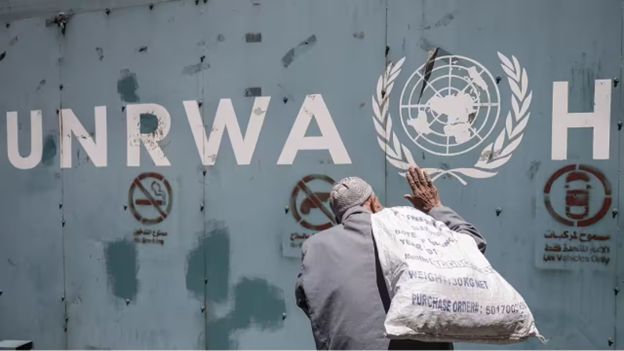


Israel’s sweeping new legislation targets the heart of UNRWA’s operations, raising the stakes for Palestinian refugees and the future of international aid in the region.
In recent months, Israel has instituted draconian legislation designed to curtail the operations of the United Nations Relief and Works Agency for Palestine Refugees in the Near East (UNRWA). These actions are emblematic of a broader, systematic endeavour to fundamentally reconfigure the narrative surrounding Palestinian refugees and to confront enduring grievances regarding the agency’s pervasive role in the geopolitical landscape. This legislative initiative epitomizes a deliberate strategy to fundamentally reconfigure the discourse surrounding Palestinian refugees and to confront what the Israeli government regards as entrenched grievances regarding UNRWA’s significant role in the regional landscape.
UNRWA has been entrenched for over seventy years, dispensing essential services such as education, healthcare, and social support to Palestinian refugees. While it has served as an indispensable lifeline, it has concurrently morphed into a contentious focal point. Critics, particularly from the Israeli government, assert that UNRWA perpetuates the refugee status of Palestinians and engenders narratives that are fundamentally antithetical to Israeli interests. They contend that the agency’s existence exacerbates a pervasive culture of victimhood and subverts prospects for peace by obstructing the assimilation of refugees into their host countries.
The recent Israeli laws impose draconian restrictions on UNRWA’s operations, intent on stifling its funding and constraining its activities within Israeli-controlled territories. Among these measures are regulations that categorically prohibit financial support from private entities and foreign governments, a tactic meticulously designed to preclude resources from being allocated to initiatives perceived as antagonistic to Israeli interests. Moreover, the legislation mandates enhanced transparency from UNRWA, necessitating comprehensive disclosures regarding its funding and expenditures. The Israeli government contends that these measures are imperative to mitigate the risk of aid being diverted to facilitate terrorism or propagate anti-Israel narratives.
The ramifications of these newly instituted restrictions are profoundly consequential. For the millions of Palestinian refugees dependent on UNRWA’s services, a potential decline in support could exacerbate already dire humanitarian crises. Many of these refugees reside in overcrowded camps with severely limited access to fundamental necessities, and the erosion of UNRWA’s services could precipitate heightened poverty, healthcare deficits, and a dearth of educational opportunities. Critics caution that the diminishment of UNRWA may engender greater instability in the region, as humanitarian catastrophes frequently catalyze resentment and unrest. Moreover, the legislation has incited widespread censure from the international community. Numerous humanitarian organizations and sovereign states regard UNRWA as a critical linchpin in cultivating stability and delivering indispensable support in a tumultuous region. They assert that constraining its operations could profoundly obstruct efforts toward a diplomatic resolution of the Israeli-Palestinian conflict. The agency’s role transcends mere provision of aid; it functions as an essential conduit for dialogue and mutual understanding, both of which are paramount in a landscape rife with entrenched mistrust.
This predicament precipitates pivotal inquiries concerning the future of UNRWA and the rights of Palestinian refugees. Many within the international community assert that these laws manifest a brazen violation of the humanitarian principles integral to UNRWA’s mission. By endeavouring to delegitimize the agency, Israel endangers the further marginalization of an already beleaguered population, thereby exacerbating the intricate challenges inherent in pursuing a viable peace.
The systemic marginalization of Palestinian refugees exacerbates their suffering and poses severe challenges to any semblance of peace in the region. A sustainable resolution necessitates an unyielding commitment to confronting the entrenched injustices faced by all parties, especially the most vulnerable. The international community must urgently rally to fortify UNRWA and ensure that Palestinian refugees are not silenced or overlooked. It is imperative to confront the pervasive inequities that perpetuate this cycle of despair; only then can we aspire to dismantle the barriers to a just and lasting peace. Anything less is a tacit endorsement of ongoing oppression and instability.
A Call to Action
The time for half-measures and complacency is irrevocably past. A just and enduring peace in the region is only achievable if the international community confronts the brutal realities of oppression faced by Palestinian refugees with relentless urgency and unshakeable resolve. We must shatter the oppressive barriers that keep them marginalized and voiceless. Anything less is not merely an affront to human rights; it is a profound betrayal of the very essence of peace.
This is a clarion call: the world cannot afford to turn a blind eye while these injustices fester. It is imperative that we engage in unwavering collective action, demanding accountability and transformation. Only then can we hope to forge a future where justice reigns and the dignity of every individual is fiercely defended. The moment for decisive, uncompromising action is now; complacency is complicity in the continuation of this tragic cycle.
We cannot flinch from the brutal truths of this conflict; we must confront them with unyielding fortitude. Only through an unwavering commitment to justice—rooted in unvarnished acknowledgement, reparations, and sincere dialogue—can we aspire to forge a future where equity and dignity indisputably prevail. There can be no evasion of these harsh realities; we must face them resolutely to dismantle the entrenched structures of oppression that have endured for far too long. The time for decisive action is now; anything less is a capitulation to injustice.
By Nusrat Jan
nu*************@***il.com