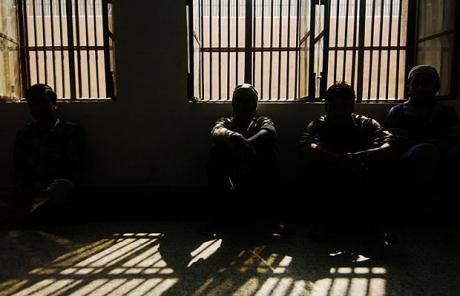


There is an urgent need to reform India’s prisons and protect the rights of undertrials and convicts
India primarily believes in the principle of reformation of offenders rather than punishment. One of the cardinal principles of criminal jurisprudence in India is the presumption of innocence; an accused is to be presumed innocent until proven guilty. The presumption of innocence is a basic human right. The conditions of prisons in India are very poor, and they should be working towards an objective that facilitates the protection of Fundamental Rights for both undertrials and convicted prisoners.
The prisons in India lack adequate infrastructure to serve the aim and objective of punishment, which is the reformation of offenders. The evolving criminal jurisprudence now aims at the rehabilitation of the offender. Whether our present prison system, as an institution, is ready for this is subject to introspection. Factually, our prisons are overcrowded, and lack adequate infrastructure, and instances of torture and inhumane treatment of prisoners also exist.
We don’t find sufficient writings on the sufferings of individuals that occur in devastating ways inside prison walls. That’s because the system does not want you to know. It’s easier for us to compartmentalize our thinking and believe that all those behind bars are monsters of one kind or another—undeserving of kindness or consideration.
Life inside a mass-scale incarceration complex has cancerously overgrown what is needed to keep us safe. A system so overpopulated that it cannot deliver effective rehabilitation even if it had the will to do so. A system so large that the disproportions between prisoners and staff mean that staff must maintain an atmosphere of unceasing intimidation. Prisoners who might be helped by social services treatment or mental health care but face daily dehumanization are left to shape much of the day-to-day culture and mores of the institution. The daily traumatic experience of living in overcrowded, loud, and always potentially dangerous conditions in the prison dehumanizes the inmates.
We consistently fail to acknowledge that conviction and imprisonment, while perhaps bringing comfort to the direct and obvious victims of crime, set off another series of victimizations—of the families and loved ones of the men and women sent to prison. From the inside, no matter how well-incarcerated people cope with life in prison, and no matter how many moments of peace they achieve for themselves, much of the pain that imprisonment creates is endured by those beyond the incarcerated people’s reach.
Removing some individuals from their families and communities may be necessary, but we delude ourselves if we believe that this removal, especially when carried out on a mass scale, only reduces and does not also precipitate crime. Maintaining supportive connections with family on the outside is not only one of the surest indicators that incarcerated people will succeed when they return from prison, but such connections also help break the generational cycle of incarceration. There are and should be consequences for the commission of a crime.
If we claim that convicted criminals do not “deserve” to maintain such connections, we must also ask whether incarcerated people’s sons and daughters, sisters, brothers, mothers, and grandmothers deserve this loss, or if families and neighbourhoods deserve to be eviscerated by mass imprisonment.
Health care in prison is a serial tragedy. A Supreme Court judge has declared that, due to overcrowding, the inadequacy of mental and physical health care afforded to men and women incarcerated in prisons constitutes cruel and unusual punishment; it was these conditions that moved the Supreme Court to order the state to reduce its prison population. Health care throughout Indian prisons is inadequate even when available, often exacerbating rather than ameliorating both temporary and long-term suffering.
No one feels the stakes of prison transformation more intimately than the prison’s inhabitants. An overhaul in the system is needed to make improvements that would turn the prisons into a more functional, safe, and socially constructive institution—for staff, inmates, and the public at large. What occurs inside prisons today has been left to prisoners and outnumbered, undertrained, and lethally overstressed staff to manage without meaningful oversight.
Treatment and mental and physical health care are tragically inadequate in prison. Congestion in jails, particularly among undertrials, has been a major concern, reflecting poorly on the system. Corruption by prison staff, and its less aggressive corollary, guard corruption, is common in Indian jails. The overcrowding in prisons leads to inhuman living conditions for inmates.
The majority of the jails in India do not have well-planned prison programs providing daily structured activities, vocational training, pre-discharge guidance, and post-prison monitoring for prisoners. Poor budgeting for health and care in prison, and a lack of good and efficient lawyers on legal aid panels, are concerns. The torture, brutal physical treatment, and abuse of prisoners are other chronic problems in the prisons of India.
The basic dignity of an undertrial or convicted person must be given proper respect, which is guaranteed under human rights laws. Protections of such dignities are mentioned in the Universal Declaration of Human Rights as well as under Article 21 of the Indian Constitution. The provisions for the security of prisoners mentioned in jail manuals must be followed strictly, and well-equipped and trained prison staff should be appointed to ensure safety measures. Judicial officers must conduct regular and timely inspections of the jails to take firsthand appraisals of the conditions.
Law enforcement agencies, courts, and civil administration must work together to ensure effective social rehabilitation of inmates. There is a need to take measures to modernize jails and make them technologically adept with stringent security. The measures required to introduce better living and health facilities, libraries, and training programs for prisoners to help them reintegrate into society, and initiatives to promote mental development cannot be neglected. To address the issue of prison overcrowding, the undertrial population must be reduced drastically, and this cannot happen without the courts and police working together.
The Government of India set up a Committee in 1980 on Jail Reforms under the Chairmanship of Justice A. N. Mulla. The Mulla Committee submitted its report in 1983 and recommended prominent reforms such as: improving prison conditions by providing proper food, clothing, and sanitation; training and organizing prison staff into different cadres; setting up an All India Service called the Indian Prisons & Correctional Service; making after-care, rehabilitation, and probation an integral part of prison service; allowing the media and public inside prisons and allied correctional institutions frequently so that the public may have firsthand information about prison conditions and be willing to cooperate in rehabilitation work; reducing the number of undertrials to a bare minimum and keeping them separate from convicts and hard criminals; and reducing the population of undertrials and first-time detainees by speeding up trials and liberalizing bail provisions.
Although various bodies and organizations have studied the problems of prisons in India and laws have been made to improve jail conditions, many problems still plague our prisons. In many cases, prisoners come out of jails as hardened criminals rather than as reformed wrongdoers willing to join mainstream social processes. Experts must be invited to prisons to conduct proper counselling sessions to correct prisoners’ behaviours. The mindset of prison staff must change. The prison staff must be well-disciplined and respect the human rights of prisoners. Prison reform is not just about prison buildings but what goes on inside them that needs to be changed. The focus must be on the human rights of prisoners as well as on improving their behaviour.
The writer is a columnist