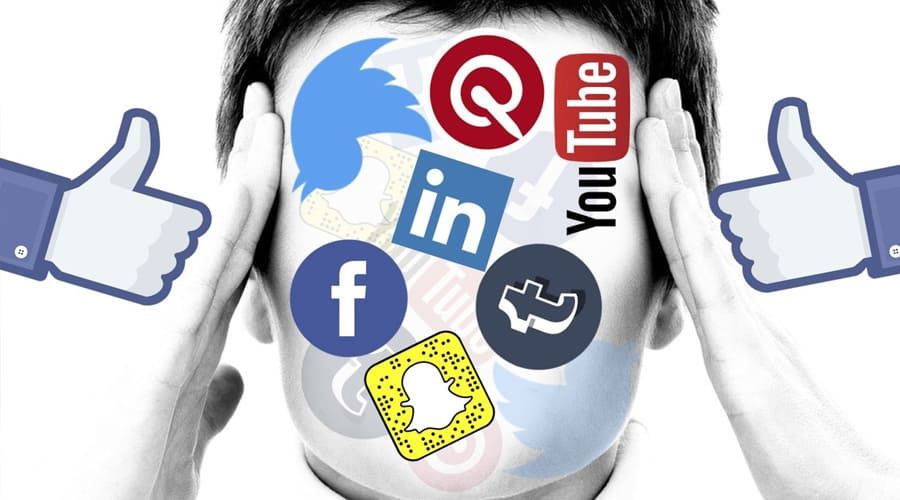


In the modern world, social media has become as common as electricity and as unavoidable as air. From dawn till midnight, millions of people wake up to notifications, scroll endlessly through reels and videos, react impulsively to headlines, and measure their lives through digital approval. What was once introduced as a revolutionary tool to connect humanity has gradually transformed into a powerful psychological ecosystem that shapes emotions, opinions, attention spans, relationships, political behaviour, and even brain function itself.
Dr Aashaq Hussain Bhat
In the modern world, social media has become as common as electricity and as unavoidable as air. From dawn till midnight, millions of people wake up to notifications, scroll endlessly through reels and videos, react impulsively to headlines, and measure their lives through digital approval. What was once introduced as a revolutionary tool to connect humanity has gradually transformed into a powerful psychological ecosystem that shapes emotions, opinions, attention spans, relationships, political behaviour, and even brain function itself.
The phrase “social media rots your brain” may sound exaggerated or sensational at first glance. Still, an increasing body of neuroscientific, psychological, and sociological evidence suggests that the concern is neither imaginary nor trivial. The issue is not merely about wasting time online. Rather, it concerns the slow restructuring of human cognition, emotional resilience, and social interaction under the influence of algorithm-driven digital platforms designed primarily to maximise user engagement and corporate profit.
Human civilisation has always been shaped by communication technologies. The printing press expanded literacy, radio transformed public discourse, and television altered culture and politics. However, social media differs fundamentally from previous technologies because it is interactive, personalised, addictive, and omnipresent. Unlike traditional media, social media platforms continuously monitor user behaviour, collect psychological data, and use artificial intelligence to manipulate attention. Every click, pause, reaction, and comment becomes part of a vast behavioural profile that predicts what will keep a person online for longer durations.
The human brain evolved over millions of years in environments that demanded sustained attention, face-to-face interaction, patience, and gradual learning. In contrast, modern social media platforms bombard users with rapid visual stimuli, instant rewards, and endless novelty. Neuroscientists have increasingly linked this pattern to alterations in dopamine regulation within the brain’s reward circuitry. Dopamine is often described as the “feel-good” neurotransmitter, but more accurately, it governs motivation and anticipation. Each notification, like, or viral video creates a small reward signal that encourages repeated checking behaviour. Over time, the brain begins craving constant stimulation, much like it does in other forms of behavioural addiction.
This phenomenon is particularly dangerous for adolescents and young adults whose brains are still developing. The prefrontal cortex, which controls decision-making, impulse regulation, and critical thinking, matures relatively late in life. Excessive exposure to fast-paced digital content during these developmental years can impair concentration, reduce emotional control, and weaken deep cognitive processing. Many teachers across the world now report that students struggle to focus on long readings, analytical discussions, or uninterrupted classroom learning. Attention spans appear increasingly fragmented as minds become conditioned to consume information in short bursts lasting only seconds.
The decline in deep attention is not a minor inconvenience; it has profound implications for education, innovation, and democracy itself. Scientific discovery, philosophical thinking, and meaningful creativity require prolonged concentration. A society unable to focus deeply risks becoming intellectually shallow, emotionally reactive, and vulnerable to misinformation. Social media platforms thrive on speed rather than accuracy. False information often spreads faster than truth because sensationalism attracts stronger emotional reactions. In such an environment, outrage becomes profitable while nuance becomes invisible.
The psychological consequences are equally alarming. Numerous studies have associated excessive social media use with anxiety, depression, loneliness, sleep disturbances, and low self-esteem. Ironically, platforms designed to “connect” people are increasingly linked with emotional isolation. Digital interaction cannot fully replace the emotional richness of human presence, eye contact, empathy, and physical companionship. Many individuals now maintain hundreds of online connections while simultaneously experiencing profound loneliness in real life.
A major driver of this emotional crisis is the culture of comparison. Social media rarely reflects ordinary reality. Instead, it presents carefully edited fragments of success, beauty, luxury, and happiness. Users compare their unfiltered lives with the curated highlights of others and often conclude that they are inadequate. Young people are particularly vulnerable to body-image dissatisfaction, social anxiety, and feelings of failure triggered by unrealistic online standards. The pressure to appear perfect has intensified a silent epidemic of emotional distress.
The commercialisation of attention has also reshaped human identity itself. Increasingly, people perform their lives for audiences rather than experience them authentically. Vacations become photo opportunities, relationships become public content, and personal worth becomes linked to digital validation. The pursuit of likes and followers subtly alters behaviour, encouraging sensationalism, narcissism, and emotional exhibitionism. Human experiences that once possessed intimacy and privacy are now converted into commodities for online consumption.
Social media’s influence extends beyond individual psychology into the fabric of society. Political polarization has deepened globally due to algorithmic echo chambers that expose users primarily to information reinforcing their existing beliefs. Instead of encouraging dialogue, many platforms amplify division because emotionally charged content generates higher engagement. Anger, fear, and outrage keep people online longer than calm and balanced discussion. Consequently, societies become fragmented into hostile ideological tribes incapable of constructive conversation.
The rise of misinformation represents another grave challenge. During public health emergencies, elections, and international conflicts, misleading narratives spread rapidly through social networks. Scientific misinformation, conspiracy theories, and fabricated news can influence millions within hours. The COVID-19 pandemic revealed how digital misinformation could undermine healthcare systems, fuel vaccine hesitancy, and endanger public safety. In an age where information spreads faster than scientific verification, digital literacy has become as essential as traditional literacy.
Children today face unprecedented exposure to harmful content, cyberbullying, and online exploitation. Unlike previous generations, many children enter the digital world before developing emotional maturity or critical judgment. Continuous exposure to violent, sexualized, or manipulative material can affect psychological development and social behaviour. Cyberbullying, in particular, has emerged as a major public health concern, contributing to trauma, anxiety, and in severe cases, self-harm and suicide among vulnerable adolescents.
Another underappreciated consequence of social media is its effect on sleep and neurological health. Blue light emitted from screens suppresses melatonin production, disrupting circadian rhythms and impairing sleep quality. Chronic sleep deprivation affects memory, immunity, mood regulation, and cardiovascular health. Yet millions of people continue scrolling late into the night, sacrificing restorative sleep for fleeting digital stimulation. Sleep scientists increasingly warn that poor sleep patterns associated with excessive screen use may contribute to rising mental health problems among youth.
Despite these concerns, it would be intellectually dishonest to portray social media as entirely harmful. Social platforms have democratized communication, enabled marginalized voices to be heard, accelerated educational access, supported social movements, and connected families across continents. Scientists share research globally within seconds. Emergency information reaches disaster zones rapidly. Small businesses gain economic visibility. Patients with rare diseases find supportive communities. During periods of isolation such as the pandemic, digital platforms provided emotional connection and continuity.
The real issue, therefore, is not technology itself but the manner in which it is designed, consumed, and regulated. Social media operates within an economic model often referred to as the “attention economy.” In this system, human attention is treated as a commercial resource. The longer users remain engaged, the more advertising revenue platforms generate. Consequently, algorithms are optimized not for human well-being but for behavioural retention. This creates an inherent conflict between corporate profit and public mental health.
Addressing this crisis requires collective responsibility from governments, educational institutions, parents, technology companies, and individuals. Digital literacy education should become a fundamental component of school curricula worldwide. Students must learn how algorithms function, how misinformation spreads, and how digital manipulation influences emotions and decision-making. Critical thinking skills are no longer optional in the information age; they are essential survival tools.
Technology companies must also accept ethical accountability. Stronger regulations are needed to protect user privacy, reduce addictive design practices, and safeguard children from harmful content. Features intentionally engineered to maximize compulsive engagement should be reconsidered under public health frameworks similar to those applied to tobacco or gambling industries. Transparency regarding algorithmic operations is crucial for democratic accountability.
Parents and educators face the difficult challenge of guiding younger generations toward healthier digital habits. Restricting screen time alone is insufficient. Children need opportunities for outdoor activity, reading, creativity, sports, and genuine social interaction. Families should encourage device-free conversations and shared experiences that strengthen emotional bonds beyond screens.
At the individual level, digital self-awareness is becoming a modern necessity. People must learn to use technology intentionally rather than compulsively. Simple habits such as disabling unnecessary notifications, scheduling screen-free hours, practising mindful consumption, and prioritising real-world relationships can significantly improve psychological well-being. Human beings must reclaim mastery over technology before technology fully masters human behaviour.
The future consequences of unchecked social media dependence could extend far beyond mental health. A population addicted to distraction may struggle to address complex global challenges such as climate change, public health crises, scientific innovation, and social inequality. Civilization advances through thoughtful reflection, collaborative reasoning, and sustained intellectual effort. If collective attention continues fragmenting under digital overload, society risks entering an era of superficial engagement where emotional reactions replace informed understanding.
Perhaps the greatest irony of social media is that a tool designed to connect humanity may ultimately weaken the very cognitive and emotional capacities that sustain meaningful human connection. Brains are not literally “rotting” in a biological sense, but patterns of thinking, attention, empathy, and emotional resilience are undeniably changing under the influence of digital ecosystems. The concern is therefore not merely rhetorical; it is deeply scientific, social, and ethical.
Human progress has always depended on balance. Fire can cook food or destroy forests. Medicines can heal or harm. Likewise, social media can educate or manipulate, unite or divide, empower or exploit. The challenge before modern society is not whether to abandon technology, but whether humanity can develop the wisdom, discipline, and ethical courage necessary to control technologies that increasingly seek to control us.
In the end, the most important question is not what social media is doing to our screens, but what it is doing to our minds, our relationships, and our civilization. The answer to that question may shape the future of humanity itself.
The writer is an Assistant Professor at the Department of Biosciences, University Centre for Research and Development, Chandigarh University, Punjab, with a passion for promoting global health, ecological sustainability, and environmental awareness
aa***********@****il.in