

Illegal sand extraction. Soil erosion. Shrinking pastures. If the local community and authorities do not come up with constructive strategies, the deterioration of resources is inevitable.
Firdous Ahmad Khanday
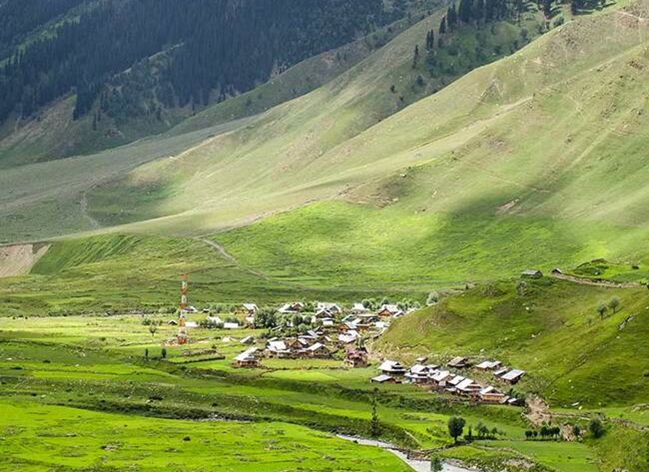
Warwan Valley has now become a dream destination, known for its natural beauty – pristine streams, small crystal-clear waterfalls, beautifully stretching meadows, and eye-catching snow-clad mountains. Most importantly, it offers visitors picturesque and fascinating glimpses of the Marru Sudhir River, which flows through the middle of the valley, dividing it into two parts.
However, despite its unique characteristics and rich natural qualities, the valley has begun to witness a significant decline even before reaching its peak and maturity, due to the unsustainable use of resources. We are axing our own legs; knowingly, we are treating the valley as if we are strangers to it. Personally, I wonder how careless we are about nature. Everyone is busy building their homes close to the river, but no one cares what they are actually doing.
Particularly in summer, due to the scorching heat of the sun, large glaciers melt, and the river becomes more dangerous because of the increased water level and its fast flow. It brings down huge rocks and fallen wood, resulting in disturbance to aquatic life. With this rapid flow, the river has also naturally widened its reach. Despite this, residents and other stakeholders continue to disturb its direction, which leads to soil erosion. As a result, large pasture lands have become sandy, and vegetation has also been degraded.
The Marru Sudhir River is a lifeline for the local community as well as for tourists. Its soothing sound enhances its attractiveness as an offbeat destination. For the local community, it holds great potential to create employment opportunities through this unique form of tourism. The river possesses exceptional features such as rapid flow, turbulence, and shallow stretches, which make it suitable and an excellent choice for adventure seekers. Hundreds of people could derive their livelihood from opening and operating such activities.
For the past five to six years, I have personally observed that people have been extracting sand and boulders from the Marru Sudhir River. This has resulted in significant deterioration of the landscape along both banks. Consequently, biodiversity has been affected by this illegal extraction, and the river has seemingly widened, encroaching upon a large area of farmers’ land.
Core tourism destinations that could open earning avenues for the local community, such as Kawyerd, Brayen Yerd, and Aalas Yerd, are getting spoiled by the water that flows over the vegetation. These areas of the region hold a strong presence and image in terms of tourist arrivals every year. Besides the illegal extraction of materials, the government and the concerned departments—such as the Irrigation and Flood Control Department, Fisheries Department, and Biodiversity Management authorities—must take strong initiatives to formulate a long-term policy for the smooth and optimal use of natural resources.
From my perspective, if the local community and the concerned authorities do not come up with constructive strategies, the deterioration of resources is inevitable within a short span of time. If the river continues to extend its reach, it will become a threat to the residents living along its banks. Many families in several villages have built their houses close to the river. Some houses are still under construction, while others are in the pipeline. This is mainly because people do not have other options due to a lack of land on the other sides. If the extraction of sand and boulders from the river continues, the consequences could be severe and may have disastrous effects on people’s lives.
Places like Kawyerd, Brayen Yerd, Inshan Yerd, and Aalas Yerd were once large open arenas. However, over the past five years, these areas have started to shrink in size, while the river has expanded its reach. It has even divided parts of the land into small islands due to continuous soil erosion along the riverbanks. If this situation continues, the river may eventually cover the whole area, and the residents may not be able to derive agricultural products because their lands will no longer exist.
The government and authorities must take immediate initiatives to protect the habitat, seek long-term remedial measures to prevent any mishap, and stop the illegal extraction of materials.
The writer is an alumnus of the Department of Tourism, Hospitality & Leisure Studies, University of Kashmir
fi****************@***il.com