

Kewa, Malikabad, and Manzmoh are over 30 kilometres from Anantnag district headquarters. Winter snowfall cuts off these areas for months. Residents face hardships accessing basic services. A district status would mean reduced travel, lower expenses, and quicker resolution of everyday problems.
Rayees Ahmad Kumar
In recent days, following the assent given by Jammu and Kashmir Lieutenant Governor Manoj Sinha for the introduction of a private member’s bill proposing divisional status to the Pir Panchal and Chenab regions, as well as district status to several other areas, a wave of aspirations has emerged across the Union Territory. Various regions of central, north, and south Kashmir have come forward to assert their long-pending demands for district status. Among these, the demand raised by the people of Qazigund stands out prominently.
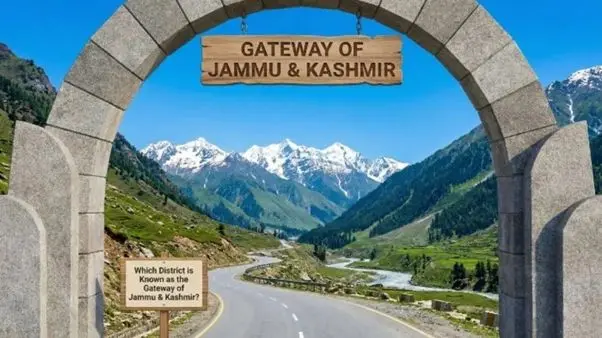
Cutting across political affiliations and party lines, residents of the entire Qazigund area gathered at the Tehsil Headquarters, engaging in detailed deliberations to strengthen and energise their movement for the grant of hill district status. Strategically located as the entry point to the Kashmir Valley, Qazigund is widely known as the “Gateway to Kashmir.” Its geographical importance has long been acknowledged. During the first phase of the recent budget session held in Jammu, the government itself reiterated that additional funds would be allocated for the construction of a grand gateway structure at Qazigund. This announcement was welcomed enthusiastically by the local population, especially by the educated unemployed youth, who saw in it a sign of recognition and opportunity.
The movement for district status in Qazigund is not a sudden development but the culmination of years of sustained effort by local residents, who have repeatedly submitted memorandums to successive governments. Community leaders have held numerous public meetings and awareness campaigns to highlight the region’s unique administrative and geographical challenges. The current momentum, fueled by similar demands elsewhere in the Union Territory, has given fresh energy to their cause.
A fair and unbiased analysis of Qazigund’s case clearly indicates that it rightfully deserves district status. Historically, however, the region has faced neglect. During the tenure of the government led by Mufti Mohammad Sayeed, Qazigund was overlooked even for a tehsil status, which it merited at the time. Instead, Devsar, then a relatively smaller and less developed habitation, was granted that status. It was only after Omar Abdullah assumed office in 2009 that Qazigund was finally accorded tehsil status, albeit belatedly. Today, as the demand for new districts gains momentum across the Valley, the people of Qazigund are once again voicing their aspirations with renewed vigour.
Local shopkeepers and small business owners in Qazigund have also thrown their weight behind the demand, arguing that district status would boost economic activity and attract greater investment. The town’s location on the national highway, they point out, already makes it a natural transit hub. With enhanced administrative status, they believe, Qazigund could emerge as a commercial centre for the surrounding areas, benefiting traders and consumers alike.
Granting district status to Qazigund would not merely fulfil a long-standing public demand but would also stand as a just and well-reasoned administrative decision. A significant portion of Qazigund’s population resides in hilly terrains. The Kund belt, comprising around fifteen inhabited villages with a population exceeding one lakh, is particularly noteworthy for its immense tourism potential. This picturesque region attracts a large number of both local and non-local tourists during the summer season. Similarly, Brinal and Lammer are two other prominent hilly areas where a considerable population resides, and which hold untapped tourism prospects that deserve immediate attention and development.
At present, the district headquarters of Anantnag and Kulgam are located at considerable distances from these remote and hilly regions. This geographical gap often results in administrative inconvenience and delays, adding to the hardships faced by the local population. If Qazigund is granted district status, it would significantly improve administrative accessibility, accelerate development, and alleviate the long-standing difficulties of the people living in these far-flung areas. Such a decision would not only be widely welcomed but would also reaffirm the government’s commitment to equitable and inclusive development.
Women in the region, who often bear the brunt of poor administrative access, have also voiced strong support for the demand. Many recounted harrowing experiences of travelling long distances to avail basic services such as obtaining certificates, registering complaints, or accessing healthcare facilities. For them, a district status for Qazigund means reduced travel, lower expenses, and quicker resolution of their everyday problems.
The areas of Kewa, Malikabad, and Manzmoh in Qazigund are located more than thirty kilometres away from the district headquarters at Anantnag. As a result, residents of these regions face considerable hardship in accessing essential administrative services, even for minor or routine matters. During the winter months, heavy snowfall, often reaching four to five feet, frequently cuts off these areas from both Qazigund and the district headquarters. The difficult hilly terrain further compounds the problem, making mobility and service delivery extremely challenging. Consequently, the local population continues to suffer due to limited accessibility and delayed administrative response.
Educational institutions in the region, including several government-run high schools and private colleges, have also felt the impact of administrative distance. Students and teachers frequently struggle with delayed release of grants, inspection schedules, and coordination with education department officials based far away. Granting district status would bring education administration closer, potentially improving the quality of schooling and oversight in the area.
In this context, granting district status to Qazigund would significantly ease these difficulties. It would bring governance closer to the people, ensure faster delivery of services, and improve overall administrative efficiency in these far-flung areas. In light of these genuine concerns and merit-based considerations, it is humbly requested that the government take a positive, bold, and people-friendly decision regarding the grant of district status to Qazigund, widely regarded as the gateway to Kashmir. Such a step would provide long-awaited relief to the residents of these underserved regions.
ra***********@***il.com