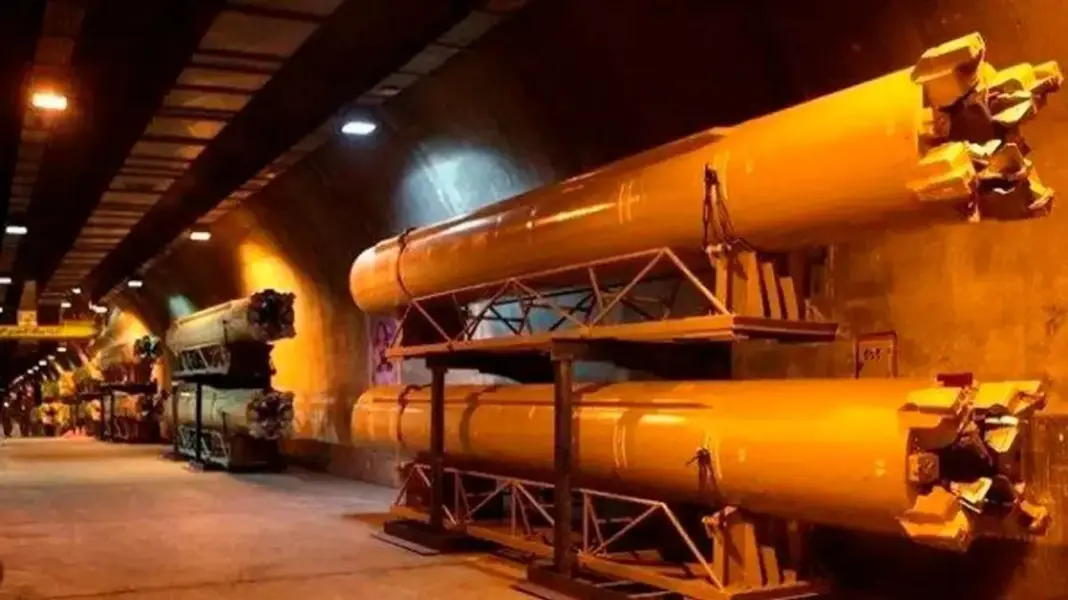


Fordow sits beneath 80–90 meters of hard rock. Natanz extends tens of metres below surface. The GBU-57 penetrator loses efficiency against competent rock. In the contest between bombs and bedrock, geology holds a decisive edge.
Abdul Waheed War
Modern warfare is no longer confined to visible battlefields of land, air, and sea; it has extended deep beneath the Earth’s surface, where geology itself has emerged as a decisive factor in military strategy. The ongoing tensions involving Iran, the United States, and Israel reveal a striking reality: despite possessing some of the most advanced weapon systems ever developed, even the most powerful militaries face significant limitations when confronting infrastructure protected by geological formations. Repeated attempts to target Iran’s underground nuclear and missile facilities using high-precision bunker-buster bombs have exposed a critical truth: when properly utilised, they can serve as a defensive barrier far more resilient than conventional engineered materials.
Iran’s underground facilities are not randomly distributed but are strategically embedded within geologically favourable regions that maximise natural protection. The Fordow Fuel Enrichment Plant, located near Qom, is constructed beneath approximately 80 to 90 meters of hard rock within a mountainous setting, providing substantial resistance to external forces. Similarly, the Natanz nuclear facility in Isfahan Province consists of underground halls buried tens of meters below the surface, with newer tunnel systems extending even deeper into the subsurface. In addition, emerging sites such as those near Kuh-e Kolang Gaz La are believed to be constructed at depths exceeding 260 feet within mountainous terrain, while extensive missile tunnel networks across Iran further demonstrate a deliberate integration of geological shielding into military infrastructure. These installations are not merely bunkers; they represent a fusion of engineering and geology, effectively transforming natural landscapes into fortified defensive systems.
The effectiveness of bunker-buster weapons, such as the GBU-57 Massive Ordnance Penetrator, is fundamentally governed by the physics of penetration and the mechanical properties of the target material. Although such weapons are capable of penetrating several meters of reinforced concrete and greater depths in softer materials like soil, their efficiency drastically decreases when encountering hard, competent rock. Iranian facilities, often buried beneath tens to hundreds of meters of rock, exceed the penetration capacity of even the most advanced conventional weapons. As a result, bombs may detonate before reaching critical underground chambers, thereby dissipating their energy without achieving complete destruction of the intended targets. This mismatch between weapon capability and geological resistance highlights the inherent limitations of modern military technology when confronted with deep subsurface fortifications.
From a geological perspective, the type of rock hosting these facilities plays a crucial role in determining their survivability. Hard crystalline rocks such as granites and other basement formations exhibit high compressive strength, low porosity, and significant resistance to fracturing, making them exceptionally difficult to penetrate. Even sedimentary rocks like limestone and dolostone, which are prevalent in regions such as the Zagros Mountains, can provide substantial protection due to their density and structural competence. These rocks are capable of dispersing shockwaves generated by explosions, thereby reducing localised damage. In contrast, facilities constructed within unconsolidated or weak sedimentary materials are far more vulnerable, as such substrates allow easier penetration and greater structural disruption. This contrast explains why certain sites have experienced greater damage than others, despite being subjected to similar attack strategies.
Depth further amplifies the protective advantage offered by geological formations. The relationship between penetration and depth is not linear; rather, it becomes increasingly difficult for a weapon to reach deeper targets as both depth and rock strength increase. Underground facilities that extend tens or hundreds of meters below the surface benefit from an exponential increase in protection, particularly when combined with reinforced concrete linings and complex tunnel networks. Even if an initial strike damages surface entry points or shallow sections, deeper chambers often remain intact, allowing operations to continue with minimal disruption. This layered defence, integrating both natural and artificial barriers, significantly complicates efforts to achieve complete destruction.
An additional factor influencing the outcome of such strikes is the behaviour of shockwaves within different geological media. Hard rocks tend to transmit shockwaves efficiently over long distances; however, they simultaneously resist the physical penetration of the weapon itself. This creates a paradoxical situation in which energy from an explosion may propagate through the rock mass without directly impacting the most critical components of the underground facility. Consequently, while surface-level damage or partial collapse may occur, the core infrastructure often remains functional. This phenomenon underscores the importance of understanding subsurface mechanics in evaluating the actual effectiveness of military strikes.
It is important to refine the common assumption that these facilities are exclusively located within Precambrian granite formations. While the broader concept of utilising strong, ancient rocks for protection is valid, many Iranian sites, particularly in the Zagros region, are actually hosted within carbonate sequences rather than crystalline basement rocks. Nevertheless, the underlying principle remains unchanged: older, well-compacted, and mechanically strong rocks provide superior resistance to penetration and structural failure. Such rocks, formed over geological timescales that predate complex life on Earth, possess properties that inadvertently make them ideal for defensive purposes in modern conflict scenarios.
Iran’s approach represents a sophisticated integration of geological knowledge and engineering design. By constructing facilities deep within mountains, reinforcing them with advanced materials, and incorporating multiple entry points and redundant systems, these underground complexes achieve a level of resilience that is exceedingly difficult to overcome. Military assessments have repeatedly acknowledged that no single conventional weapon can guarantee the complete destruction of such deeply buried targets. Instead, achieving meaningful damage would require repeated, precisely targeted strikes, each compounding the difficulty of accessing and neutralising the most protected sections of the infrastructure.
In practical terms, while it is possible to damage access tunnels, disrupt logistical pathways, or temporarily halt operations, achieving total destruction of an extensive underground network remains extremely challenging. The deepest sections of these facilities often lie beyond the effective reach of conventional weaponry, and their design ensures that even significant damage does not translate into complete operational failure. The only theoretical means of ensuring total destruction would involve the use of nuclear earth-penetrating weapons, an option that carries profound environmental, political, and humanitarian consequences, making it highly impractical in most scenarios.
This evolving dynamic highlights the emergence of what may be termed “geological warfare,” where the properties of the Earth itself become a decisive factor in strategic planning and conflict outcomes. For geologists, this represents a significant shift in the relevance of their discipline, extending beyond academic study into the realms of defence and geopolitics. Concepts such as rock mechanics, structural geology, and stratigraphy are no longer confined to textbooks; they are actively shaping real-world decisions at the highest levels of global power.
In conclusion, the resilience of Iran’s underground infrastructure is not solely a product of advanced engineering but is fundamentally rooted in geological advantage. By embedding critical facilities within deep, strong, and stable rock formations, Iran has effectively transformed natural geological structures into formidable defensive shields. The interplay between weapon technology and geological resistance demonstrates a clear reality: while military innovation continues to advance, the strength of the Earth remains a constant and often insurmountable force. In the contest between bombs and bedrock, it is evident that geology holds a decisive edge, reminding us that the oldest forces of our planet still command respect in the most modern of conflicts.
References
- U.S. Department of Defense. (2010). Massive Ordnance Penetrator (GBU-57) Fact Sheet. Washington, D.C.: Department of Defense Publications.
- Federation of American Scientists (FAS). (2023). Bunker Buster Weapons and Penetration Capabilities. Retrieved from https://fas.org
- International Atomic Energy Agency (IAEA). (2022). Verification and Monitoring in the Islamic Republic of Iran in Light of United Nations Security Council Resolution 2231. Vienna: IAEA Reports.
- Nuclear Threat Initiative (NTI). (2023). Iran Nuclear Facilities: Natanz, Fordow and Beyond. Retrieved from https://www.nti.org
- Down To Earth. (2025). Rocks vs Bombs: How Subsurface Geology Shapes Survival of Underground Targets. Retrieved from https://www.downtoearth.org.in
- U.S. Air Force. (2015). Air Force Doctrine Document: Targeting and Precision Strike Capabilities. Washington, D.C.
- Brady, B. H. G., & Brown, E. T. (2006). Rock Mechanics for Underground Mining (3rd ed.). Springer.
- Hoek, E., & Brown, E. T. (1997). Practical Estimates of Rock Mass Strength. International Journal of Rock Mechanics and Mining Sciences, 34(8), 1165–1186.
- Jaeger, J. C., Cook, N. G. W., & Zimmerman, R. (2007). Fundamentals of Rock Mechanics (4th ed.). Blackwell Publishing.
- Pollack, H. N. (1982). The Heat Flow from the Earth’s Interior. Annual Review of Earth and Planetary Sciences, 10, 459–481.
- U.S. Congressional Research Service (CRS). (2021). Conventional Prompt Strike and Earth-Penetrating Weapons: Background and Issues. Washington, D.C.
- Al Jazeera Centre for Studies. (2023). Iran’s Underground Missile Cities and Strategic Deterrence. Doha.
The writer is an MSc Geology student at the University of Kashmir
va*********@***il.com