

Core beliefs unite—tawhid, prophethood, Qur’an. Sectarian rhetoric distracts from justice and oppression. Education, dialogue, and compassion are the way forward
Prof Hamid Naseem Rafiabadi
The contemporary Muslim world is facing one of the most difficult and complex moments in its recent history. Conflicts, geopolitical rivalries, economic hardship, and ideological polarisation have affected many Muslim societies. In such circumstances, one of the most painful realities is the persistence of sectarian tensions between Sunni and Shia communities. While theological differences have existed for centuries, the current political climate has often magnified these differences, turning them into instruments of division rather than subjects of scholarly dialogue. At a time when the Muslim ummah faces immense external and internal challenges, there is an urgent need for a thoughtful and sincere plea for unity—one that does not deny historical realities but seeks to transcend them in the service of justice, compassion, and collective well-being.
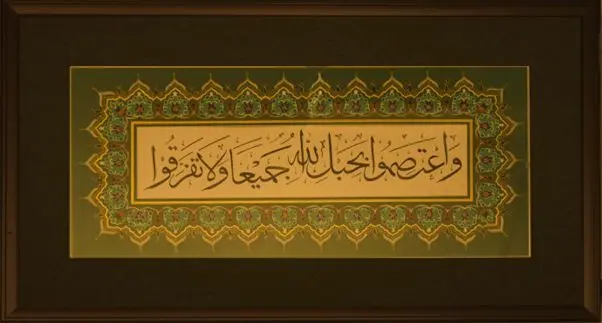
Islam, at its core, is a religion that emphasises unity, justice, and moral responsibility. The Qur’an repeatedly reminds believers that their primary identity is rooted in their submission to Allah and their commitment to ethical conduct. The command, “Hold firmly to the rope of Allah all together and do not become divided” (Qur’an 3:103), stands as a timeless reminder that unity is not merely a political strategy but a spiritual obligation. The “rope of Allah” symbolises the shared foundation of faith in the Qur’an, the guidance of the Prophet Muhammad (Peace Be Upon Him), and the ethical teachings that bind Muslims together.
The historical origins of the Sunni–Shia divide are well known and have been extensively discussed in Islamic scholarship. These differences emerged from early political disagreements regarding leadership after the demise of the Prophet (PBUH). Over time, these disagreements developed into distinct theological and jurisprudential traditions. Yet it is important to remember that both traditions share the same core beliefs: the oneness of God, the prophethood of Muhammad, the authority of the Qur’an, and the central practices of Islam such as prayer, fasting, charity, and pilgrimage. These shared foundations far outweigh the points of divergence.
In the modern world, however, sectarian identities have often been politicised. Conflicts in various parts of the Muslim world are frequently framed as sectarian struggles, even when the underlying causes are political, economic, or geopolitical. Such narratives risk turning legitimate political disagreements into religious hostility. This dynamic can be seen in the way discussions about countries like Iran sometimes become entangled with sectarian rhetoric. Iran’s political positions or regional policies may be debated or critiqued, as is natural in international relations, but these debates should not transform into hostility toward Shia Muslims as a religious community.
A thoughtful approach requires distinguishing between political disagreements and religious identity. Muslims must resist the temptation to interpret every geopolitical issue through the lens of sectarian conflict. Doing so only deepens divisions and distracts from the broader ethical responsibilities that Islam places upon believers.
Prominent voices within the Muslim world have consistently warned against this sectarianisation of political issues. Among them is Sajjad Nomani, who has repeatedly emphasised that Muslims must not allow sectarian differences to overshadow the greater moral challenges facing the community. He has argued that the real test for Muslims today is not whether they belong to one sect or another, but whether they are prepared to stand for justice and defend the dignity of the oppressed. This perspective reflects a deeply Qur’anic approach to contemporary challenges.
The Qur’an strongly condemns oppression and commands believers to stand in solidarity with those who suffer injustice. The verse, “And what is wrong with you that you do not stand for the oppressed among men, women, and children?” (Qur’an 4:75), highlights the moral responsibility of the Muslim community. This call is universal and transcends sectarian boundaries. Whether the oppressed belong to Sunni or Shia communities—or indeed any other group—the obligation to support them remains the same.
The teachings of the Prophet Muhammad (PBUH) reinforce this principle of solidarity. In a well-known tradition, he described the believers as being like a single body: when one limb suffers, the whole body feels pain and responds with wakefulness and fever. This powerful metaphor underscores the interconnectedness of the Muslim community. Sectarian hostility contradicts this prophetic vision because it fragments the body of the ummah into competing parts.
At the same time, advocating unity does not require ignoring theological differences. Islamic intellectual history demonstrates that scholars often disagreed on complex issues of theology and law while maintaining mutual respect. Sunni and Shia scholars engaged in debates, produced scholarly works, and contributed to the same intellectual civilisation. Cities such as Baghdad, Damascus, and Cairo became centres of learning where scholars from diverse backgrounds interacted and enriched Islamic thought.
The challenge today is to revive this culture of intellectual engagement without hostility. Differences should be discussed within scholarly frameworks rather than exploited for political mobilisation or social division. When disagreements are approached with humility and respect, they can deepen understanding rather than provoke conflict.
Education plays a crucial role in fostering such an environment. Islamic institutions must teach the history of the Muslim community in a balanced and responsible manner, emphasising shared values while acknowledging diversity within Islamic traditions. Students should learn that diversity of interpretation has always existed within Islam and that this diversity has often been a source of intellectual vitality.
Community initiatives can also contribute to building bridges between Sunni and Shia Muslims. Inter-sect dialogue, joint humanitarian projects, and shared religious gatherings can create spaces where mutual understanding grows. When believers work together to address social challenges—such as poverty, education, or humanitarian relief—they discover that their shared commitments far exceed their differences.
Equally important is the responsibility of religious leaders, scholars, and public intellectuals to use language that promotes harmony rather than division. Words carry immense power in shaping perceptions and attitudes. When influential voices emphasise unity, justice, and compassion, they help cultivate a culture of respect within the Muslim community.
In difficult times, unity becomes not only a moral ideal but also a practical necessity. The challenges facing the Muslim world—ranging from political instability to economic inequality and humanitarian crises—require collective wisdom and cooperation. No single community or sect can address these challenges alone.
The path forward, therefore, lies in reaffirming the ethical foundations of Islam. Muslims must remember that their ultimate allegiance is to Allah and to the principles of justice and mercy that Islam teaches. Sectarian identities, while historically significant, should never overshadow the broader responsibilities of faith.
A nuanced plea for unity recognises both the reality of differences and the greater importance of shared values. It calls on Muslims to engage with one another respectfully, to resist narratives of hatred, and to stand together in defence of justice and human dignity.
In the end, the strength of the Muslim ummah lies not in uniformity but in its ability to maintain unity amid diversity. By prioritising compassion, solidarity with the oppressed, and mutual respect, Muslims can transform sectarian diversity from a source of division into a source of collective strength. In these difficult times, such unity is not merely desirable—it is indispensable for the moral and spiritual future of the Muslim world.
—Dr Hamid Naseem Rafiabadi (also known as Dr Hamidullah Marazi) is a distinguished contemporary Islamic scholar whose work significantly contributes to the dialogue between Islamic philosophy and modern Western thought. He is the author of several books. Through a rigorous comparative methodology and an emphasis on epistemological integrity grounded in Tawhid (the oneness of God), Marazi critiques secular paradigms and advocates for an integrative intellectual tradition. His scholarship not only critiques Western thought but also calls for mutual enrichment between traditions, emphasising Islamic metaphysics, ethics, and educational reform as central to contemporary challenges.
ha*********@***il.com