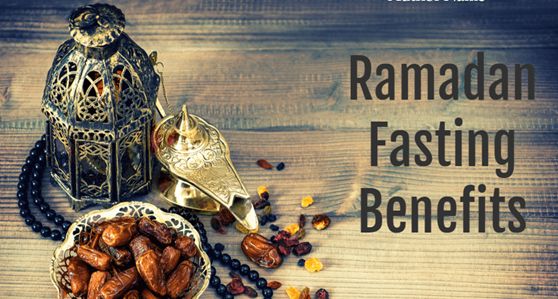


Beyond its spiritual significance, Ramadhan reshapes Kashmir’s economy by driving consumption, accelerating trade, and activating embedded systems of redistribution. With ₹250 crore mutton, ₹167 crore fruit, and a surge in Zakat-driven redistribution, the holy month is Kashmir’s defining economic cycle, sustaining farmers, traders, and informal workers.
Dr Ishfaq Jamal
The month of Ramadhan does not only carry spiritual and religious significance; it is, in fact, a giant month in economic terms. From economic planning, spending, and charity to the redistribution of wealth, it plays a pivotal role. It is a month where faith fuels the economy, reshaping both the pattern and pace of consumption.
Ramadhan reshapes consumption patterns as households that otherwise spend conservatively on consumables—especially food—begin to loosen their budgets and spend more freely during this period.
Market estimates from 2025 suggest that during a single Ramadhan, Kashmir consumed mutton worth over ₹250 crore, with nearly 1,400 truckloads of sheep entering the Valley’s markets, alongside record-breaking fruit consumption valued at ₹167 crore. Fruit and vegetable markets become the main economic arteries, witnessing heavy rushes. The consumption market extends to various sectors: dairy products, bakery items, spices, edible oils, and packaged goods, all of which experience higher turnover. Tailors, garment sellers, and small traders begin preparing weeks in advance for Eid-related purchases. In economic terms, Ramadhan represents an intense thirty-day economic cycle and a powerful engine of localised economic circulation, sustaining farmers, traders, transporters, and informal workers across the Valley.
Another significant dimension of this month is the payment of Zakat, charity, and other forms of alms. Zakat is a mandatory annual contribution—usually 2.5 per cent of accumulated wealth (savings, gold, business assets, etc.)—given to specific categories of people in need. Sadaqah, on the other hand, is voluntary charity. In Kashmir, the practice of Zakat and Sadaqah takes on a localised character. These contributions are often channelled quietly through local mosque committees, trusted community elders, or given directly to widows, orphans, and struggling households. Unlike formal or centralised welfare systems, this redistribution operates on social knowledge. People know who in their neighbourhood needs support, and assistance is extended with discretion and dignity.
It is because of these donations that, for many low-income families in the Valley, Ramadhan becomes a month of relative financial relief. Zakat payments help clear small debts, support educational expenses, fund marriages, or at least ensure stable food supplies. In this way, wealth does not remain static within upper-income groups but circulates downward, strengthening social cohesion and reducing visible inequality, at least temporarily.
Ramadhan is the defining month of the financial year. Many butcher shops, fruit dealers, bakery units, poultry sellers, and small eateries earn a substantial share of their annual income during these thirty days. Even tailors and garment traders rely heavily on pre-Eid demand to stabilise their yearly balance sheets. In fact, certain farming and trading activities are strategically timed so that peak supply coincides with Ramadhan. Vegetable growers plan harvest cycles accordingly, poultry rearers expand batches in anticipation of higher demand, and wholesalers stock essential commodities weeks in advance. The economic calendar, in many ways, aligns with the religious calendar, ensuring that maximum benefit is reaped during this spiritually charged and commercially vibrant month.
The Ramadhan economy of Kashmir demonstrates community-driven economic resilience, where faith and economy intersect in systematic ways. It accelerates trade, sustains small enterprises, and activates an embedded system of local redistribution that temporarily narrows visible economic gaps. Beyond the statistics of consumption and turnover, Ramadhan reveals a social contract rooted in obligation, dignity, and shared responsibility. In the Valley, it is not merely a month of fasting—it is a lived model of circulation, where wealth moves with conscience, and the economy runs smoother.
dr***********@***il.com