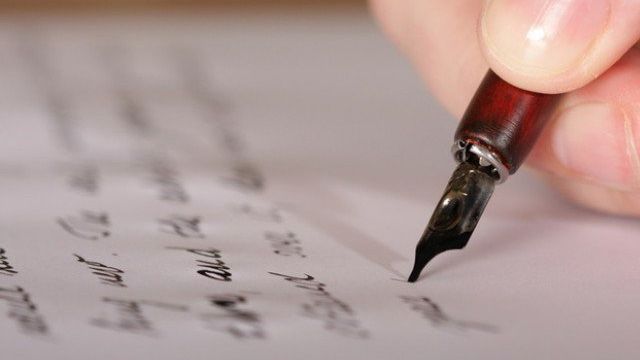


Read, read again, and read once more—only then pick up the pen
Syed Mustafa Ahmad
Plagiarism or literary theft—both terms refer to the act of including others’ ideas in an essay or book without citation, or presenting someone else’s ideas as their own. This act of literary theft clearly shows how much care an author must take regarding ethics. Thousands of such events occur around us, illustrating how deeply plagiarism has spread in our society.
A few years ago, when I started writing, I too included others’ words without citation in my essays multiple times. However, after scoldings from some sincere teachers, I promised to stay miles away from this betrayal, and today, by the grace of God, I am learning to write by reading various essays of my teachers. I am not qualified to point fingers at others, but I do pity those authors who commit this betrayal daily. I recall the words of a benevolent teacher who, in response to one of my essays, said: “Mustafa! Read, read again, and read once more—only then pick up the pen and start writing.” Four years later, his words are proving true.
Now, how do we make these so-called authors understand that writing requires rigorous hard work? But now the question arises: what are the reasons that compel a person to commit literary theft? Some are mentioned in the following lines.
The first reason is showmanship. To impress others with the might of their pen, an unlearned writer resorts to literary theft. Their thoughts and words have not yet passed through the tough stages of maturity, yet they blindly copy others’ ideas and adorn themselves with grand titles. Thus, the filthy lust for show turns an ignorant and illiterate person into a literary thief.
The second reason is envy. Here, if someone reaches a position through hard work and toil, everyone rushes to point out their flaws. The same applies to the art of writing. A writer becomes familiar with the subtleties of sentences after years of labour and spending lakhs of rupees—only then does polish come to their writing. Jon Fosse of Norway, who received the 2023 Nobel Prize in Literature, writes about his writing journey, describing how he passed through the most gruelling stages to become capable of writing a novel that consists of just one continuous sentence, which is a monumental achievement in itself. But here, people want to become Jon Fosse overnight, without sacrificing sleep or personal desires. They cannot digest the progress of other authors, and thus these unlearned writers keep burning in the fire of envy.
The third reason is the acceptance of fake authors. Here, those who are not even worthy of being called authors are encouraged. They claim others’ ideas as their own and write such nonsense that it exasperates the reader. Here, if a gathering has ten to fifteen people and a few photographers taking pictures, everyone joins the race to become the centre of attention. Usually, the books that get launched feature only romantic stories and the sorrow of heartbreak—the pain of separation from a beloved and the lack of love. The grandeur of words and the symbols of the times are present in these so-called books.
Therefore, we all must avoid literary theft so that we too can accomplish something worthwhile. As much as possible, pen your own thoughts. If you need to draw from other authors’ books or essays, always provide citations. This increases opportunities to become an influential author. Those engaged in research must be especially cautious about plagiarism. If they, too, start attributing others’ words to their own name, like everyone else, the result will be that zero trust in research will erode. Moreover, journalists must avoid ideological theft while writing news or articles. People are influenced by their words, so they should not let go of the hem of transparency and ethics.
Furthermore, one must look inward and realise that literary theft is an immoral act contrary to a civilised society. We all should abandon false prestige and adopt hard work as our way. Let us avoid literary theft, study the great authors and minds of the world earnestly, and become true authors. This is the need of the hour.
sy**********@***il.com