

Renewed push for forest conservation, water security, tribal-centric dev: Javed Rana
Jammu: Jammu and Kashmir Legislative Assembly on Friday passed the grants worth Rs. 3,24,177.48 Lakh for Public Health Engineering, Rs. 1,52,482.05 lakh for Forest, Ecology & Environment, Rs. 1,60,699.61 lakh for Irrigation & Flood Control and Rs. 40,600.72 for Tribal Affairs Department. The grants were passed through voice vote after a daylong debate by the Members in the House.
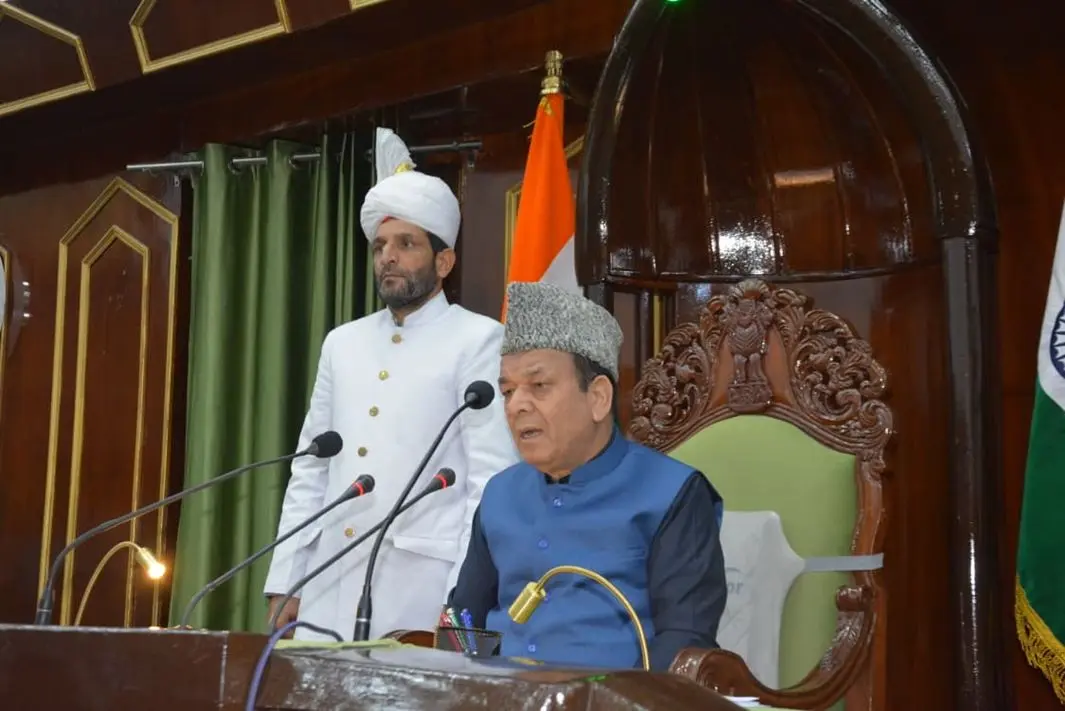
The session saw detailed debates, with Minister for Jal Shakti, Forest, Ecology, Environment, and Tribal Affairs, Javed Ahmed Rana, emphasizing the government’s commitment to balancing development with ecological preservation.
Javed Rana highlighted that forests are the lifeline of Jammu and Kashmir, covering nearly half of its geographical area and featuring diverse forest types. For fiscal 2026–27, an increased allocation of ₹242 crore has been proposed, signifying strong commitment to forest conservation and sustainable development.
Under the UT Capex 2025–26, ₹168.18 crore has been approved, with ₹141.14 crore released and ₹56.97 crore spent so far. Similarly, under CAMPA, ₹175.06 crore was allocated, with ₹155.14 crore released. Notably, the ‘Ek Ped Maa Ke Naam’ initiative has successfully planted 71.77 lakh saplings by January 2026, with a target of one crore saplings to be achieved by the next year.
Forest boundary demarcation has advanced significantly, with 1.85 lakh boundary pillars installed, and the digitization of forest boundaries using GNSS technology has positioned J&K as a leader in forest governance. Wetland conservation efforts include mapping 260 wetlands using GIS and remote sensing technologies, with revival projects for Wular Lake—an important Ramsar site—restoring 5 sq km of water and afforesting 2,952 hectares, benefitting over 5,200 fishermen.
Wildlife conservation measures have covered 11.5% of the UT, rescuing over 3,002 animals and disbursing ₹214 crore+ in compensation for human-wildlife conflicts. Air quality improvements have also been notable, with PM10 levels reducing by 18.5% in Jammu and 41.3% in Srinagar.
Community empowerment initiatives include establishing 171 sale depots under the Sustainable Collection and Utilization of NTFP Policy, benefiting 7,100 families and generating ₹792.32 lakh. Forest fire prevention measures, transparency in timber and firewood supply via e-auctions, and pollution control reforms—such as integrated single-window systems—are also prioritized.
Rana emphasized that upcoming initiatives include planting one crore saplings with community participation, demarcating forest areas, developing eco-tourism routes, and upgrading conservation infrastructure. The government aims to promote eco-tourism, complete SASCI projects, install air quality sensors, upgrade Jambu Zoo, establish breeding centers for endangered species, and build wildlife protection infrastructure to reduce human-wildlife conflicts.
He reaffirmed that forests are integral to water security, livelihoods, disaster mitigation, and climate resilience, emphasizing that the government’s vision is to safeguard Jammu and Kashmir’s rich natural heritage for future generations.
Rana underlined the government’s resolve to ensure universal access to safe drinking water. Under the Jal Jeevan Mission (JJM), 15.64 lakh households have received tap water connections, with ongoing schemes aiming to cover the remaining households.
For 2026–27, a Capex budget of Rs. 1561.9 crore was proposed, a 10.4% increase over the previous year. Progress last year included commissioning 69 projects worth Rs. 302 crore, benefiting approximately 29,000 households. The extension of JJM till December 2028 was announced, with increased funding to accelerate progress.
Water quality monitoring is a key focus, with 98 laboratories conducting over 2.64 lakh tests annually. Targets include completing 850 ongoing schemes, achieving 100% Har Ghar Jal certification, and operationalizing all completed projects through optimized manpower. The government is also working on large water supply projects for AIIMS facilities in Awantipora and Vijaypur.
To address water shortages, the fleet of water tankers has been expanded with 20 new tankers, supplementing existing departmental and private tankers. Flood restoration works, including the ₹430 crore flood damage works identified for 2025, have commenced, reflecting effective crisis response following the devastating floods of August–September 2025.
Long-term flood and water management strategies include establishing inter-departmental committees, finalizing a State Specific Action Plan under the National Water Mission, and strengthening human resources within the Jal Shakti Department. Initiatives like the construction of floodplain zoning measures and the completion of major projects such as the Shahpur Kandi Dam and Tawi Barrage are expected to enhance water security and flood control.
The government proposed a Capex of ₹996 crore for 2026–27 for irrigation and flood control, marking a 62% increase from the previous year. Efforts aim to bring 3.96 lakh hectares under assured irrigation through major and minor projects, including the ongoing Har Khet Ko Paani scheme.
Significant projects like the Shahpur Kandi Dam are nearing completion, promising irrigation benefits for over 32,000 hectares in Kathua and Samba districts. The Tawi Barrage Project has achieved about 90% progress, ensuring reliable water flow to Jammu.
Flood management improvements include increasing the flood-carrying capacity of the Jhelum River from 31,800 cusecs to 41,000 cusecs, strengthening infrastructure with projects like the PMDP Phase-II bank protections, and constructing ecological gates at Hokersar wetland to aid habitat restoration.
The government is also implementing floodplain zoning, with over 1,000 ongoing works under the UT Capex, including flood control and irrigation projects. Restoration works of ₹430 crore for flood damages have been prioritized, with rapid responses to recent floods demonstrating the government’s crisis management capabilities.
Addressing tribal communities, Rana highlighted that the Omar Abdullah government prioritized inclusive and dignity-centric development, focusing on bridging gaps and safeguarding rights. Jammu and Kashmir is home to diverse tribes like Gujjars, Bakerwals, Gaddis, Sippis, Paharis, and Paddaris, facing challenging geographies and mobility issues.
For 2026–27, the Tribal Affairs Department plans to focus on Education & Human Development, Livelihood & Economic Strengthening, Infrastructure & Migration Support, and Cultural Preservation. In 2025–26, notable progress included disbursing ₹8.75 crore in scholarships to over 4,500 students, establishing 28 hostels, and operationalizing six Eklavya Model Residential Schools.
Infrastructure development saw the release of ₹78 crore under UT Capex, supporting nearly 2,000 projects such as livestock units, bore wells, rural roads, and transit accommodations for migratory tribes. Under PM Van Dhan Yojana, ₹14.57 crore was allocated to establish 1,000 Van Dhan Vikas Kendras, aiding livelihood enhancement.
The department also promotes cultural preservation, with initiatives like eco-guides training for tribal youth and collaborations with IIT Jammu for entrepreneurship and business development. The Tribal Research Institute continues research and documentation efforts, while the government is working to implement the Forest Rights Act effectively, with ₹3.77 crore allocated for establishing FRA cells in districts.
Rana emphasized that the overarching goal is to empower tribal communities, ensuring they participate in and benefit from Jammu and Kashmir’s developmental journey with dignity.
The assembly’s approval of these grants underscores a comprehensive strategy to promote sustainable development, ecological conservation, water security, and tribal empowerment. The government aims to balance growth with environmental preservation, improve infrastructure, and ensure inclusive progress, reflecting a vision for a resilient, environmentally secure, and socially empowered Jammu and Kashmir.