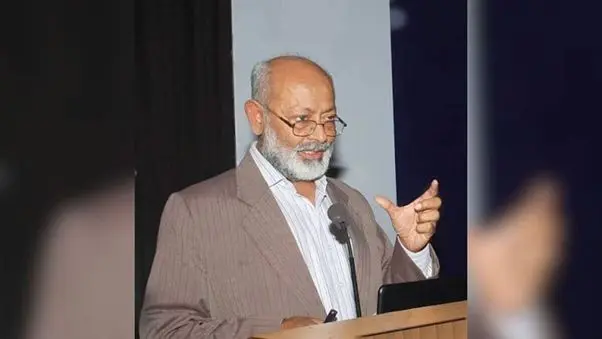


Remembering the scholar who founded the Institute of Objective Studies, led the All India Milli Council, and nurtured countless intellectuals with humility, warmth, and unwavering faith in dialogue
Prof Hamid Naseem Rafiabadi
The passing of Dr Mohammed Manzoor Alam is not merely the departure of an individual; it marks the silencing of a moral voice, the loss of a principled intellectual, and the end of an era in which one man could inspire minds, shape institutions, and touch hearts with his vision, wisdom, and integrity. On 14 January 2026, when Dr Alam breathed his last in a New Delhi hospital at the age of 80, India—and particularly its Muslim community—lost a rare combination of scholarship, leadership, and moral courage.
In an age marked by short-term political calculations, ideological polarisation, and the diminishing value of reflective thought, Dr Alam stood apart. He believed in the transformative power of ideas, in the patient building of institutions, and in dialogue over demagoguery. For him, leadership was never about spectacle or transient influence; it was about steady, principled engagement with society, fostering knowledge, and empowering communities to meet the challenges of modernity with confidence, dignity, and ethical clarity.
A Personal Association: From AMU To The Inception Of IOS
I had the profound privilege of being associated with this great soul from the early 1980s at Aligarh Muslim University and closely with the inception of the Institute of Objective Studies (IOS) in 1986. From those early days, he became not only a guide but a mentor in the truest sense—supporting my academic endeavours, providing scholarships, and opening doors to experiences that shaped my intellectual journey.
He invited me to participate in national and international conferences, taking me personally to the Maldives, and entrusted me with responsibilities such as Convenor of the Academic Committee for Philosophy and Convenor of the Forum for Inter-Religious Understanding. His faith in my abilities extended to research projects, including the Assam Accord in the 1980s and the pioneering study Islam and Knowledge. He provided me the opportunity to draft concept notes for conferences on Ismail Raji Faruqi, and later entrusted me with editing a volume on this distinguished scholar.
On my request, he came personally to Kashmir to support and grace several international conferences at the University of Kashmir and the Central University of Kashmir. Throughout our long association, he treated me as a confidant colleague, respected my sensibilities, and nurtured my growth with patience and wisdom. In his passing, I feel that I have lost not only a mentor but a spiritual father—a guide whose influence on my life is incomparable.
From Humble Beginnings To Intellectual Eminence
Born in a remote village in Darbhanga, Bihar, Dr Alam’s early life was shaped by modest circumstances. Yet, his journey from a small, economically and educationally marginalised village to the corridors of national and international influence is a testament to perseverance, discipline, and intellect. He pursued higher education at Aligarh Muslim University, earning a PhD in Economics, where the rich legacy of reformist thought and modern Muslim education profoundly influenced him.
While trained as an economist, Dr Alam’s intellectual curiosity transcended disciplinary boundaries. He engaged deeply with sociology, political thought, education, Islamic studies, and civilisational dialogue. This breadth became the hallmark of his life’s work, enabling him to function as a public intellectual who bridged faith and modernity, tradition and innovation.
Global Engagement, National Commitment
Dr Alam’s professional life was marked by significant global contributions. He served as Economic Advisor in Riyadh, Associate Professor at Imam Mohammad bin Saud University, and Chief Coordinator at the King Fahd Holy Qur’an Printing Complex, overseeing translations into multiple languages. He represented the International Islamic University Malaysia in India and contributed to the Islamic Development Bank’s scholarship initiatives for Muslims in non-member countries.
Yet, despite international recognition and professional comfort abroad, he chose to return to India. This decision was not sentimental; it was a deliberate commitment to the intellectual and social empowerment of Indian Muslims. He understood that India’s minority communities required research, critical thinking, and institution-building more than mere activism or emotional mobilisation.
Founder Of The Institute Of Objective Studies
In 1986, Dr Alam founded the Institute of Objective Studies (IOS), which would become one of India’s leading Muslim think tanks. IOS embodied his vision: a platform for rigorous, research-based engagement with social issues ranging from education, economics, and minority rights to interfaith understanding and civilisational dialogue. Under his stewardship, IOS organised seminars, conferences, and dialogues that brought together scholars from diverse disciplines and ideologies, reflecting his conviction that intellectual strength comes from plurality, not uniformity.
His vision for IOS was inseparable from his belief in dialogue. He saw knowledge as a bridge, not a barrier. Through IOS, he nurtured generations of scholars, journalists, and professionals, insisting on ethical research, balanced analysis, and constructive debate. He mentored quietly, refused limelight, and instilled in those around him a commitment to substance over spectacle.
A Moral Compass: Leadership Of The All India Milli Council
Parallel to his work at IOS, Dr Alam served as General Secretary of the All India Milli Council (AIMC), providing a moral and consultative platform for Indian Muslims. Under his leadership, AIMC was not a political body but a space where scholars, academics, and professionals could deliberate on community challenges while remaining committed to India’s constitutional values and secular ethos.
In the years preceding the 2014 general elections, Dr Alam travelled extensively, speaking against communal polarisation and advocating for the protection of India’s multicultural fabric. He articulated a vision of India rooted in coexistence, shared responsibility, and equal citizenship. He defended the “Idea of India” not for political expediency but from conviction and conscience, reminding all that true leadership is anchored in moral clarity, not expediency.
Dialogue, Mentorship, And Human Touch
Dr Alam’s defining trait was his unwavering faith in dialogue. He engaged with religious scholars, secular intellectuals, policymakers, and international academics with patience, humility, and respect. He believed that conversation, reason, and understanding were the antidotes to conflict and that Indian Muslims could thrive only through knowledge, ethical confidence, and openness to critique.
He was also a master builder of people and institutions. By attracting talent, nurturing young scholars, and mentoring journalists, Dr Alam ensured that the ideas he championed would continue beyond his lifetime. Yet, he never sought cults of personality. Those who met him remember not just his intellect but his warmth, humility, and accessibility. His stature never created distance; it invited engagement.
Recognition, Respect, And Legacy
Dr Alam’s influence extended across ideological lines. His integrity, consistency, and intellectual rigour earned him respect even from those who disagreed with him. Landmark events such as the silver jubilee celebrations of AIMC in Lutyens’ Delhi reflected the esteem in which he was held nationwide.
His legacy is not in accolades but in enduring institutions, in lives shaped by mentorship, and in ideas that continue to inspire. IOS remains a living testament to his belief in research-driven reform, while AIMC stands as a model for principled, non-polarising community leadership. His life was a bridge between faith and modernity, scholarship and civic responsibility, tradition and pluralism.
The Call To Continue His Mission
Dr Manzoor Alam’s passing is a moment of profound loss, but also of responsibility. In remembering him, Indian Muslims—and India as a whole—are called to sustain his vision: to strengthen institutions, nurture knowledge, promote dialogue, and act with moral courage. He devoted his life to empowering the marginalised, enriching public discourse, and safeguarding the ethical foundations of a plural society.
He embodied Allama Iqbal’s call to constant striving:
“Sitaron se aage jahan aur bhi hain,
Abhi ishq ke imtehaan aur bhi hain.”
Dr Alam never considered his work complete, his mission fulfilled, or his journey over. And so, the truest tribute to him is not simply remembrance but the continuation of his work, guided by integrity, insight, and compassion.
Conclusion
Dr Mohammed Manzoor Alam was more than an economist, thinker, or community leader. He was a leader of minds and hearts—a rare soul whose intellect was matched by moral courage, whose vision encompassed both knowledge and empathy, and whose life was a testament to principled engagement with society. Personally, I mourn not only a mentor but a spiritual father, a guide whose faith in me shaped my career and vision.
May the Almighty grant him mercy, elevate his rank, and provide patience to his family, colleagues, and countless admirers. His life reminds us that the measure of a leader lies not in power or position, but in the enduring impact on minds, hearts, and institutions.
Travel gently, Dr Manzoor Alam. Your legacy lives—not merely in words, but in action, thought, and inspiration.
—Dr Hamid Naseem Rafiabadi (also known as Dr Hamidullah Marazi) is a distinguished contemporary Islamic scholar whose work significantly contributes to the dialogue between Islamic philosophy and modern Western thought. He is the author of several books. Through a rigorous comparative methodology and an emphasis on epistemological integrity grounded in Tawhid (the oneness of God), Marazi critiques secular paradigms and advocates for an integrative intellectual tradition. His scholarship not only critiques Western thought but also calls for mutual enrichment between traditions, emphasising Islamic metaphysics, ethics, and educational reform as central to contemporary challenges.
ha*********@***il.com