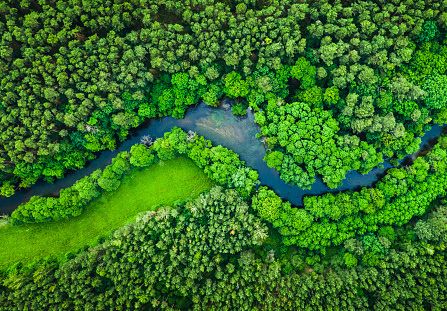


By planting and nurturing trees on farms, the nation can empower its farmers, strengthen its economy and safeguard its environment, ensuring that development is not only rapid, but also inclusive, resilient and sustainable
Dr Jauhar Rafeeq and Dr Hilal Ahmad Malik
As India advances towards the visionary goal of Viksit Bharat@2047, the transformation of agriculture and the empowerment of farmers remain central to national progress. Farmers today stand at the crossroads of multiple challenges – climate change-induced uncertainties, food and nutritional insecurity, fodder shortages, shrinking landholdings, ecological degradation and stagnant farm incomes. Addressing these complex and interlinked issues demands an integrated and sustainable solution. Agroforestry, which integrates trees with crops and livestock on the same land unit, offers a holistic framework capable of resolving many of these hurdles simultaneously.
Building Climate-Resilient Agriculture
Climate change has emerged as one of the most serious threats to Indian agriculture. Increasing temperature extremes, erratic rainfall patterns, prolonged droughts, untimely frosts and floods are severely impacting crop productivity and farm livelihoods. Agroforestry systems enhance climate resilience by improving the farm microclimate. Trees act as windbreaks, reduce heat stress, conserve soil moisture and protect crops from extreme weather events. Beyond adaptation, agroforestry plays a crucial role in climate change mitigation. Trees capture and store atmospheric carbon in their biomass and soils, making agroforestry a powerful nature-based solution for carbon sequestration. Large-scale adoption of agroforestry can significantly contribute to India’s climate commitments while offering farmers an opportunity to benefit from emerging carbon markets in the future. Thus, agroforestry positions farmers not as victims of climate change, but as partners in climate action.
Strengthening Food And Nutritional Security
While India has achieved self-sufficiency in food grain production, ensuring nutritional security for all remains a challenge. Agroforestry contributes to both food and nutrition security by promoting the diversification of farm produce. Alongside cereals and pulses, farmers can cultivate fruits, nuts, vegetables, medicinal plants and spices within agroforestry systems. This diversification ensures year-round availability of diverse and nutritious foods at the household level. It also reduces dependence on a single crop, thereby minimising the risk of complete crop failure. For small and marginal farmers, agroforestry acts as a safety net, ensuring food availability even during adverse climatic or market conditions. In this way, agroforestry supports the broader national objective of a healthy and food-secure population.
Solving The Fodder Crisis And Supporting Livestock
Livestock plays a vital role in rural livelihoods, contributing significantly to farmers’ income and nutritional security. However, chronic fodder scarcity, particularly in rainfed, hilly and border regions, continues to constrain livestock productivity. Agroforestry offers a sustainable solution by integrating fodder trees and grasses into farming systems. Tree species such as mulberry, willow, and poplar provide nutritious green fodder during lean seasons when crop residues are scarce. Tree-based fodder systems reduce pressure on forests and grazing lands while ensuring a reliable and high-quality feed supply. Improved fodder availability directly enhances milk production, animal health and overall farm profitability, reinforcing the livestock crop synergy essential for sustainable farming.
Promoting Crop Diversification And Risk Reduction
Indian agriculture has long suffered from over-dependence on monocropping and a limited number of crops. Such systems are highly vulnerable to pest outbreaks, diseases, climate shocks and price volatility. Agroforestry inherently promotes crop diversification by integrating multiple components: trees, crops and livestock within the same land unit. Diversified systems are more stable and resilient. Trees improve soil health through organic matter addition, enhanced microbial activity and erosion control. Increased on-farm biodiversity helps suppress pests and diseases naturally, reducing reliance on chemical inputs. By spreading risk across multiple outputs, agroforestry provides farmers with greater economic and ecological stability.
Doubling Farmers Income Through Diversified Returns
The goal of doubling farmers’ income cannot be achieved through conventional crop farming alone. Rising input costs, market uncertainties and climatic risks limit the profitability of monocropping systems. Agroforestry creates multiple income streams over different time horizons. Annual crops provide short-term returns, fruit and fodder trees offer medium-term income, while timber, fuelwood and other tree products generate long term financial security. In addition, agroforestry opens avenues for value addition, agro-processing and farm-based enterprises. With appropriate policy and institutional support, farmers can also benefit from payments for ecosystem services, carbon credits and green certification. Such diversified and staggered income sources significantly enhance income stability and resilience, making agroforestry a key instrument for achieving farmers’ economic empowerment.
Restoring Natural Resources And Ecosystem Health
Degradation of soil, water and biodiversity threatens the sustainability of agriculture and rural livelihoods. Agroforestry contributes significantly to ecological restoration by improving soil structure, enhancing water infiltration and conserving biodiversity. Tree roots stabilise soil, reduce runoff and promote groundwater recharge, while tree canopies moderate temperature and humidity. Agroforestry systems also serve as effective tools for rehabilitating degraded and marginal lands, converting them into productive and income-generating assets. This ecological restoration aligns seamlessly with national priorities on sustainable land management, biodiversity conservation and environmental protection under the Viksit Bharat@2047 framework.
Conclusion
Agroforestry is not merely an agricultural practice; it is a comprehensive development approach that integrates productivity, sustainability and resilience. By addressing climate change, food and nutritional security, fodder availability, crop diversification, ecological restoration and income enhancement, agroforestry offers a single, powerful solution to multiple challenges confronting Indian agriculture. As India marches towards Viksit Bharat@2047, embracing agroforestry can transform rural landscapes and livelihoods. By planting and nurturing trees on farms, the nation can empower its farmers, strengthen its economy and safeguard its environment, ensuring that development is not only rapid but also inclusive, resilient and sustainable.
Dr Jauhar Rafeeq is a Junior Scientist Agroforestry at KVK Gurez SKUAST-K. Dr Hilal Ahmad Malik is a Senior Scientist-cum-Head KVK/MAR&ES, Gurez SKUAST-K