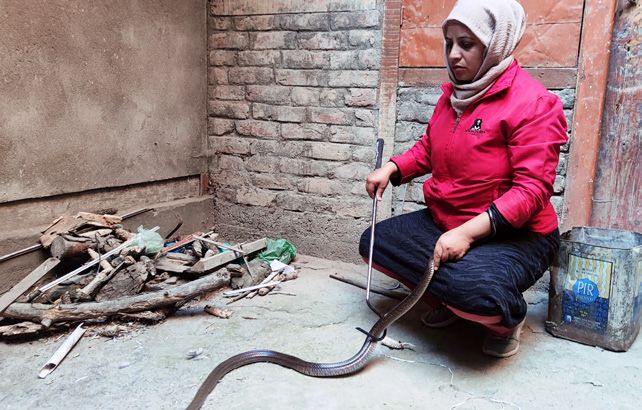


The conversion of farmland and shrinking forests create inviting habitats for bears and leopards. To prevent panic and injury, habitat corridors and regulated relocation are needed, not just reactive rescues.
By Suhail Gaznavi
Human–wildlife conflict has emerged as a serious issue in Jammu & Kashmir, with wild animals frequently entering residential areas and causing panic among local populations. Notably, a recent incident involved a bear entering the campus of the University of Kashmir in Srinagar — an event that sparked fear and panic among students and staff. Such episodes are no longer isolated. Bears, leopards, and other wild creatures are increasingly seen near homes, agricultural fields, and orchards. Recent incidents in regions like Anantnag have resulted in multiple injuries — instilling widespread fear, especially among residents living close to forested zones.
A central factor behind this surge in conflict is the dramatic transformation of land use. Many agricultural fields have been converted into horticultural orchards, while, simultaneously, forestlands have shrunk under pressure from development projects such as roads, buildings, and railways. This dual shift — loss of natural forest habitat and conversion of farmland into horticulture — fragments wildlife territories and alters the landscape in ways that inadvertently attract animals. Dense fruit orchards and vegetation associated with horticulture resemble natural forested habitats. For animals deprived of their original habitat, these horticulture plots appear as promising sources of food and shelter, prompting more frequent forays into areas inhabited by people.
When wild animals enter populated zones, the Wildlife Department responds promptly. Teams capture or tranquillize the animal to prevent harm to both people and wildlife. However, such rescues must be followed by scientific, well-regulated relocation: deep into viable forest habitats, not mere fringes near human settlements. Proper health checks, rehabilitation, and post-release monitoring are essential to prevent repeat intrusions — simply releasing animals near villages only perpetuates the conflict.
At the same time, the population of certain wild animal species — particularly bears and leopards — has increased over the years due to improved protection measures and reduced hunting. While conservation success is commendable, it has not been accompanied by parallel expansion or preservation of natural habitats. Forests continue to shrink and become fragmented due to rapid infrastructural development and human encroachment. This imbalance — rising wildlife populations but declining forest spaces — pushes animals closer to human settlements in search of food and territory. It is therefore crucial that scientific strategies such as habitat restoration, regulated wildlife population management, and the creation of ecological corridors be adopted. These measures will help ensure that wild animals remain within their natural environments while minimising the risk of conflict with human communities.
To effectively address this growing crisis, the government must adopt a scientific and humane wildlife policy. Key measures should include restoring and protecting forest corridors, regulating land-use changes, ensuring adequate water and natural habitat availability, and educating communities living near forest belts. With timely, strategic action that balances human safety and ecological integrity, it is possible to safeguard both lives and wildlife in Jammu & Kashmir.
The writer is a Srinagar-based advocate at the High Court of Jammu & Kashmir and Ladakh
su*********@***il.com