

Muhammad Iqbal’s call to revive Ijtihad was a call to awaken the creative conscience of the Muslim Ummah—to reclaim its intellectual vitality and ethical responsibility in an ever-evolving world
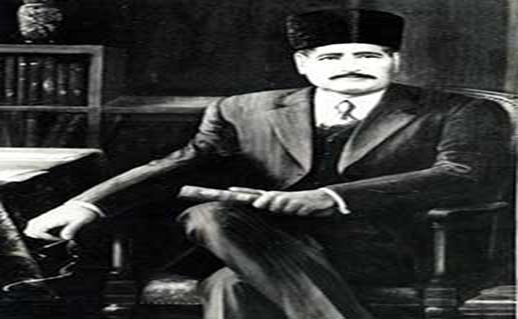
Islamic philosopher and poet Muhammad Iqbal praying at the iconic Cordoba Mosque in Spain, circa 1933
By Prof Hamid Naseem Rafiabadi
The concept of Ijtihad—independent reasoning in Islamic law—has historically served as the dynamic force that kept Islamic civilisation intellectually alive and morally vibrant. Muhammad Iqbal (1877–1938) reconceptualised it not merely as a juristic tool but as a moral and metaphysical principle of movement within Islam. Rooted in the Qur’anic idea of life as a process of becoming, Iqbal’s notion of Ijtihad sought to reconcile the permanence of divine principles with the change inherent in human society, thus presenting a vision that united tradition and modernity.
The Arabic term Ijtihad derives from juhd, meaning “to strive” or “to exert effort.” In Islamic jurisprudence, it denotes the intellectual exertion of a qualified scholar (mujtahid) to derive rulings from the Qur’an, Sunnah, consensus (ijmā‘), and analogical reasoning (qiyās). The Prophet Muhammad (PBUH) validated this principle in his approval of Mu‘adh ibn Jabal’s decision to “exert his own judgment” when textual evidence was unavailable (Abu Dawud, Sunan, ḥadīth no. 3592). Ijtihad thus served as the mechanism through which Islam maintained its vitality and adaptability during the formative centuries of Islamic law. However, with the institutionalisation of the schools of jurisprudence (madhāhib), intellectual rigidity gradually replaced creative engagement, and taqlid—blind adherence to precedent—overshadowed the spirit of renewal. Although the “closure of the gates of Ijtihad” was more symbolic than factual, it reflected a general intellectual stagnation. It was within this historical milieu that Iqbal redefined Ijtihad as the key to Islamic reform and revival.
Educated in Lahore, Cambridge, and Munich, Iqbal was deeply conversant with both the Islamic and Western intellectual traditions. His philosophy of Khudi (selfhood) emphasised human creativity, autonomy, and moral agency as reflections of divine attributes. In The Reconstruction of Religious Thought in Islam (1930), Iqbal famously declared Ijtihad to be “the principle of movement in the structure of Islam” (Iqbal, 1930/2012, p. 148). He envisioned Islam as a dynamic faith in which life, law, and spirituality evolve in harmony with the unfolding of human experience. The Qur’an, according to Iqbal, presents a universe in perpetual motion—a creative process demanding active human participation. Thus, Ijtihad becomes the bridge between revelation and reason, ensuring that the eternal truths of the Qur’an remain applicable to the ever-changing circumstances of life.
Iqbal’s critique of stagnation was both intellectual and moral. He lamented that the Muslim world’s decline resulted from the abandonment of Ijtihad and the uncritical reverence for medieval juristic authorities, which “immobilised what is essentially mobile in its nature.” For Iqbal, Islam’s message was fundamentally action-oriented, for “the Qur’an is a book which emphasises deed rather than idea.” This emphasis on action implied a continual engagement with revelation through reflection and renewal. Iqbal thus proposed that the function of Ijtihad should no longer rest solely with individual jurists but with representative legislative assemblies capable of expressing the collective moral consciousness of the Muslim community. This vision of collective Ijtihad through institutional mechanisms foreshadowed modern legislative councils in Muslim-majority countries, aligning with his vision of Shura-based governance grounded in revelation and reason.
Iqbal’s intellectual activism also found expression in his proposal for a Darul-Islam—a centre for the reconstruction of Islamic thought through the integration of modern sciences and traditional religious studies. Collaborating with Maulana Abul A‘la Maududi, Iqbal laid the groundwork for the establishment of such an institution at Pathankot. Although his untimely death in 1938 curtailed its development, the project symbolised his belief that reform must be both intellectual and institutional, rooted in authentic Islamic principles yet open to modern knowledge.
In his reinterpretation of Ijtihad, Iqbal engaged critically with classical thinkers such as al-Ghazālī, Ibn Taymiyyah, Shah Waliullah, and al-Shawkānī. Al-Ghazālī (d. 1111), in his al-Mustasfā, had defined Ijtihad as the rigorous intellectual effort of a scholar qualified in jurisprudence, emphasising both expertise and piety. While Ghazālī introduced flexibility through maslahah mursalah (public welfare), his Ash‘arite theological commitments limited the scope of rational autonomy. Iqbal, by contrast, viewed Ijtihad as a metaphysical and creative principle extending beyond jurisprudence to encompass all dimensions of intellectual and social life. Ibn Taymiyyah (1263–1328) had also challenged the rigidity of the legal schools, insisting that every generation must engage directly with the Qur’an and Sunnah. His call for continuous Ijtihad resonated with Iqbal’s critique of taqlid. Yet, Iqbal transcended the pre-modern framework by integrating modern science and philosophy, seeing in them manifestations of divine creativity. Shah Waliullah Dehlawi (1703–1762) had anticipated this synthesis by linking Ijtihad to the maqāṣid al-sharī‘ah (objectives of law), which aim at human welfare (maslahah). Iqbal built upon Waliullah’s vision, situating Ijtihad within a historical and philosophical framework of civilizational evolution. Similarly, al-Shawkānī (d. 1839) argued for ijtihād mutlaq—complete independence of reasoning unbound by sectarian affiliation. Iqbal shared his anti-sectarian spirit but modernised it by proposing collective, institutionalised Ijtihad within democratic and consultative structures.
Iqbal’s ideas found resonance among modern reformers such as Muhammad Abduh, Rashid Rida, Fazlur Rahman, and Abdul Hamid Abu Sulayman. Abduh and Rida, through works like Risālat al-Tawḥīd and Tafsīr al-Manār, called for reopening Ijtihad to harmonise Islam with modern science and reason. While Iqbal shared their reformist zeal, he transcended their legal rationalism by grounding Ijtihad in a broader metaphysical vision of creativity and moral evolution. Fazlur Rahman (1919–1988), inspired by Iqbal, developed his “double movement theory,” emphasising historical contextualisation of the Qur’an and its moral reapplication to contemporary life. Both thinkers saw Ijtihad as a hermeneutical process integrating revelation and reason to achieve moral reconstruction. Similarly, Abdul Hamid Abu Sulayman (1936–2021) drew from Iqbal in arguing that Ijtihad must serve as the intellectual backbone of education, governance, and social transformation. In Crisis in the Muslim Mind (1993), Abu Sulayman asserted that stagnation could only be overcome by reviving Ijtihad as the spirit of critical inquiry and moral responsibility—an idea directly traceable to Iqbal’s Reconstruction.
At the heart of Iqbal’s philosophy lies the concept of harakat (movement). For him, the universe is not a finished product but a continuing act of divine creativity. “Life,” he wrote, “is an act; the universe is an act rather than a thing” (Iqbal, 1930, p. 14). Humanity’s role, therefore, is participatory—we are co-workers with the Divine in the unfolding of creation. Ijtihad, in this metaphysical sense, is the human expression of divine creativity, ensuring that faith remains dynamic and responsive. The vitality of Islam, Iqbal argued, depends on harmonising eternal principles (thabāt) with temporal realities (taghayyur). The Qur’an’s constant exhortations to reason, reflect, and act demand continuous renewal of understanding. For Iqbal, religious systems that once embodied vitality can harden into lifeless dogmas unless periodically reinterpreted through Ijtihad. The reconstruction of religious thought, therefore, is not a rupture with tradition but its rejuvenation through reason and experience.
Iqbal’s transformation of Ijtihad from a juristic principle into a universal philosophy of creativity and movement remains one of his most enduring contributions to modern Islamic thought. By uniting faith and reason, permanence and change, he offered a vision of Islam as an ever-living moral and spiritual organism. His legacy continues to inspire modern scholars such as Fazlur Rahman and Abu Sulayman, who extended his vision into the domains of knowledge, education, and social reform. In essence, Iqbal’s call to revive Ijtihad was a call to awaken the creative conscience of the Muslim Ummah—to reclaim its intellectual vitality and ethical responsibility in an ever-evolving world.
—Dr Hamid Naseem Rafiabadi (also known as Dr Hamidullah Marazi) is a distinguished contemporary Islamic scholar whose work significantly contributes to the dialogue between Islamic philosophy and modern Western thought. He is the author of several books. Through a rigorous comparative methodology and an emphasis on epistemological integrity grounded in Tawhid (the oneness of God), Marazi critiques secular paradigms and advocates for an integrative intellectual tradition. His scholarship not only critiques Western thought but also calls for mutual enrichment between traditions, emphasising Islamic metaphysics, ethics, and educational reform as central to contemporary challenges.
ha*********@***il.com