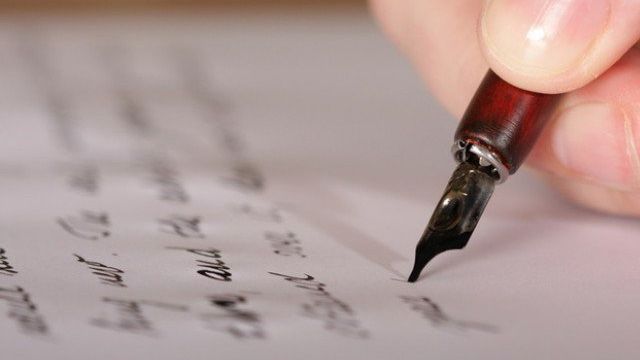


From classical poetry to personal reflections, love remains the timeless force that shapes human life, transcending materialism and inspiring compassion across ages
From Geoffrey Chaucer’s Canterbury Tales to John Keats’s romantic poems, love has occupied a substantial portion and has been a significant topic, thereby exposing the fragility and frailty of human nature since time immemorial. These greatest writers have immortalised love, as abundant themes of their work deal with sensuous love and the transient nature of love life. It in no way shall be an exaggeration to admit that love poems so lovingly crafted are what made them the greatest ever romantic poems.
Youth and beauty, they say, are the only two potent forces in the entire cosmos. From the historical point of view, I don’t see any logic to disagree with this old English axiom, for throughout the course of history we find poets, scholars, saints and sages falling for beauty—material or spiritual. This fact depicts how vulnerable to love human hearts are.
In the poem When You Are Old, William Butler Yeats, the great English romantic poet, pours out his sentiments, thereby leaving no stone unturned to cajole his beloved Maud Gonne—but all in vain. He then mourns for his unrequited love throughout the poem. I have been greatly influenced by the love letters of John Keats. According to him, love is an utmost delight and a brief yet tranquil passage from the worldly vexations and anguishes.
Love, to me, exists in diverse forms. It is like a magnet that gravitates human hearts. It comes more naturally to the human heart than its opposite. It creates a strong bond between father and son. In the poem My Mother at Sixty-Six, Kamala Das feels choked when she sees the wrinkled face and sunken cheeks of her mother, who is in her late sixties. Fear of loss and separation from her mother turns out to be torturous for her. Imagining life without her mother depresses her, but she never lets her realise that her days are numbered. This close association of a daughter with her mother is, out and out, an absolute love which creates an undying and unfading relationship between the duo. The only person for whom children are not ageing is the mother; even middle-aged adults born to her merely appear as grown-up toddlers to her eyes. It is a strong string that binds strangers for a lifelong relationship in the form of husband and wife.
The extremity of love doesn’t exist because love is not extreme for me. You can’t give or take more than what is wanted or needed. It is calm and gentle. It doesn’t repair life or relationships, but shapes them through decisions and accountability. With love, you find joy in the saddest places. It simplifies what looks complicated and brings absolute tranquillity and everlasting warmth to the human heart. It is the rarest of rare feelings, for I recall the ailing Keats saying to his beloved Fanny Brawne, “Take me somewhere else, for English winter will put an end to my life.” I sense intense love and longing in this line; this reflects how utterly engrossed they were in each other. It is the love and affection that one partner endures the illness, poverty and life failures of the other with utmost delight and stands by his/her side through every thick and thin. Russian writer Dostoevsky corroborates this by whispering to his beloved’s ear, who was lying on a deathbed, “Even in my thoughts I haven’t betrayed you.”
These poets have, in one way or another, found solace and comfort in this abstract entity. I have been a student of English literature. These poets have therefore made a lasting impression and altered my perception of love. For nature, religion, women or whatsoever, their love was extreme.
Human history is not a history of cruelty but a history of love, compassion and kindness, for we see a father sacrificing career for his children, a mother giving up everything she holds dear, and a father bringing up his daughter with blood only to place her in the courtyard of another. These acts of love explicitly reflect how strong and powerful an emotion it is.
As human beings, we all are connected in a chain of hearts. Love, they say, is the very essence of life. As Rumi reminds us, it hits everybody, including those who shun love. Elif Shafak, in The Forty Rules of Love, says:
“Life without love is of no account. Don’t ask yourself what kind of love you should seek—spiritual or material, divine or mundane, Eastern or Western.… Divisions only lead to more divisions. Love has no labels, no definitions. It is what it is, pure and simple. Love is the water of life. And a lover is a soul of fire!”
Does love rot? Like all living and dying things, it seems so. The love that once made our world meaningful and bright is absent now. Such a worldview is flawed and incomplete. It has, unfortunately, taken an ugly turn. Once it sweetened life, it has now made things bitter because of our affinity for materialism. Materialistic life may provide temporary pleasure, but all I can say is that it steals long-lasting peace.
Let’s open our hearts to love, for it yields contentment, and hatred yields mental instability. It is therefore better to be loving in all circumstances. It is indeed the essence of life for those who listen with their hearts.
May you find love when you least expect it, where you least expect it.
The writer, a Master’s in English Literature, is Principal, DPS Vailoo Kokernag
Aadil Mohi ud din
aa****************@***il.com