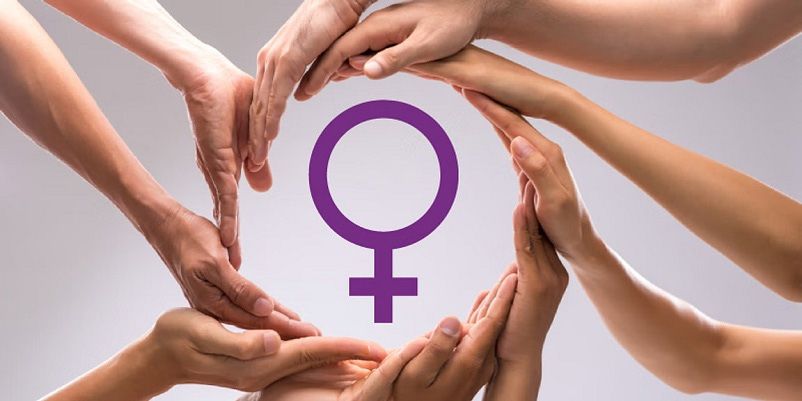


Examining the complex challenges faced by women and girls in a society bound by gender inequality and cultural norms
We live in a society where people are judged based on different standards. The rich are given respect, while the poor are treated as inferior. Similarly, there is an unfair distinction between men and women, even though both have unique qualities. In some areas, women surpass men, while in others, men may have an advantage. However, despite their capabilities, women’s talents are often neglected.
The Struggles of Girls: A Cycle of Injustice
In ancient times, baby girls were buried alive—a practice rooted in ignorance and illiteracy. But our beloved Prophet Muhammad (PBUH) abolished this cruel act and gave women a high status in society. He taught that daughters are a blessing, not a burden.
Yet, if we look at today’s world, the same injustice continues in a different form. Now, many girls are killed before birth through gender-based abortions. Those who survive often face discrimination as soon as they start understanding the world. Society labels them as a burden, and in many places, child marriage is still practised. Young girls, unaware of marriage’s meaning, are married off just to relieve families of so-called responsibility.
Another harsh reality is dowry, which has become a curse for many poor families. A girl is considered worthy of marriage only if she can fulfil the groom’s family’s demands—whether it is money, a car, or any other expensive gift. This reduces a girl to a mere object, a property to be exchanged under conditions. Due to this outdated mindset, many girls suffer from domestic violence, and some marriages even fall apart.
If a girl is not conventionally beautiful, her only chance of marriage is by offering extra dowry. This injustice shapes a girl’s upbringing, making her believe that suffering in silence is normal. She is raised with the fear of society and the weight of protecting her so-called honour, which forces her to accept oppression rather than fight for her rights.
Instead of supporting girls, society often pushes them away. At a time when they need encouragement, they are left to struggle alone. A girl sacrifices her happiness, dreams, and even her life just to protect her dignity. It is time to break this cycle of injustice and treat girls with the respect, love, and equality they truly deserve.
Breaking the Chains: Rethinking Women’s Roles and Rights in Society
In our society, it is deeply ingrained that household work is solely a woman’s responsibility, while men are exempt from such duties. This belief persists despite the fact that even our beloved Prophet (PBUH), the highest example of human dignity and morality, actively participated in household chores. If such a noble figure could share domestic responsibilities, why do modern men feel ashamed or consider it beneath them to assist women at home? Instead of recognizing it as a sign of partnership and respect, men often label it as a blow to their so-called pride and self-respect.
Today, women are breaking barriers in various fields, excelling in professional careers while simultaneously managing their homes. Despite handling this dual burden, men rarely feel the need to step in and share the load. Isn’t it time we questioned why domestic responsibilities are considered solely a woman’s duty? Why should only women bear the weight of maintaining a household while men remain detached from these essential tasks? True partnership lies in shared responsibility—in working together, not in assigning roles based on outdated gender norms.
Another glaring inequality lies in the matter of inheritance. A daughter, who is raised in the same home as her brother, is often denied an equal share of the family property. She is made to feel like an outsider in her own home—the place where she grew up, the place that shaped her. The property is automatically considered the rightful possession of the male heirs, while the daughter is often left with nothing but emotional attachments. If a woman dares to ask for her rightful share, she is met with resentment and hostility, especially in our Kashmir. Families that once claimed to cherish her do not hesitate to sever ties with her for simply seeking justice. How is this fair? Why should a woman’s right to her own family’s legacy be denied simply because of her gender?
Women are often taught from a young age to maintain relationships at all costs—to sacrifice their happiness, endure emotional pain, and put others’ needs before their own. Even after giving so much of themselves, they are denied the basic right to inheritance and respect. If they speak up for their rights, they are labeled as selfish or rebellious. A woman’s strength is measured by her ability to endure, not by her ability to demand what is rightfully hers. This double standard not only undermines women’s dignity but also robs them of their autonomy and sense of belonging.
It is time we reflect deeply on these injustices. Why are women expected to be the sole caretakers of both home and family while men are exempt from these responsibilities? Why is a woman’s right to inheritance questioned while a man’s claim is accepted without hesitation? Why is a woman’s voice in matters of fairness and justice met with resistance and rejection? True progress lies not only in recognizing these inequalities but also in addressing them with courage and fairness. A society that values justice cannot afford to treat half of its population as second-class citizens. It is time to challenge these outdated norms and build a future where equality is not just preached but practiced—both at home and beyond.
The Burden of Stereotypes: A Girl’s Silent Struggle
Society is built around stereotypes that define a girl as weak and a boy as powerful. These outdated beliefs make life difficult for women in every aspect—whether in school, college, office, or while travelling. A constant fear surrounds them, and unfortunately, many take advantage of this fear by harassing them.
The worst part is that even after facing harassment, most girls remain silent. They fear that speaking up might damage their reputation, or worse, society might blame them instead of the harasser. This fear traps them in an invisible cage, forcing them to suffer in silence. Workplace harassment, inappropriate behaviour in public transport, and other forms of mistreatment slowly kill a girl’s confidence, leaving her emotionally drained.
This silence and hesitation encourage wrongdoers. When a girl does not raise her voice, they feel emboldened to cross further limits. Many cases have emerged where girls’ pictures and videos are edited and misused to blackmail them. This pressure forces some into wrongful acts, and in extreme cases, even pushes them toward suicide.
It is heartbreaking that in a world where women are achieving great things, they still have to fight for their basic dignity. The cycle of fear and harassment must be broken. Girls should be encouraged to speak up, and society must stop blaming victims. Only then can we create a world where every girl feels safe, respected, and empowered.
The Quest for Love and Respect: A Dangerous Search for Many Girls
In many societies, the lack of love, respect, and emotional support for girls, especially from their own families, can drive them to seek these fundamental needs elsewhere. Often, when a girl is deprived of affection and recognition at home, she becomes vulnerable to manipulative individuals who offer her the love and attention she craves. Unfortunately, this search for validation can lead her down dangerous paths that may endanger her life.
One of the most troubling trends today is the widespread rise of “boyfriend-girlfriend” relationships, which are often seen as a means of emotional support for many young girls. While genuine relationships can offer comfort and security, the increasing number of girls who fall into such relationships without adequate emotional guidance is concerning. In many cases, the relationship starts innocently, but it quickly becomes a trap, as some men exploit the girl’s vulnerabilities.
What makes this situation even more dangerous is the growing issue of human trafficking. Many girls who run away from home in search of love and respect are at risk of being trafficked. Human traffickers often prey on girls who are emotionally unstable or neglected at home, luring them with promises of better lives and false assurances of safety. Once they are manipulated into leaving their homes, these girls are often coerced, sold, or forced into sexual exploitation, labour, or other forms of abuse.
This issue is not limited to one region or country. Trafficking of girls is a global problem, but certain areas are particularly vulnerable due to social, economic, and cultural conditions. For instance, in parts of South Asia, including countries like India and Bangladesh, a significant number of girls are trafficked due to poverty, lack of education, and emotional neglect. These girls are often from rural or impoverished backgrounds where the family struggles to provide basic needs. The desperation for better opportunities or a better life pushes them to make dangerous decisions.
To prevent such tragedies, there needs to be a stronger emphasis on education, emotional well-being, and community support. Families must understand the importance of providing a safe, loving environment where girls feel valued and heard. Only when emotional neglect is addressed can we reduce the number of girls who seek love and support in all the wrong places, falling victim to trafficking and exploitation.
The Struggles of a Woman: Sacrifice and Society’s Unseen Injustice
A woman wears many hats in her life: she is a mother, a daughter, a wife, and a sister. Each role comes with its own set of responsibilities, and she carries them with unmatched strength and grace. She dedicates her entire life to her family, often sacrificing her own happiness to ensure that everyone around her is content. Whether it’s managing the home, nurturing her children, supporting her spouse, or caring for her parents, she is the glue that holds everything together.
Despite her constant efforts and sacrifices, society often overlooks her contributions. A son is considered an “investment,” someone who will carry forward the family name and wealth, while a daughter is often seen as “paraya” (someone who belongs to another family). No matter how much a woman does, she is always made to feel like an outsider, never fully belonging, even in her own home.
This deep-rooted societal mindset forces women to endure struggles silently. They suppress their own dreams, desires, and aspirations to make others happy, yet they often receive no appreciation. Even after doing everything for their family, women continue to suffer under these unfair expectations and biases.
When the foundation of society is built on such stereotypes, how can there be any true equality? Shouldn’t we take a moment to reflect on how we treat the very people who hold the world together? A woman who contributes so much to her family and society deserves not only respect but also recognition of her sacrifices. It’s time to break free from these age-old beliefs and value a woman for her endless contributions. Every woman deserves to be seen, heard, and appreciated for the strength she carries and the sacrifices she makes.
Poverty: A Major Reason Behind Selling Daughters in Rural Areas
In many impoverished rural areas, extreme poverty forces parents to make heartbreaking decisions, such as selling their daughters. When families struggle to meet basic needs like food and water, their mindset often shifts to survival. Parents begin to feel that if they cannot even care for themselves, how can they provide for their daughters? This desperation leads them to treat their children as commodities, sometimes selling them for money or marriage in exchange for survival.
Example:
Yemen is a country where this tragic reality is unfolding. The ongoing conflict, combined with severe economic collapse, has pushed many families into extreme poverty. With limited resources and no access to proper food or healthcare, parents are left with no other option but to sell their daughters. In some cases, girls as young as eight or nine years old have been married off for a few hundred dollars or food. These marriages are often arranged by traffickers who exploit the family’s dire situation.
Even though humanitarian organizations are working to provide aid, the reach and impact are limited. Governments and institutions need to step in with stronger efforts to address the root causes of poverty and provide support to struggling families.
Women’s Progress and Challenges
Women have made remarkable achievements in education, sports, business, and leadership. From space exploration to entrepreneurship, they are proving their worth in every field. However, many still face discrimination, especially in rural areas where gender roles are deeply rooted. In such places, women are often restricted from pursuing education, careers, or personal ambitions.
The biggest challenge women face is a lack of awareness and societal support. Many families hesitate to educate their daughters or allow them to work. This mindset needs to change because when a woman is empowered, an entire generation benefits. Society must recognize that women are equally capable and should be given the freedom to explore their potential.
Conclusion
In conclusion, the emotional neglect and inequality that many girls face, both within their families and society at large, create an environment where they are forced to search for love, respect, and validation in dangerous places. This desperation often leads them down harmful paths, including being exploited and trafficked.
The root causes of this crisis lie in the lack of emotional support, resources, and societal responsibility to protect vulnerable girls. It is crucial for families and communities to address the emotional needs of girls, ensuring they feel valued and respected. Only by fostering a culture of love, equality, and safety can we prevent the exploitation and suffering of those seeking the love and respect they deserve.
Gul Tabina
gu*******@***il.com