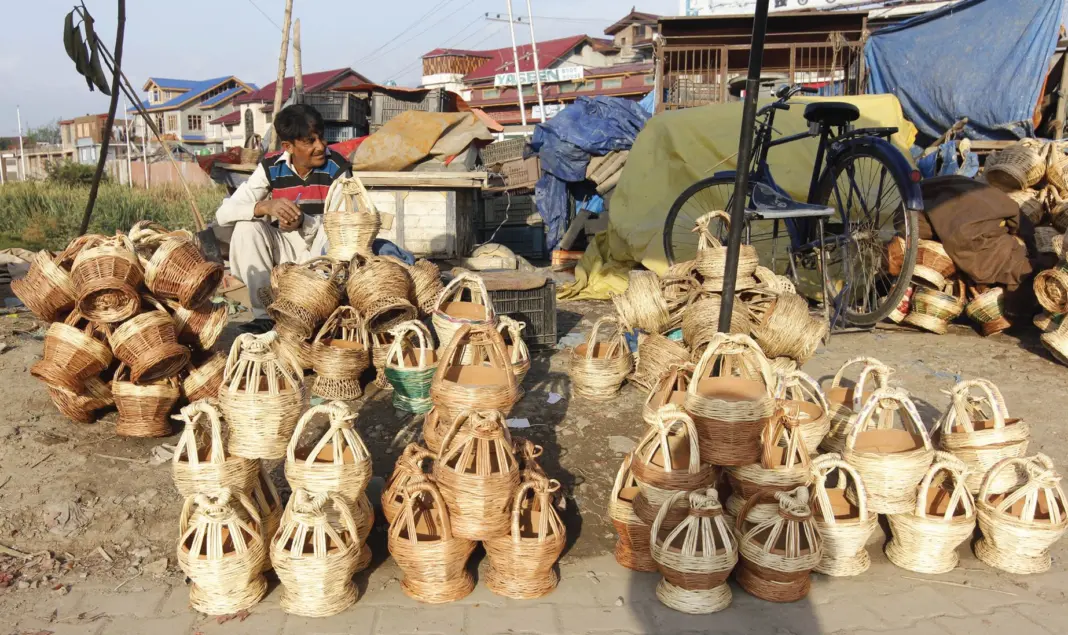


It serves as comforting companion during Kashmir’s harsh winter
As winter descends upon the Kashmir Valley, bringing with it freezing temperatures and snow-covered landscapes, one can’t help but marvel at the resilience of its people. This resilience, in part, owes itself to the kangri, a humble yet ingenious device that has been a trusted companion during the cold season for centuries. Known as a traditional portable heater, the kangri is more than just a utilitarian object; it is a cultural emblem, a testament to Kashmiri ingenuity, and a source of warmth and comfort in icy winters.
The kangri is a beautifully crafted basket made of wicker or willow, enclosing a small earthen pot inside. This pot is filled with smouldering charcoal, creating a portable source of heat that can be carried under clothing. Its design is simple but highly effective, allowing it to radiate warmth directly to the user’s body. Compact and lightweight, it is a perfect fit for the daily life of the region’s inhabitants.
The making of a kangri is an art form in itself. Local artisans skillfully weave the outer wicker basket, often adorning it with intricate patterns and vibrant colours. The inner earthen pot, known as the khari, is baked to withstand high temperatures. The dual-layered structure not only ensures safety but also reflects the deep-rooted craftsmanship and aesthetic sensibilities of Kashmiri culture. Each kangri is unique, blending functionality with artistic expression.
The kangri is more than just a winter accessory; it is woven into the fabric of Kashmiri life. It often features traditional folk songs, stories, and proverbs, symbolizing warmth and care. During winter weddings, gifting kangris is a cherished tradition, signifying the wish for warmth and prosperity in the newlyweds’ lives.
In many households, kangris are passed down through generations, becoming family heirlooms that tell stories of shared winters and familial bonds. Even today, despite the advent of modern heating solutions, the kangri remains a beloved symbol of Kashmiri identity.
During the biting cold, people carry kangris under their pherans, the traditional loose cloaks worn in Kashmir. The kangri serves as a personal heater, keeping individuals warm as they go about their daily activities. Whether tending to household chores, travelling, or gathering with friends and family, the kangri ensures that the winter chill does not hinder productivity or social interaction.
Its portability and efficiency make it indispensable, particularly in remote areas where electricity and modern heating systems might be unreliable or unavailable. The kangri’s ability to sustain warmth for hours with minimal fuel consumption also makes it an environmentally friendly option.
While the kangri’s charm and utility are undeniable, it is not without challenges. Prolonged use or misuse can lead to health risks, such as burns or respiratory issues from charcoal fumes. Awareness and careful handling are essential to maximize its benefits and minimize risks.
In today’s world of advanced heating technologies, some may view the kangri as outdated. However, its affordability, eco-friendliness, and cultural significance ensure its continued relevance. For many, the kangri is not just a practical tool but a cherished tradition that connects them to their roots.
The kangri embodies the spirit of Kashmir: resourceful, enduring, and warm. It is a true friend in winter, offering not just physical warmth but also a sense of belonging and cultural pride. As modernity advances, preserving and celebrating such traditional practices becomes all the more important. The kangri is a reminder that sometimes, the simplest solutions are the most effective, and the deepest comforts are those rooted in tradition.
By Dr Feroz Ahmad Dar
da**********@***il.com