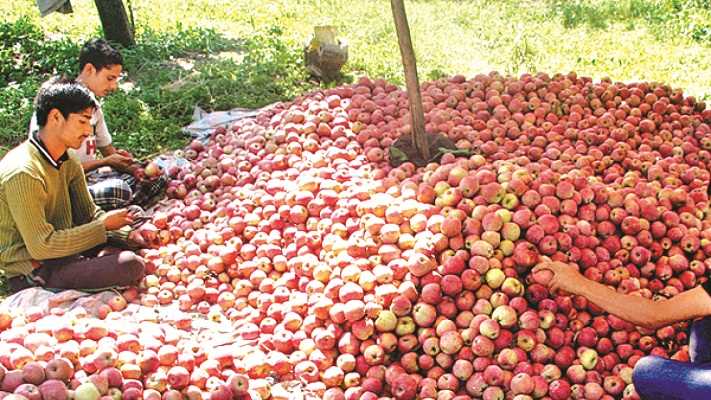


Addressing climate change, infrastructural shortcomings and market competition is essential for safeguarding the future of Kashmir’s prized apple production
The Kashmir Valley, renowned for its breathtaking beauty and fertile land, is a significant contributor to India’s apple production, accounting for nearly 70% of the total yield. Apples from this region are known for their quality and flavour, making the industry vital for the local economy. Despite its prominence, the apple industry in Kashmir faces numerous challenges that threaten its sustainability and growth.
Below are some of the major changes.
- Climate change and unpredictable weather
Erratic Weather patterns due to climate change have become a significant threat. Untimely snow, hailstorms, and frost damage orchards and affect yield. For instance, early snowfall can destroy unharvested apples, while extreme heat during blooming periods impacts pollination and fruit development.
- Transportation and infrastructure issues
The Perishable nature of apples demands efficient transport and storage facilities. However, Kashmir suffers from inadequate infrastructure, including insufficient cold storage units and poor road connectivity. Traffic disruptions, especially during winter, delay shipments and lead to significant losses.
- Pests and diseases
Apple scab, woolly aphids and codling moths are some of the common pests and diseases affecting apple orchards in Kashmir. Farmers often lack access to advanced pest control methods or affordable high-quality pesticides which further exacerbates the problem.
- Rising Input Costs
The Cost of fertilizers, pesticides, and labour has risen considerably, squeezing farmers’ profit margins. Most apple growers are small-scale farmers who struggle to bear these costs, leading to a decline in orchard management quality and productivity.
- Market competition and pricing
Kashmir’s apples face competition from imported varieties and those from other Indian states. The influx of cheaper apples with respect to quality, especially from countries like Iran, has disrupted the local market. Moreover, the lack of a standardized pricing mechanism often results in middlemen exploiting farmers, reducing their earnings.
- Lack of Modernization and Technology
Kashmiri apple farming remains largely traditional. The adoption of modern techniques like high-density planting, mechanized harvesting and drip irrigation is minimal. Limited knowledge and access to these advancements hinder productivity and quality improvements.
- Post-Harvest Losses
A Significant portion of apples is wasted due to poor post-harvest management. The absence of adequate cold storage facilities, grading units and packaging infrastructure results in quality degradation and reduced shelf life, affecting both domestic and export markets.
The possible way forward
Addressing these challenges requires a multi-pronged approach:
- Infrastructure Development; enhancing road connectivity and building more cold storages can improve infrastructure.
- Adoption of Modern Techniques; Promoting high-density planting and training farmers in advanced orchard management practices
- Policy Support; implementing a fair pricing mechanism, reducing import competition and simplifying access to subsidies and loans.
- Climate resilience; encouraging climate-smart agriculture and insurance schemes to mitigate risks.
- Market Diversification; exploring export opportunities and adding value through processing industries.
- Setting up processing units; processing units should be set up in all major towns and at cluster levels in hinterlands so that many by-products such as juice and jam can be produced out of apple.
Conclusion
The apple industry is the backbone of Kashmir’s economy and livelihood. By overcoming these challenges, it can not only secure its position as India’s top apple producer but also enhance the socio-economic well-being of the region.