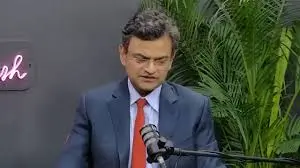


SRINAGAR: Er. Ehtisham Khan, a prominent social and student rights activist and Co-founder of the NGO “The Purpose” has strongly condemned the recent remarks made by Anand Ranganathan, an author and Jawaharlal Nehru University (JNU) Professor.
Ranganathan’s statement, which advocates for Israel like genocidal actions in Kashmir, is deeply troubling and unacceptable, Er. Ehtisham said in a statement.
Khan highlighted the dangerous implications of Ranganathan’s comments. “Advocating for genocide, under any pretext, is a reprehensible act that must be condemned unequivocally. Such rhetoric not only threatens the lives of many but also undermines the principles of justice and humanity,” he said, adding, “It is alarming that an individual in a position of influence is spreading such hateful and divisive messages.”
Er. Khan emphasized the severe consequences of such statements, noting that they can incite violence and further polarize society. “Ranganathan’s genocidal call is an incitement to violence and a threat to peace. It is imperative that we stand against such hateful ideologies and ensure that those who propagate them are held accountable,” he said
Ehtisham called for immediate and strict action against Ranganathan, urging authorities to intervene decisively. “There must be swift and stringent measures taken to address these dangerous statements. It is crucial to send a clear message that such ideologies will not be tolerated,” he asserted.
Khan also appealed to the government, which has been striving to ensure peace, to intervene in this matter. “I appeal to the government, which has been doing its utmost to establish peace, to take decisive action against such divisive rhetoric. Additionally, I urge the JNU authorities to take a firm stand and uphold the values of the institution,” he said.
Furthermore, Er. Ehtisham called on the academic community to denounce such views and uphold the values of peace and tolerance. “Educational institutions must not be platforms for spreading hate. They should foster an environment of respect and inclusivity. We must ensure that our academic spaces are free from such toxic influences,” he said.