

Once Kashmir’s hidden treasure, Gurez now faces plastic waste, unplanned construction, polluted air, and social tensions. Tourists must respect local customs; the government must enforce limits. The question is not whether tourism should stop, but whether it can happen with respect.
Shiekh Bilal
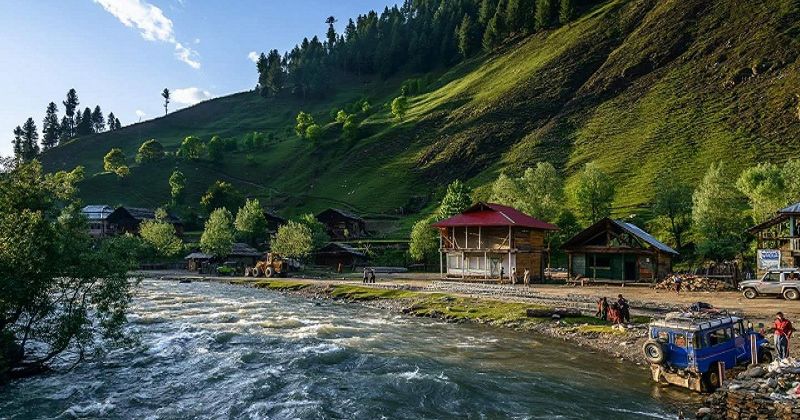
For a very long time, Gurez Valley was Kashmir’s hidden treasure. It sits high in the mountains of Bandipora district, about 8,000 feet above sea level. The Kishanganga River flows through it, bright blue and clean. The huge Habba Khatoon peak watches over green meadows. For hundreds of years, the Dard-Shin people lived here in wooden houses. They spoke the Shina language, grew their own food, and lived a simple life. Everyone knew everyone. If you did something wrong, your family and neighbours would know. That kept people in check. Gurez was known for its natural beauty, culture, tradition, wooden log houses, lush green meadows, forests and Kishan Ganga.
Then, over the last few years, things changed. The government named Gurez the “Best Off-Beat Destination in India – Gold”. Suddenly, tourists from across India found out about it. In 2022, more than 40,000 tourists came. In 2023, it was nearly 50,000. In 2024, the number shot up to more than a lakh. By the middle of this, almost 40,000 people have already visited.
Tourism brought money. Roads got better. Many homes became guest houses. Young people found work. But with the good came problems that Gurez had never seen before. The valley is now asking itself: How much change is too much?
The River and the Garbage
The first thing to suffer was the Kishanganga River. For the people of Gurez, this river is everything. They drink from it. They use it for wuzu and irrigation. Children played near it. It was always clean, even drinkable.
Now, the riverbanks near tourist camps are full of plastic bottles, chips packets, and food wrappers. For years, there was no proper system for garbage collection. The waste from Dawar town was thrown into a dry stream near Badwan. Some people even threw their house trash straight into the river.
The locals say if this garbage keeps piling up, no tourist will come here in two years. They mean it. No one wants to visit a beautiful valley that smells bad. Tourists leave behind plastic and trash because they think someone else will clean it. But Gurez is small. It cannot handle so much waste.
The second problem is buildings. Old wooden houses were perfect for Gurez. They stayed warm in winter and cool in summer. They were built without nails and could last for years. Now, people are breaking them to build concrete hotels. In Dawar, every second house has become a hotel or homestay. There are no rules about where to build. Farms where people grew vegetables are now camping grounds.
This is hurting nature. On the way to Gurez, you can see dead pine trees. Forests are being cut. Animals are losing their homes. The environmentalists named this “unplanned tourism”, which is cutting people off from nature. They warn that if this goes on, Gurez will lose both its culture and its environment.
There is one more strange problem – the air. A big dam called the Kishanganga Hydroelectric Project makes electricity here. But that power goes to other cities. In Gurez, 90% of people still use diesel generators. Tourists want lights, phone charging, and hot water all day. So the generators run non-stop. The air, which was once the cleanest in Kashmir, now smells of diesel.
And the problem does not stop with generators. The number of vehicles has exploded. Before 2022, only a few Sumos and local taxis came to Gurez each day. Now, in summer, hundreds of cars, bikes, and tempo travellers climb the steep Razdan Pass daily. Most run on diesel. Their engines work very hard on the mountain road and let out thick, black smoke. In the Dawar market, traffic jams and constant honking are now normal.
This vehicle’s smoke mixes with the generator’s smoke and makes the air heavy. Elders and children have started coughing in summer, something that never happened before. The dust from so many tyres also settles on crops, grass, and even the roofs of wooden houses. At 8,000 feet, the air is thin and cannot clean itself fast. So every extra vehicle adds more pollution than it would in the plains. The “fresh mountain air” that people come for is slowly disappearing.
When Rules Feel Far Away
The damage to nature is easy to see. The damage to society is harder to notice, but it may be more serious. Gurez was always a traditional place. Most people are Muslim. Drinking alcohol in public, wearing short clothes, and loud parties were not part of life here. People behaved well because families lived close. If you did something bad, your parents and neighbors would find out. That fear kept people honest.
Tourism changes this. A tourist is away from home. No one knows him here. A guesthouse full of strangers feels different from a family home. In this new, “relaxed environment far from family and accountability”, some behaviours are changing.
The Problem of Alcohol
There are no wine shops in Gurez. Drinking in public is not allowed. But many elders and teachers now worry. They say some tourists and workers bring alcohol and drink in rooms and tents. What worries them more is that a few local boys have also started drinking. They see tourists doing it and think it is “modern”.
This is new for Gurez. The valley has no rehab centres. Families do not know how to deal with addiction. Drinking was never a social problem here. Now it could become one.
Loss of Respect and ‘Tehzeeb’
Gurez is sold as a place to “feel free”. But some visitors think “free” means no rules. They play loud music at night on the riverbank. They wear clothes that locals find disrespectful. They make videos of local women without consent.
Young girls say they now feel unsafe walking on roads where they grew up. Elders feel that tourists do not show them respect. This is not about the law. It is about Tehzeeb, it is about modesty, it is about culture, it is about values.
Here is the real danger: when a guesthouse owner allows loud parties at night because he is afraid of a bad review, he is selling more than a room. He is selling the valley’s values. Once you sell your values for money, it is very hard to buy them back.
What Real Tourism Should Look Like
A place cannot survive on money alone. It needs good character – from tourists, from locals, and from the government.
- What a Good Tourist Does
Being a good tourist is simple. Remember, you are a guest. The Kishanganga is not just for your photos. People use it for drinking and prayer. Do not throw anything in it. Carry your plastic bottles back with you.
Dress in a way that respects local culture. Do not drink alcohol in public. Do not play music after 9 pm. The silence of Gurez is not a problem to fix. It is the reason you came. Travel in shared taxis instead of separate cars. Fewer vehicles mean less smoke and less noise. Ask before you take someone’s photo. A little respect goes a long way.
- What the People of Gurez Must Do
The Dard-Shin people survived thousands of years by living with nature, not against it. That wisdom is your real wealth. Concrete hotels can be built anywhere. But wooden houses, Shina stories, and organic farms are only in Gurez. These should cost more, not less.
It takes courage to say “no”. No to a tourist who wants alcohol. No to a builder who wants to cut forests for hotels. No to loud music at night. If you do not protect your culture, who will? We ask for development that follows environmental laws. The same strong stand is needed for social rules. Villages can also limit cars per guesthouse and ask for “no-horn zones” in Dawar and Tulail. Walking should be the rule inside villages.
- What the Government Must Do
It is not fair to call Gurez “untouched” in ads and then forget to build toilets and dustbins. Since July 2025, the government has banned plastic bags and started fines of ₹5,000 for littering. Garbage is now collected from homes. This is a good start. But more is needed. The government should set a limit on how many tourists and vehicles can enter each day. A simple pass system at Tragbal check-post can manage the rush. Every tourist should watch a 3-minute video there about local customs – what to wear, how to behave, why alcohol is not allowed, and why horns should not be used.
The government must also help with clean air. Solar panels and small water turbines can cut the need for diesel generators. Electric buses or CNG taxis should be tested for tourist travel. If the Kishanganga dam’s power cannot reach Gurez, then at least give solar street lights and solar water heaters to guesthouses.
Success should not be counted only in tourist numbers. It should be counted in how clean the river is, how quiet the nights are, and how safe girls feel on the road.
The Final Choice
Every famous place in the world faces this moment. You can take quick money and become just like every other crowded hill station. Or you can protect what makes you special, even if it means earning a little less.
Gurez can still be cleaned. The plastic can be picked up. New rules can control buildings and vehicles. But if people stop caring about respect, manners, and responsibility, that is much harder to fix. A valley can recover from garbage. It cannot recover if its people stop caring about what happens after dark.
The real question for Gurez is not “Should tourism stop?” The question is “Can we have tourism with respect?” That needs tourists who control themselves, locals who set clear limits, and a government that cares about more than numbers.
Gurez is not just mountains and a river. It is a way of life. If that way of life is lost, then we lose Gurez – even if the mountains are still there. The valley does not need our pity. It needs our best behavior. Because without character, travel is not travel. It is just damage.
The writer is an Environmental Sciences student
bi********@***il.com