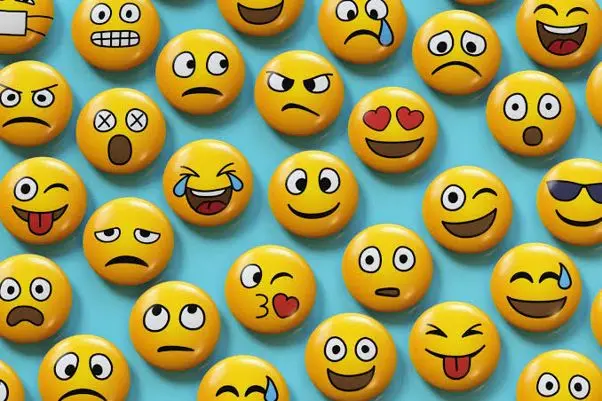


The future question is not whether emojis will replace emotions, but whether emojis represent emotions as complex, individually constructed unique narratives, or whether they reshape our negotiated emotional experience by offering selections from predefined categories and standardised emotional signals from templates, rather than allowing us to embody them.
Mohammad Imran
If you are reading this, you are probably a student of sociology. In this article, I am leaving a few questions and observations to invite you to further sociological reflection.
Emotions are not words to define but to discover the structure of the conditions to which such words or actions apply. Such structures may be the discourse, meanings, attributes, and circumstances created by our collective consensus through prolonged series of social relationships.
Through the process of emotional socialisation, each new member in the social system comes to learn their emotional culture. This helps in sustaining the self of an individual and creates a moral force that controls us in line with societal standards to maintain equilibrium and tell us what we ought to feel, how much we ought to feel it, and how we ought to express it.
With emotional socialisation, conditioning of cognitive ability occurs together to interpret social situations, understand others, and develop a sense of self. It also helps us acquire experiences, assumptions, and memories that oblige us to experience emotions in everyday interactions in a way that sustains our sense of self, social relationships, and social order and stability—through self-control, self-evaluation, impression management, and by giving meanings to certain social forms in a way that makes crying seem natural at a funeral and laughing seem wrong.
However, the digital online world has fundamentally transformed social interpersonal relationships. The use of memes, GIFs, and emojis is a new modus operandi for expressing and experiencing emotions. These have eclipsed reality and negotiated meanings, producing new meanings—what Jean Baudrillard called the hyperreal.
Sending and using emojis allows an individual to create different versions of themselves with a hyperreal impression. With these hyperreal identities, it would be difficult for sociologists to determine the role and position of individuals in social structure.
Through emojis, emotional commitment can occur without the actual experiencing of emotional empathy, which may lead to a change in existing discourse and collective meanings attached to objects and emotions in particular. As there is no implied meaning for one emoji—several attributes can be associated—a new social reality full of ambiguity, multiple meanings, and based on uncertainties is emerging.
In social personal relationships, feelings of pride or shame, badness, and anger result from individuals’ perceptions of how they appear to others and how others are believed to judge that appearance. In social relationships, these feelings not only contribute considerably toward the establishment of an emotionally grounded notion of the self but also act as self-control, self-evaluation, and social responsibility to make behaviour conform to social norms. But when sharing emojis online, brain disinhibition is emerging, potentially reducing the normal inhibitory processes which regulate social behaviour.
Emotions make sense when experienced in social interpersonal relationships, which help us to infer the emotional state of others and to understand a particular context that further enhances social structure and sustains institutions in the social system. Anthony Giddens argued that social structures are continuously recreated through everyday social interactions, without which the social system collapses. In the absence of context in sharing emotions through emojis, new structures and institutions may emerge to determine the conduct of individuals.
Émile Durkheim and R. Collins held that the meaning of rituals took place in society when people collectively share common emotions of grief, solidarity, and celebration, and these socio-emotional experiences and expressions constitute the basis of social rituals. However, practising emojis through online platforms is potentially transforming this traditional mode of expressing solidarity and celebration, creating new forms of collective effervescence and possibly giving rise to new rituals and new discourses tomorrow.
We have similar emojis across all smartphones, and using the same across the globe is fostering a new universal means of expressing emotions. This is now challenging postmodern assumptions and may necessitate a new sociological theory. Alternatively, if emojis are seen as a reflection of cultural values and remain open to multiple interpretations, they will create another social reality full of uncertainties and ambiguities, and may present a fundamental challenge to linguistic theory.
The future question is not whether emojis will replace emotions, but whether emojis represent emotions as complex, individually constructed, unique narratives, or whether they reshape our negotiated emotional experience by offering selections from predefined categories and standardised emotional signals from templates, rather than allowing us to embody them.
mo**************@***il.com