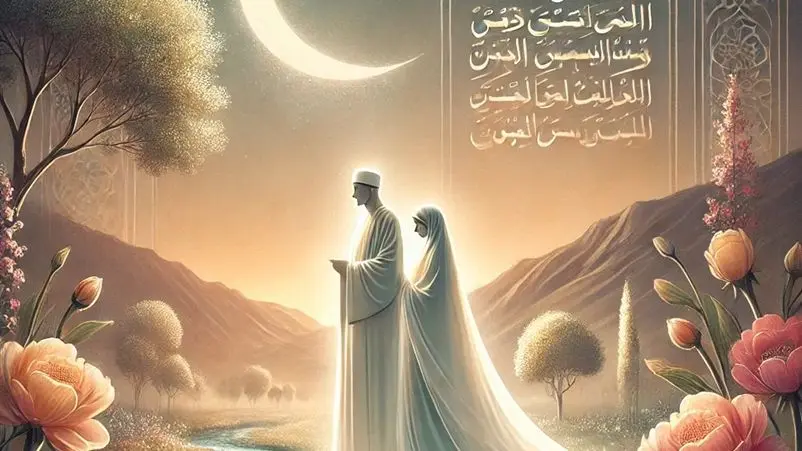


Islam never presented marriage as merely a temporary emotional experience built on excitement or endless romance. Nikah is a sacred bond, an act of worship, a responsibility, and a means of attaining peace, protection, and spiritual growth. True love in Islam grows through mercy, patience, sacrifice, loyalty, forgiveness, and shared obedience to Allah.
Rayees Yaseen
In today’s society, it has become common to hear people claiming that love marriages are superior, while arranged marriages are often portrayed as emotionally empty or outdated. Many unmarried individuals speak about marriage through the lens of fantasy rather than reality, while social media, films, dramas, and novels continuously shape unrealistic expectations about relationships. But the real problem is not whether a marriage begins through love or arrangement — the real crisis is that society has gradually forgotten the true purpose of Nikah itself.
Islam never presented marriage as merely a temporary emotional experience built on excitement, attraction, or endless romance. Rather, Nikah is a sacred bond, an act of worship, a responsibility, and a means of attaining peace, protection, and spiritual growth. Allah says in the Qur’an that He created spouses so that human beings may find tranquillity in one another, and He placed between them love and mercy. This love was never meant to be based only on appearances or emotions, because emotions rise and fall. True love in Islam grows through mercy, patience, sacrifice, loyalty, forgiveness, and shared obedience to Allah.
Unfortunately, modern culture has redefined love entirely. Movies and dramas glorify emotional intensity, private relationships, rebellion, and physical attraction while rarely showing the realities of commitment, compromise, responsibility, or faith. Over time, society began to normalise forbidden relationships and present them as symbols of “true love”, while simple and dignified arranged marriages were made to appear inferior. So much so that many people today feel embarrassed to admit that their marriage was arranged, as though a relationship without a dramatic love story is somehow incomplete.
But Islam teaches something very different.
A successful marriage is not determined by how intensely two people felt before marriage; it is determined by the amount of taqwa, sincerity, character, and mercy they bring into the marriage after it begins. A relationship built only on emotions may weaken when beauty fades, hardships arrive, or responsibilities increase. But a marriage built upon the fear of Allah, good character, patience, and mutual respect develops strength even during difficulty.
This is why Islam emphasised religion and character when choosing a spouse. The Prophet Muhammad (SAW) did not teach the Ummah to search only for attraction or emotional excitement; rather, he taught that righteousness, manners, and faith are the true foundations of a blessed home. Because physical beauty may attract the eyes for a moment, but good character protects a marriage for a lifetime.
The modern world constantly teaches people to follow desires, while Islam teaches human beings to discipline their desires. Society says marriage should always feel exciting, but Islam teaches that real love is often quiet, loyal, patient, and deeply rooted in responsibility. The world glorifies passion, yet many peaceful homes are built not on intense romance, but on mutual respect, simplicity, sacrifice, and remembrance of Allah.
This does not mean every arranged marriage is successful or every love marriage is wrong. Islam does not deny human emotions. Love itself is natural. But when love becomes separated from modesty, wisdom, family guidance, and the boundaries set by Allah, it often turns into confusion, unrealistic expectations, and emotional instability. A marriage succeeds not because it began with cinematic romance, but because both individuals fear Allah and strive to fulfil each other’s rights sincerely.
Today, one of the greatest tragedies is that many people prepare extensively for wedding ceremonies but never prepare themselves for marriage itself. They learn romance from films but never learn patience from Islam. They search for perfect feelings but neglect to build righteous character within themselves.
In reality, the strongest marriages are often the quietest ones — relationships where two imperfect people sincerely try to please Allah together, protect one another’s dignity, remain patient during hardship, and slowly grow in love through faith, mercy, and companionship. Because in Islam, marriage was never simply about “finding someone you love”; it was about finding someone with whom you can walk toward Allah.
ra*************@***il.com