

40,000 children killed in five years. 63 million near starvation. 78 million out of school. 50 million displaced. Wars do not stay on battlefields; they remake childhood itself.
Surjit Singh Flora
The highest cost of war falls on children, not on the leaders who start it. Figures cited alongside the Global Hunger Index say that more than 40,000 children have been killed in wars over the last five years, 63 million have been pushed to the edge of starvation, 78 million are out of school, about 50 million have been driven from home, and 40 per cent have missed essential vaccines.
UN agencies have also described 2024 as one of the worst years in recent memory for children in conflict. Around 473 million children, roughly one in six worldwide, now live in conflict-affected areas. These numbers are large, but their meaning is plain: war is remaking childhood on a global scale.
This crisis is not one story. There are many harms at once, and they stack on top of each other. A child may survive a bombing, then go hungry, lose school, flee home, and miss basic health care.
The scale is also hard to capture. The UN has verified hundreds of thousands of grave violations against children over the past two decades, yet verified cases are never the full count. Many deaths, injuries, abductions, and assaults go unreported because monitors cannot reach the places where children are trapped.
Recent war reporting shows how quickly the toll climbs. The widely cited 40,000 figure reflects child deaths and injuries from recent years of conflict, but the true number is likely higher.
In Gaza alone, UNICEF has warned that more than 18,000 children have been killed, while many more have died after losing access to treatment. In Ukraine, officials have said that about 20,000 children were taken into Russia. These are not side effects. They are a central feature of modern war.
War also tears apart the systems that keep children alive. Farms fail, roads close, aid stalls, clinics run out of medicine, and teachers disappear.
That is why 63 million children in war-hit countries are said to be near starvation, while UNESCO-linked estimates put 78 million out of school in conflict settings. In Gaza, the Palestinian Ministry of Education said 87.5 per cent of children had dropped out by March 2025. At the same time, about 40 per cent of children in war zones have missed essential vaccines, which raises the risk of measles, polio, and other preventable diseases.
By the end of 2024, about 47.2 million children had been displaced by war and violence, a number often rounded to 50 million. Once families flee, childhood loses its basic frame. School, routine, neighbours, and often parents vanish first.
Attacks on schools make the cruelty sharper because the places built to protect children become sites of death. Ukraine has reported damage to thousands of education facilities. In Gaza, hundreds of thousands of children have lost years of learning. After the shells stop, fear often remains. Many children struggle with sleep, memory, focus, and trust. Some carry grief that no ceasefire can quickly repair.
Nearly every country has accepted the basic rights set out in the UN Convention on the Rights of the Child, including safety, education, health care, and protection in war. Yet those rights are broken again and again in today’s conflicts.
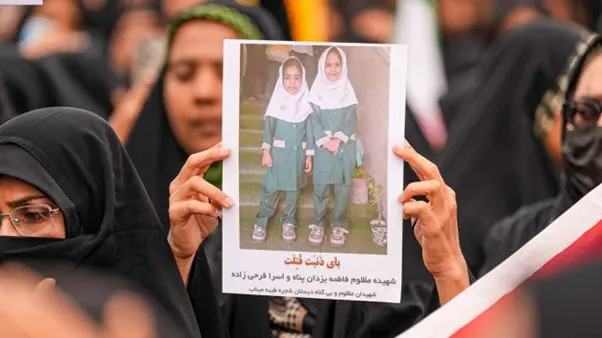
According to investigative reports and preliminary military findings, a U.S. airstrike on February 28, 2026, hit the Shajareh Tayyebeh girls’ primary school in Minab, Iran, and killed at least 168 people, about 110 of them children. If those findings hold, the strike will stand as one of the deadliest reported attacks on a school in the recent U.S.-Iran conflict.
Also, reports by government watchdogs, court filings, and later investigations show that the Trump administration separated more than 5,000 children from their parents at the U.S.-Mexico border during President Donald Trump’s first term. The public got the clearest view of the policy in April 2018, when the White House announced “zero tolerance” and federal prosecutions surged. But the record shows the practice didn’t start there. Officials had already launched a pilot program in 2017, and families were split apart before the administration admitted how broadly it was using the tactic. As a result, the true count ran well above the numbers first offered to the public, and the gap exposed how much of the policy was built out of public sight.
Long wars make the damage heavier each year, and aid systems are stretched thin. Hunger lasts longer, missed schooling compounds, and broken health care leaves children exposed to disease. These figures describe more than a humanitarian emergency. They describe a generation growing up with loss, fear, and interrupted futures. Wars do not stay on battlefields; they remake childhood itself.
The writer is a journalist based in Brampton, Canada
fl*****@*ol.com