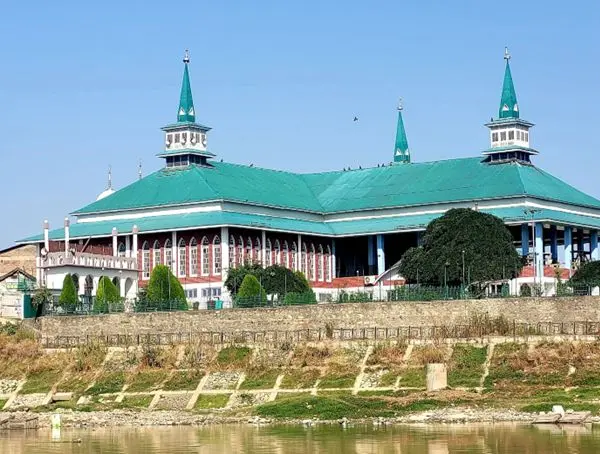


Dating back to the 17th century, this historic mosque carries the stories of generations. Its T-shaped architecture, serene setting near the river, and a library-cum-reading room make it the soul of Sopore. The mosque remains alive in their hearts and memories.
Shoiab Mohmmad Bhat
In the heart of Sopore stands one of the town’s most respected and historic religious sites, Jamia Masjid Sopore, which many locals lovingly call Jamia Qadeem. The mosque carries a long history and a deep emotional connection with the people of the town and nearby villages. For generations, it has remained a gathering place where faith, tradition, and community life come together.
The mosque dates back to the 17th century during the Mughal period in Kashmir. That era left a strong architectural and cultural influence across the valley. Jamia Masjid Sopore became one of the important religious structures built during that time. Over the centuries, the mosque witnessed the changing life of the town, while continuing to serve as a place where people gathered for prayer and reflection.
One of the unique aspects of the mosque is its setting. It is located near the gentle flow of the Jhelum River, which has been an integral part of the history of Kashmir. The flow of the river creates a serene environment around the mosque. People often experience a feeling of tranquillity whenever they visit the mosque, especially in the early morning and evening hours.
For the people of Sopore, Jamia Masjid has always been closely connected to daily life. Each Friday, the mosque becomes filled with worshippers who come to offer Friday prayers. The gathering brings together people from nearby areas, such as Tarzoo, Nigli, Shangurjund, Model Town, and Seelu who travel to the mosque to offer their Friday prayers. For many families, this weekly visit has remained a long-standing tradition.
Senior residents of Sopore often reflect on how the mosque played an important role in their childhood memories. Many grew up watching their fathers and grandfathers preparing for Friday prayers and walking toward Jamia Masjid. These small moments created lasting memories within families.
Even today, I remember how my grandfather prepared himself every Friday before going to the masjid with deep faith and devotion. It was an indication of his strong spiritual commitment and discipline. As kids, we would always see him leaving the house and wait for him to come back from the prayers. The memory seems more precious now than ever since it links us to the traditions of our forefathers. They continue to inspire us to uphold those values of faith, discipline, and devotion in our own lives.
It is the significance of age and association with the congregation of worshippers over many generations that makes Jamia Masjid Sopore such a sacred place for all the citizens. It enjoys high reverence among the inhabitants, and most of them have a deep spiritual attachment to it.
The architecture of Jamia Masjid Sopore also reflects traditional Kashmiri architecture. The structure follows a T-shaped plan, which forms one of its most distinctive architectural features. The longer arm of the building extends along a north–south axis, creating a spacious interior arrangement for congregational prayers.
The mosque is about 54 metres long and 22 metres wide. This type of design ensures that many people can come together comfortably during special times of prayer. It reflects the traditional architecture of Kashmir, which incorporates wood and thoughtful planning in creating structures that are both functional and aesthetically pleasing.
Within the mosque, the open prayer hall ensures a serene environment for worshippers. Sunlight filters into the building to create a calm atmosphere that inspires worshipers.
Jamia Masjid Sopore also houses a library-cum-reading room, which serves as a quiet space for learning and reflection. Locals, especially students and elders, often come here to read religious and other types of literature. It has become a place where knowledge and faith come together in a peaceful environment. For many, come here to get some respite from their busy everyday life and read something thought-provoking.
Throughout the year, Jamia Masjid Sopore continues to serve as an important center for religious life. Scholars and community leaders often deliver sermons that guide people in matters of faith and everyday conduct. During major Islamic occasions such as Eid al-Fitr and Eid al-Adha, the mosque becomes especially lively as large numbers of worshippers gather for prayers and celebrations.
In daily life, it acts as a place of calmness and spiritual satisfaction. The call to prayer echoes through the nearby neighbourhoods, reminding locals of the rhythm of the faith in their daily lives.
Today, Jamia Masjid Sopore still represents an important symbol of the past and the heritage of the place. Over a couple of centuries old, yet it carries on its significance into the present times. Each new generation leaves behind a memory of it.
To the residents of Sopore, the Jamia Masjid Qadeem is not merely an old building. It holds the stories of their forefathers, the prayers of the current generation, and the traditions of future generations to come. For this reason, the mosque remains alive in their hearts and memories.
sh***********@***il.com