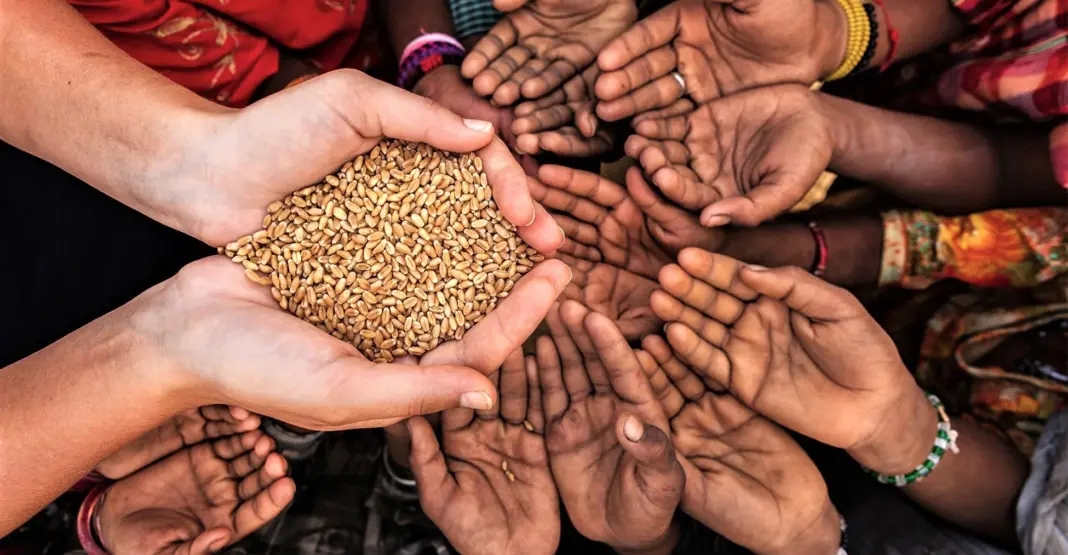


From Al-Ghazali to Ibn Arabi to Iqbal, Islamic thought has always understood wealth as trust, giving as obligation and generosity as the grammar of shared flourishing. The spirit and objectives of the entire ethical & legal vision of Islam – justice, mercy, and human welfare – are its true foundation.
Shabeer Ahmad Lone
Across civilisations, epochs, and intellectual traditions, infaq represents a universal law of justice: wealth must circulate to preserve dignity and social balance. In the Islamic intellectual tradition, Al-Shatibi anchors it in the higher objectives of safeguarding life and welfare, Al-Ghazali sees it as purification from greed, and Ibn Arabi affirms wealth as a trust, not absolute ownership. Parallel principles appear in Jewish, Christian, Indic, Confucian, and modern civic systems. The lesson is civilizational and enduring: societies rise when wealth serves the common good and decline when it hardens into privilege. Infaq, therefore, is not mere charity-it is the moral architecture of a just order.
The Qur’an transforms infaq into a civilizational ethic: wealth is trust, not possession (57:7); giving is growth, not loss (2:261). It purifies the heart, protects dignity (2:264), and prevents concentration of wealth (59:7), uniting prayer with social reform (2:3). The Prophet (Peace Be Upon Him) affirmed, “Charity does not decrease wealth” (Sahih Muslim) and taught that even a smile is charity (Sahih al-Bukhari). Thus, infaq is faith in motion-where gratitude circulates, trust overcomes fear, and justice becomes lived reality.”
Civilisations decline not merely when wealth diminishes, but when circulation ceases – when resources accumulate without responsibility, power consolidates without accountability, and prosperity detaches itself from moral purpose. Infaq, often reduced to charity, is in fact a civilizational principle that reorders the ontology of wealth, the psychology of the self, and the architecture of society. It begins with a radical metaphysical claim: ownership is provisional, stewardship is real, and wealth is a trust rather than an entitlement. Once this grammar is internalised, generosity is no longer occasional benevolence but an existential orientation. The human being is not an isolated accumulator but a trustee situated within a web of moral reciprocity.
In the integrated vision of law, spirituality, and metaphysics, infaq appears not as optional charity but as sacred circulation of justice and mercy. Abu Hanifa situates it within disciplined legal responsibility; Malik ibn Anas reflects it through living communal practice; and Al-Shafi’i secures it through methodological fidelity to revelation. Al-Shatibi elevates it to the level of maqāṣid, reminding us that the Shariʿah is established for human welfare. Spiritually, Al-Ghazali teaches that zakat purifies both wealth and the soul from greed. At the same time, Ibn Arabi unveils his metaphysical secret: wealth belongs to God, and giving is but returning to Him what was always His. Mulla Sadra deepens the insight by affirming that actions subsist within the soul-every act of generosity intensifies one’s very being. Finally, Muhammad Iqbal envisions the believer’s hand as a locus of Divine creativity, where selfhood is strengthened through self-giving. Thus, infaq stands revealed as law in service of justice, spirituality in service of purification, and metaphysics in service of ascent-a transformative act where society is uplifted, and the giver is inwardly reborn.
In the Sharīʿah, infaq is disciplined redistribution: 2.5% on surplus wealth, 10% or 5% on agricultural produce, scaled livestock duties, 20% on extracted resources, and Zakāt al-Fiṭr to secure basic dignity. Codified by jurists such as Abu Hanifa, Malik ibn Anas, Al-Shafi’i, and Ahmad ibn Hanbal, and historically institutionalised through Bayt al-Māl and waqf systems, it sustained welfare and public goods for centuries. Contemporary scholars like Yusuf al-Qaradawi and Taqi Usmani frame it for modern governance and finance. It is neither charity nor mere tax, but civilizational stewardship, where wealth circulates as obligation and justice becomes lived culture.
At the personal level, infaq transforms the inner architecture of the self. Miserliness contracts consciousness around fear-fear of scarcity, loss, and diminished status-while giving expands it toward trust, relationality, and transcendence. Contemporary research in psychology and neuroscience confirms what spiritual traditions long maintained: prosocial behaviour enhances well-being, strengthens empathic circuitry, and cultivates long-term flourishing. Yet infaq moves beyond therapeutic altruism; it disciplines desire. It resists the commodification of identity and restores the self to moral proportion. In this way, generosity becomes liberation from egoic centrality. The giver is refined as much as the receiver is supported.
But moral refinement alone cannot sustain justice. A just civilisation requires institutional embodiment. Infaq exists in dynamic tension with obligatory redistribution and public finance. Voluntary generosity animates conscience; law stabilises continuity. Without structure, generosity is fragile and episodic. Without moral transformation, redistribution risks bureaucratic sterility. The synthesis of the two generates a moral economy in which accumulation is ethically bounded, and circulation is socially normalised. Wealth becomes functional rather than ornamental; it moves where vulnerability exists.
In the contemporary global order marked by extreme inequality, speculative capital, and debt-driven economies, infaq presents not nostalgia but critique. Modern philanthro-capitalism often redistributes surplus without interrogating the mechanisms that generate exclusion. Infaq challenges the very anthropology of unlimited accumulation. It reframes prosperity as relational and accountable, aligning economic agency with moral responsibility. Emerging conversations around solidarity economies, stakeholder models, and regenerative finance resonate with this insight, yet infaq roots it in a theology of trusteeship and ultimate accountability.
Gender justice deepens this framework. Across history, women have sustained families, communities, and charitable institutions, often invisibly. Economic vulnerability, however, continues to disproportionately affect them. A civilizational ethic of infaq must therefore address structural inequities-access to education, inheritance justice, care labour recognition, and economic empowerment. Giving that ignores systemic imbalance risks reinforcing hierarchy. Authentic generosity restores agency and dignity, not dependency.
Ecological crisis expands the horizon further. Extractive consumption without restitution represents a form of collective miserliness toward the earth and future generations. Infaq extends to ecological stewardship: conservation, sustainable production, restoration of degraded environments, and restraint in consumption. Wealth circulation must include intergenerational justice. The planet is not property; it is an entrusted habitat. Thus, environmental responsibility becomes intrinsic to the moral economy.
Technological modernity introduces unprecedented tools for transparency and global solidarity. Digital platforms facilitate rapid response and cross-border generosity, yet they also risk performative giving and surveillance exploitation. The ethic of infaq demands dignity-centered implementation-ensuring privacy, accountability, and authenticity. Technology must amplify trust rather than commodify compassion.
Historical precedents demonstrate that institutionalised generosity can sustain educational, medical, and social infrastructures across centuries. Endowment systems, community-funded public works, and civic trusts once embedded compassion into urban life. Similar impulses appear across civilisations, whether in communal kitchens, monastic almsgiving, or indigenous reciprocity systems, revealing that generosity is a shared human grammar. Infaq participates in this universal horizon while anchoring it in a transcendent moral vision.
Measurement and governance are equally indispensable. Impact evaluation, transparency mechanisms, and participatory decision-making guard against inefficiency and paternalism. Generosity must empower rather than patronise. The recipient is not an object of benevolence but a co-participant in social renewal. When dignity guides distribution, solidarity replaces hierarchy.
Education forms the generational bridge of this vision. If infaq is to shape civilisation, it must be cultivated intentionally through curricula that integrate ethical reasoning, economic literacy, ecological awareness, and spiritual consciousness. Youth formation ensures that generosity is habitual rather than episodic. Civilisations endure when moral imagination is transmitted.
In moments of crisis-war, displacement, pandemics, and social fragmentation, the depth of a society’s moral economy becomes visible. Relief is necessary, yet resilience is higher. Infaq, properly understood, builds capacities, restores livelihoods, and strengthens communal bonds. It does not merely alleviate suffering; it reduces structural vulnerability.
Underlying all these dimensions is the eschatological horizon: the awareness that actions bear consequences beyond immediate visibility. Accountability before the Divine reframes wealth from possession to responsibility. This consciousness does not withdraw from worldly engagement; it intensifies it. Devotion and public welfare converge. Interior purification and social justice cease to be parallel pursuits; they become one movement.
Infaq is not seasonal generosity but a moral reordering of society. In Ramadhan, fasting awakens empathy, disciplines desire, and transforms wealth into a trust before God; giving becomes an act of purification and solidarity, not display. Yet its true power lies beyond the month, when sustained infaq resists greed, reduces structural inequality, and nurtures institutions of dignity and care. Thus, Ramadhan ignites the conscience, but continuous infaq builds a just civilisation where compassion is structured, justice is normalised, and no human being is left to humiliation.
Beyond charity, infaq emerges as the architecture of a just civilisation-ontologically grounded, psychologically transformative, legally structured, economically critical, gender-conscious, ecologically restorative, technologically aware, empirically accountable, pedagogically transmitted, and spiritually luminous. It is disciplined generosity woven into public life, not occasional sentiment. When wealth flows as trust and power acts as stewardship, justice becomes culture rather than a slogan. In such a society, giving is not loss-it is the grammar of shared flourishing.
sh*****************@***il.com