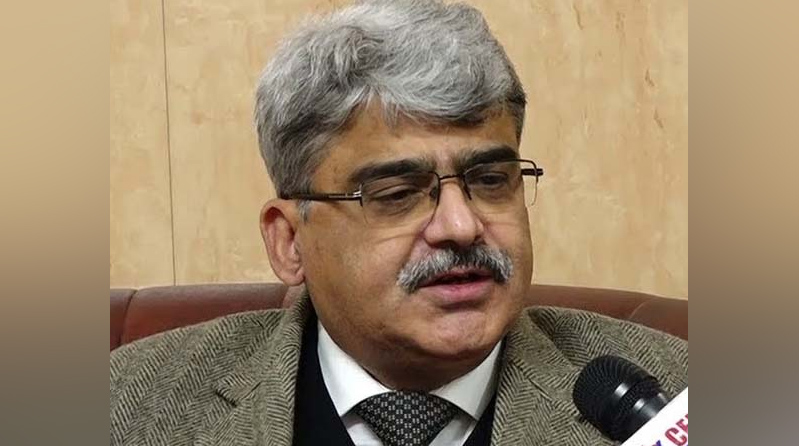


Jammu: In a major initiative aimed at making the population of J&K future-ready for emerging employment opportunities, the Skill Development Department Tuesday presented a comprehensive and forward-looking roadmap to Chief Secretary, Atal Dulloo to transform the skilling ecosystem of the UT. The meeting was attended by Vice-Chancellors of local Universities, Director IIM Jammu, Managing Director, J&K Bank, Secretary, Education; MD, Skill Mission and representatives from premier institutions including IIT, NIFT and other reputed academic and professional institutions.
Reviewing the roadmap Chief Secretary of Jammu & Kashmir highlighted the importance of establishing Global Capability Centres (GCCs) to enhance employment opportunities in the region. He proposed the development of fellowship programs to cultivate a skilled workforce. While appreciating the roadmap’s inclusive framework for skilling various population segments, he urged for a more practical and outcome-driven approach, with clearly defined roles for all involved institutions, including prestigious national entities. Emphasizing employability, the Chief Secretary called for stronger industry-academia linkages to ensure that skilling programs are market-aligned and future-ready. He directed that the roadmap be shared with stakeholders, including universities and government departments, to gather feedback for a more effective final document. The Skill Development Department’s Secretary outlined a five-year plan aimed at empowering approximately 1.4 million individuals through industry-aligned skilling, promoting inclusive growth and economic resilience. The roadmap includes specific targets: exposure to skilling for 600,000 to 700,000 school students, structured courses for 200,000 to 250,000 college students, and technical training for 500,000 to 600,000 youth and working-age individuals. It is organized into four integrated tracks addressing different stages of the skilling lifecycle. The first track focuses on foundational skilling in schools, introducing vocational skills and workplace readiness to students from Classes 6 to 12 through various structured activities. The second track, aimed at college students and recent graduates, proposes minor skilling courses, internships, and coaching for competitive exams, with a focus on bridging the education-employment gap. The third track enhances technical skilling by strengthening ITIs and polytechnics, introducing diversified courses and flexible training pathways. The fourth track promotes upskilling for the existing workforce, particularly in the informal sector, and emphasizes lifelong learning and recognition of prior learning. Additionally, a unified job listing platform for youth in Jammu & Kashmir is proposed to streamline job discovery and enhance employment opportunities, including international placements. This platform will integrate various job ecosystems and facilitate overseas employment through partnerships and resource centers. A two-tier recruitment model is also suggested to cover both international and national placements, supported by collaborations with job portals and district employment offices. Stakeholders contributed valuable insights on improving institutional frameworks and ensuring coordinated implementation to make the skilling ecosystem successful across Jammu & Kashmir.