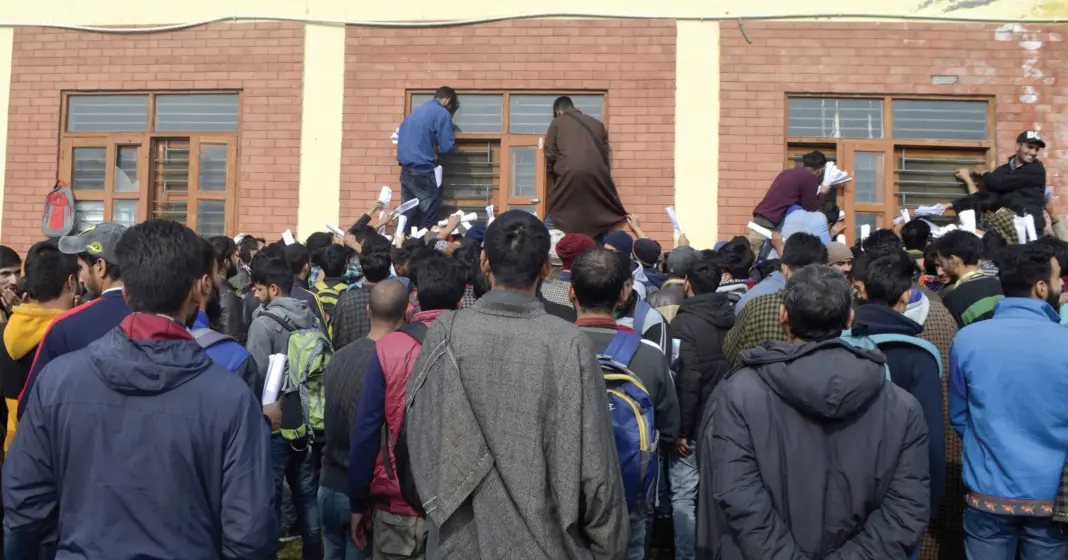


Faced with a constricted job market and anxieties over safety, the Valley’s talented young are leaving in droves, creating a feedback loop of underdevelopment that threatens the region’s socio-economic stability
By Dar Saba
Kashmir is facing a persistent socio-economic challenge that is quietly undermining the region’s future development: the “brain drain.” This phenomenon, defined by the emigration of educated and skilled professionals in search of better opportunities, is a growing concern that threatens to lock the Valley into a cycle of underdevelopment and potentially lead its future toward a precarious state.
The departure of young, talented Kashmiris is driven by a complex interplay of factors rooted in years of instability. Foremost among these are the severe limitations in the local job market. While many youths pursue higher education with aspirations of professional careers, the number of quality job openings, particularly in the private sector, remains disappointingly low. This scarcity often leads to widespread frustration and forces individuals to look outside the region for meaningful employment that matches their qualifications.
This situation has led to a critical point where the impact extends far beyond economics, deeply affecting the social fabric of the Valley. Parents across Kashmir are consumed by worry, not only about the financial future of their children but, crucially, their physical and emotional safety amidst persistent political instability.
The prevailing sentiment among the youth is a lack of personal security and a pervasive feeling that opportunities for a stable, dignified life are unavailable locally. This deep-seated anxiety, fueled by both the desire for a better standard of living and the fundamental need for safety, makes the prospect of leaving the Valley—despite the emotional toll of separation—a necessary choice rather than just a professional preference, thus perpetuating a cycle of uncertainty and loss for the community as a whole.
Political instability further exacerbates the situation. The uncertainty creates an environment where long-term planning, both personal and professional, becomes nearly impossible. The promise of a stable life, reliable income, and a safe environment acts as a powerful magnet, pulling skilled workers toward major Indian cities or international destinations. The lack of sufficient opportunities for professional advancement and research also prompts academics, doctors, and engineers to seek environments where their skills are valued and utilised to their full potential.
The consequences of this silent exodus are profound. The immediate effect is a significant loss of human capital—the very resource needed to spur innovation, economic growth, and social progress within the region. When the Valley loses its brightest doctors, engineers, entrepreneurs, and educators, it also loses their potential contributions to local healthcare systems, infrastructure development, and educational institutions. This deficit hinders the ability of local institutions to function effectively and serve the community.
Furthermore, the brain drain perpetuates a cycle of underdevelopment. The absence of a robust, skilled workforce discourages external investment, as companies require local talent pools to operate efficiently. This stagnation means fewer new jobs are created, pushing even more young people to leave, creating a feedback loop that is difficult to break.
Ultimately, this trend is leading the future of the Valley toward a worrying trajectory. A Kashmir devoid of its skilled youth faces a generational gap in leadership and expertise, threatening the preservation of its socio-economic fabric. Reversing this tide requires a concerted effort to foster a stable environment that incentivises talented individuals to stay—through job creation, investment in local industries, and the cultivation of a reliable ecosystem where ambition can thrive within the Valley itself.
da*******@***il.com