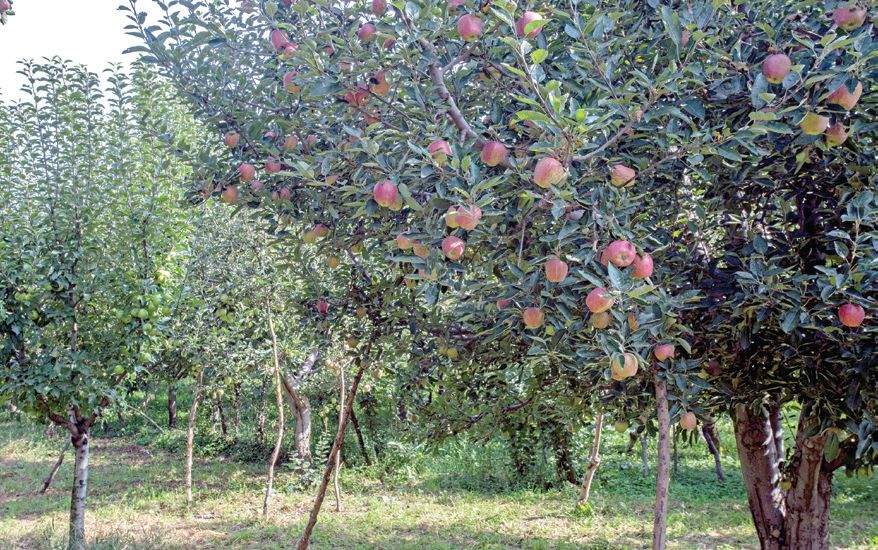


As high-density apple orchards reshape the valley, the environmental impact and the mental well-being of its people hang in the balance
Kashmir has always been synonymous with its apple orchards. The sight of lush apple trees in full bloom has become a symbol of the Valley, drawing people from across the globe. Apples, particularly the famous Kashmiri varieties, have been an essential part of the region’s economy for centuries. However, in recent years, the introduction of high-density apple orchards has raised concerns about not just the environmental implications but also the potential toll they are taking on the mental well-being of the people of Kashmir.
The Promise of High-Density Orchards
High-density apple orchards are a modern farming technique that involves planting trees closer together than in traditional orchards, often using dwarf rootstocks. These orchards can produce more fruit in less space, increasing yield and profitability. This agricultural model promises higher productivity and efficiency, which in theory is ideal for a region like Kashmir, where the apple industry is a vital source of income for thousands of families.
With rising demand for Kashmiri apples in domestic and international markets, the high-density model has been promoted as a way to increase production, reduce costs, and maintain quality. It is an attractive option for farmers looking to maximise their profits, especially with the challenges posed by climate change and unpredictable weather patterns. As a result, many orchards across the valley have switched to this method, with the hope of achieving financial stability and prosperity.
The Reality of Overcrowding
While high-density apple orchards promise financial growth, the reality is far more complex. In many parts of Kashmir, these orchards have resulted in a drastic change to the landscape. What once were sprawling fields with a variety of crops and a harmonious mix of trees and vegetation have now become monocultures dominated by apple trees planted in tight rows. This rapid shift has had several unintended consequences for both the environment and the mental peace of the people.
The most immediate and obvious impact of high-density orchards is the loss of traditional farming practices. For centuries, Kashmiri farmers have grown a variety of crops alongside apples, from walnuts to saffron and rice to vegetables. This diversity not only ensured food security but also preserved the delicate balance of the region’s ecosystem. However, with the rise of high-density orchards, many of these traditional crops have been sidelined in favour of apple cultivation. The shift from diversified farming to a focus on a single crop has diminished the rich agricultural biodiversity that once existed.
Additionally, the physical appearance of the landscape has changed. The vast, open spaces that once allowed farmers and their families to enjoy the beauty of the land have become tightly packed orchards. This transformation has altered the atmosphere of the region, as the quiet serenity of vast agricultural fields has been replaced by rows upon rows of mechanically planted trees. The peacefulness that once defined the Valley’s countryside is now under threat, as the sight of overcrowded orchards creates a sense of claustrophobia.
Mental Peace in Jeopardy
The shift toward high-density orchards is not just an environmental concern but one that affects the mental health of the people of Kashmir. The landscape of Kashmir is deeply intertwined with the people’s sense of identity and peace of mind. The stunning natural beauty of the Valley, with its vast meadows, majestic mountains, and flowing rivers, is central to the mental well-being of its residents. It is a place where the harmony between nature and agriculture has long been a source of solace.
However, the overcrowded orchards are not just altering the physical landscape; they are also taking a toll on the psychological health of those who live in these areas. The feeling of being surrounded by walls of trees, with no open spaces to retreat to, has created a sense of confinement. This can contribute to anxiety, stress, and a growing sense of disconnect from the natural world that has long been an integral part of Kashmiri life.
Furthermore, the rise of high-density orchards has led to an increased dependency on external resources, such as fertilizers, pesticides, and specialized equipment. The pressures to maintain these orchards in optimal condition are immense, and the constant fear of crop failure or disease adds another layer of stress for farmers. This new form of intensive agriculture is not just demanding physically but emotionally as well. Farmers who once worked with the land in a more sustainable manner now face the constant anxiety of meeting market expectations, further eroding their mental peace.
The Social Consequences
The shift to high-density orchards also has social implications. The traditional agricultural practices of Kashmir were more communal in nature, with families and neighbours often working together during planting and harvest seasons. The shared labour and mutual dependence on one another helped build social bonds and a sense of community.
However, the rise of high-density orchards has led to a more individualistic approach to farming. These orchards require intensive care, and the use of modern machinery has reduced the need for manual labor, which in turn has led to a decline in communal activities. This has resulted in increased isolation for many, particularly in rural areas where people once relied on one another for support and company. The breakdown of these social structures, combined with the economic pressures of modern farming, has contributed to a growing sense of alienation.
A Call for Balance
While high-density apple orchards are undoubtedly a modern solution to increasing production and profitability, it is crucial that the people of Kashmir do not lose sight of what makes their region unique. The relationship between the land and its people is more than just economic—it is spiritual, emotional, and cultural. To ensure the mental well-being of Kashmiris, it is essential to strike a balance between modern farming techniques and the preservation of the region’s natural and cultural heritage.
Farmers should be encouraged to adopt more sustainable agricultural practices that prioritize not only productivity but also environmental health and social well-being. Agroforestry, for example, is a practice that combines tree cultivation with other crops, ensuring biodiversity while still allowing for the growth of high-yield apple orchards. Additionally, creating green spaces within orchards, promoting organic farming, and reducing the reliance on harmful chemicals can help restore some of the lost tranquillity of the Valley.
Furthermore, it is crucial that mental health support services be made available to farmers and rural communities, who may be struggling with the pressures of modern agriculture. The introduction of high-density orchards should not come at the cost of people’s mental peace.
The writer is a research scholar in Sociology at the University of Kashmir
Shahid Bashir
wa*********@***il.com