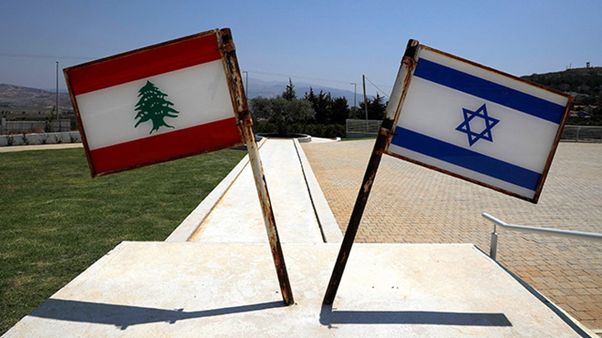


BEIRUT: Israel’s military says its forces will remain in five strategic locations in southern Lebanon after Tuesday’s deadline for their withdrawal under a ceasefire with the Hezbollah militant group, as Lebanon’s government expressed frustration over another delay.
A separate ceasefire in Gaza was also in doubt as the region marked 500 days of Israel’s war with Hamas, while Israel and the US sent conflicting signals over whether they want the truce to continue.
Military spokesperson Lt Col Nadav Shoshani said the five locations in Lebanon provide vantage points or are located across from communities in northern Israel, where about 60,000 Israelis are still displaced. He said the “temporary measure” was approved by the US-led body monitoring the truce, which earlier was extended by three weeks.
Under the agreement, Israeli forces should withdraw from a buffer zone in southern Lebanon to be patrolled by the Lebanese army and UN peacekeepers.
Israel is committed to a withdrawal in “the right way, in a gradual way, and in a way that the security of our civilians is kept”, Shoshani told reporters.
Lebanese President Joseph Aoun told reporters the ceasefire “must be respected”, saying “the Israeli enemy cannot be trusted”. He said Lebanese officials were working diplomatically for the withdrawal. Hezbollah leader Naim Kassem said on Sunday “there can be no excuses” for any delay past Tuesday.
Hezbollah began firing rockets, drones and missiles into Israel the day after Hamas’ October 7, 2023, attack out of Gaza ignited the war there. The Israel-Hezbollah conflict boiled over into all-out war in September as Israel carried out massive waves of airstrikes and killed most of the militant group’s senior leaders.
Earlier on Monday, Israel’s military said its drone strike killed Muhammad Shaheen, head of Hamas’ operations in Lebanon. The strike in the port city of Sidon was the deepest inside Lebanese territory since the ceasefire took effect. AP video footage showed a charred vehicle.
“Now the fear has come back to people,” said Ahmed Sleim, a Sidon resident, who worried about a return to war.
Israelis held protests calling for the Gaza ceasefire to be extended so that more hostages abducted in the October 7 attack can be freed.
An Israeli official said four bodies are expected to be returned to Israel on Thursday. The official gave no further details and spoke on condition of anonymity because details were being arranged. So far, no bodies have been handed over during the ceasefire’s current phase. There was no immediate comment from Hamas.
Israeli officials have said they believe eight of the 33 people to be returned in the ceasefire’s first phase are dead. Hamas is gradually releasing the 33 in exchange for nearly 2,000 Palestinian prisoners. Israeli forces have pulled back from most parts of Gaza and allowed a surge of humanitarian aid.
This first phase ends in less than two weeks. Negotiations on the more difficult second phase — which would release more hostages and see the withdrawal of Israeli forces from Gaza — should have started two weeks ago.
In the second phase, Hamas would release over 70 remaining hostages — around half believed to be dead — in exchange for more Palestinian prisoners and a lasting ceasefire.
Israeli Prime Minister Benjamin Netanyahu and US President Donald Trump’s administration say they are committed to the eradication of Hamas and the return of all hostages. Those goals are widely seen as incompatible.
The militant group, though weakened, remains in control of Gaza.
Trump calls for Gaza’s population of over two million to be permanently relocated to other countries and for the US to take ownership of the territory. Israel welcomes the plan, while Palestinians and Arab nations have rejected it. Rights groups say implementation would likely violate international law.
Egypt is working on a counter-plan to rebuild Gaza without removing Palestinians.
Agencies