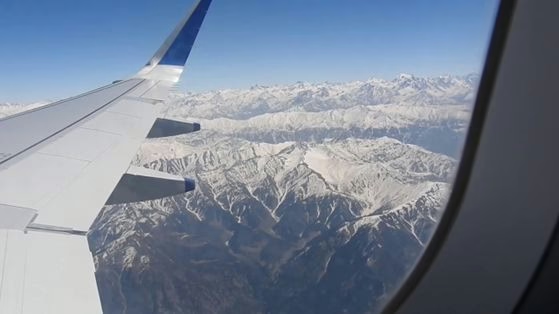


Who will take an urgent call for price regulation?
The Delhi-Srinagar air route is a critical connection between India’s capital and one of its most picturesque and strategically important regions, Jammu & Kashmir. Traditionally, this route has been a lifeline for business travelers, tourists, students, and families. However, in recent years, the cost of air travel on this route has skyrocketed, making it unaffordable for middle-class travelers.
With airfare often surpassing Rs 10,000-Rs 20,000 for a one-way ticket during peak seasons, many travelers are left with no option but to explore alternative travel methods, such as the still-developing Delhi-Srinagar train route. While rail connectivity is improving, it remains an inconvenient and time-consuming alternative to flights. The exorbitant cost of air tickets demands urgent intervention from the government and price regulators. The situation calls for strict controls and corrective mechanisms to ensure fair pricing and accessibility for all travelers.
The Issue of Price Surge: A Middle-Class Nightmare
- Unaffordable Airfare Trends
The pricing of Delhi-Srinagar flight tickets has become a pressing concern. The base fares, which once ranged between Rs 3,000 and Rs 5,000, have now soared to unsustainable levels, especially during holiday seasons, long weekends, and peak tourism periods. Many reports suggest that fares are inflated without clear justification, with sudden spikes even on non-peak travel days.
For a middle-class family of four, a round-trip journey could cost upwards of Rs 40,000–Rs 50,000, an amount that is often equivalent to their monthly income. This situation has made air travel to Srinagar a privilege rather than a necessity, restricting access to the region for many potential travelers.
- Dynamic Pricing: A Mechanism of Exploitation
Airline ticket pricing follows a dynamic model, where fares fluctuate based on demand and availability. While this system benefits airlines, it often results in price exploitation. The situation worsens when airlines deliberately reduce the number of economy seats available, pushing passengers toward higher fare brackets.
Passengers who need to travel for urgent reasons, such as medical emergencies, business meetings, or family obligations, are left with no choice but to pay inflated prices. The absence of a price cap allows airlines to charge excessively, making affordability a luxury rather than a right.
- Limited Competition on the Route
With the Delhi-Srinagar railway direct fast train still in limbo, the Delhi-Srinagar route has limited travel options other than airlines, which reduces competition and drives up fares. Unlike metro cities that have multiple airlines competing aggressively, Srinagar remains dependent on a handful of carriers, leading to cartel-like pricing practices. Airlines, under the guise of demand fluctuations, increase fares collectively, leaving passengers with no budget-friendly options.
Impact of Skyrocketing Airfares
- Decline in Middle-Class Tourism
The middle class forms a significant portion of India’s domestic travelers. Due to high airfare, many potential tourists have started reconsidering their plans to visit Kashmir, affecting local tourism. The hospitality sector, which thrives on consistent tourist footfall, is witnessing adverse effects as budget travelers are forced to seek alternative destinations or cancel their trips altogether.
Kashmir’s economy heavily depends on tourism, and restricted access due to exorbitant ticket prices is leading to revenue losses for hotels, transport operators, and local businesses. If unchecked, the trend could have long-term consequences on the state’s economic stability.
- Hindrance to Medical and Business Travel
Apart from tourism, air travel is crucial for medical patients seeking better healthcare facilities outside Kashmir. Many residents of Jammu & Kashmir travel to Delhi for medical treatments, specialist consultations, and emergency procedures. The inflated airfares make this already challenging journey even harder, often forcing patients to endure long and tiring train rides or postpone crucial treatments.
Similarly, business travel is being hampered. Entrepreneurs, traders, and professionals who rely on frequent air travel between Delhi and Srinagar are being forced to cut down on their trips, impacting commercial activities in the region.
- Disparity in Airfare Compared to Other Routes
Interestingly, airfare on longer routes, such as Delhi-Bengaluru or Delhi-Kolkata, is often lower than that on the Delhi-Srinagar route. This raises questions about the pricing strategies employed by airlines. If longer routes with similar demand patterns can maintain reasonable pricing, there is no justification for the inflated rates on the Delhi-Srinagar sector.
The Need for Government Intervention
- Introduction of Price Caps
The government must introduce a price ceiling on airfares for domestic routes, especially those serving regions with strategic and economic importance, like Jammu & Kashmir. A reasonable cap on ticket prices would prevent airlines from exploiting peak travel demand.
Regulatory bodies such as the Directorate General of Civil Aviation (DGCA) must ensure that airlines maintain a fair pricing policy, particularly on high-demand routes. A structured fare regulation mechanism, similar to that implemented during the COVID-19 pandemic, should be reinstated to prevent unjustified fare hikes.
- Encouraging More Airlines on the Route
One of the primary reasons behind high ticket prices is the limited number of airlines operating flights between Delhi and Srinagar. The government should encourage new entrants in the market and provide incentives for airlines willing to introduce budget-friendly options. Increased competition will naturally drive down prices, making air travel more accessible.
- Strengthening the Delhi-Srinagar Train Route
With the Delhi-Srinagar fast train route still in progress, it is essential to expedite its completion and improve rail connectivity. If the railway network can offer a faster and more efficient alternative to expensive air travel, passengers will have a viable option. Until then, air travel remains the only practical choice for many, making price regulation an urgent need.
- Special Discounts and Subsidies
To make air travel more affordable, the government can introduce subsidies or discounted tickets for students, medical patients, and senior citizens traveling between Delhi and Srinagar. Such measures would provide relief to those who genuinely need to travel but are struggling with high costs.
- Transparent Pricing Mechanisms
Airlines should be mandated to disclose the rationale behind their pricing strategies. A more transparent fare structure would allow passengers to plan their journeys better and avoid last-minute price shocks. Additionally, imposing restrictions on last-minute fare hikes could help control price surges.
Conclusion
The soaring airfares on the Delhi-Srinagar route have turned a routine journey into an unaffordable luxury for middle-class travelers. With no significant price controls in place, airlines continue to exploit passengers through dynamic pricing and artificial demand inflation. The government, regulatory bodies, and consumer rights organizations must intervene to ensure fair pricing.
If left unchecked, this trend will continue to impact tourism, medical travel, business activities, and overall connectivity between Delhi and Srinagar. The government must implement price caps, encourage competition, improve railway alternatives, and introduce subsidies for essential travelers.
Only through a comprehensive and well-regulated approach can air travel be made affordable and accessible to all. The people of India, especially those who rely on this critical route, deserve an air travel system that is fair, reasonable, and inclusive. It is high time that the authorities take action before air travel on this route becomes a privilege only for the elite, leaving middle-class travelers stranded with no affordable options.
The writer besides being a medical doctor at Mubarak Hospital, a member of the Group of Concerned Citizens, and a columnist, actively contributes to positive perception management on various moral, social, and religious issues dr**********@***il.com